
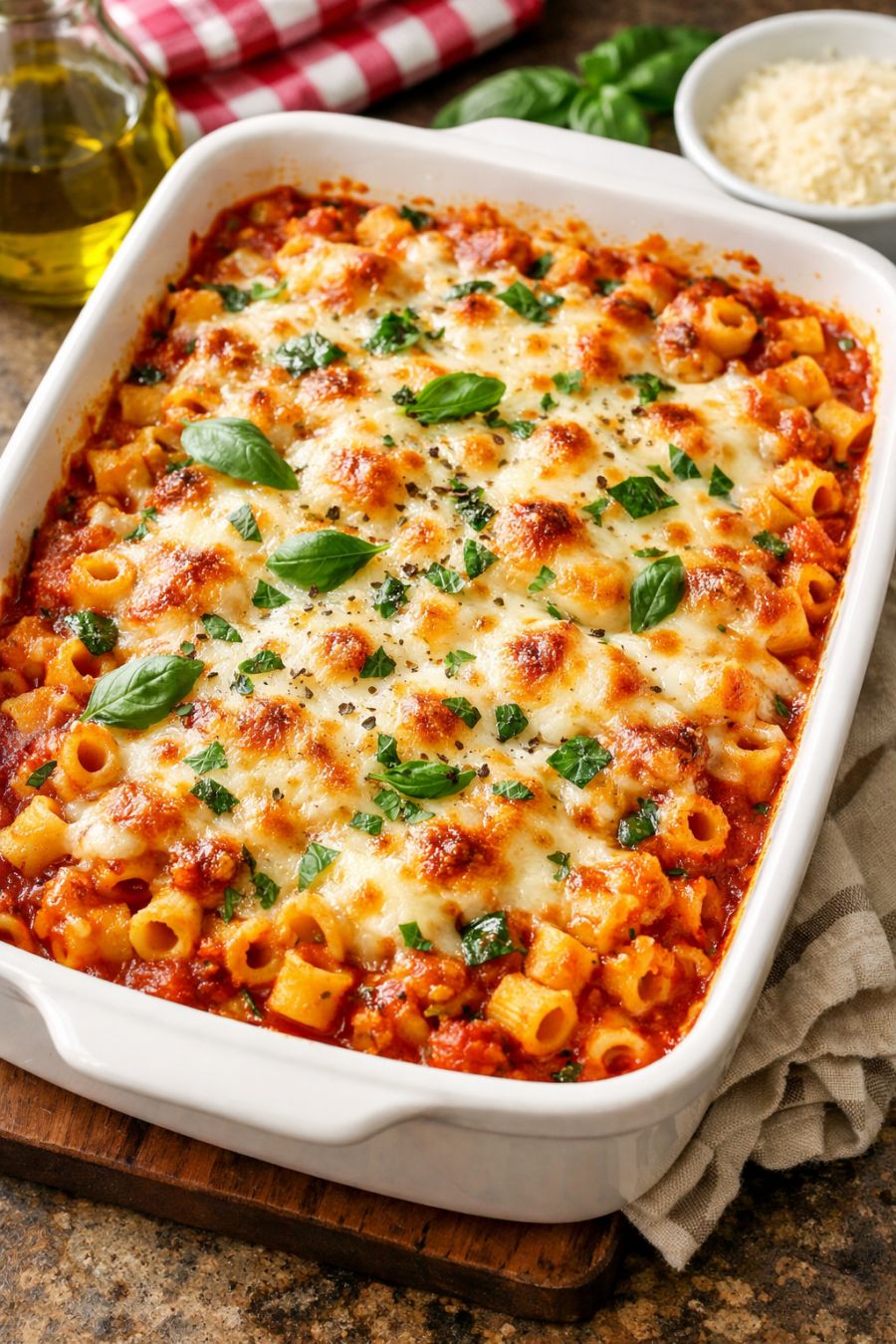
This 5-ingredient oven ditalini is the kind of back-pocket recipe I lean on when the day gets away from me. You literally scatter dry ditalini into a baking dish, add four pantry-friendly ingredients, and let the oven do the work. The pasta hydrates and cooks right in the sauce, giving you a cozy, Midwest-style baked pasta that feels like a cross between a casserole and a simple Italian pasta al forno. It’s practical, forgiving, and surprisingly rich for how little effort it takes—exactly the sort of thing friends ask you for the recipe for after the first bite.
Serve this oven-baked ditalini straight from the casserole dish with a big green salad dressed simply with lemon and olive oil to balance the richness. Warm garlic bread or a crusty baguette is perfect for catching the saucy edges. A light Italian red wine, such as Chianti or Montepulciano, or a sparkling water with lemon pairs nicely. If you’d like extra protein on the table, grilled or roasted chicken, Italian sausage, or a simple pan-seared fish all work well alongside.
5-Ingredient Oven Ditalini
Servings: 4
Ingredients
2 cups dry ditalini pasta
3 cups low-sodium chicken broth (or vegetable broth)
2 cups marinara sauce (store-bought or homemade)
1 cup shredded mozzarella cheese
1/2 cup grated Parmesan cheese
Directions
Preheat your oven to 375°F (190°C). Lightly grease a 9x13-inch glass casserole dish or a similar oven-safe dish.
Pour the dry ditalini pasta evenly into the bottom of the glass casserole dish, spreading it into an even layer. This is your base—no boiling needed.
In a large measuring cup or bowl, whisk together the chicken broth and marinara sauce until well combined. You want a loose, pourable mixture so the dry pasta can absorb enough liquid as it bakes.
Slowly pour the broth-and-marinara mixture over the dry ditalini in the casserole dish, making sure all the pasta is submerged. Gently shake the dish or press down with the back of a spoon to settle any floating pieces so they’re mostly under the liquid.
Cover the dish tightly with aluminum foil, crimping the edges to seal in steam. Place the dish on the middle rack of the preheated oven.
Bake, covered, for 30 minutes. At this point, carefully remove the foil (watch for hot steam) and stir the pasta gently, making sure to bring any pieces from the corners into the sauce so they cook evenly.
Sprinkle the shredded mozzarella evenly over the top of the pasta, followed by the grated Parmesan, covering as much surface area as possible.
Return the dish to the oven, uncovered, and bake for another 10–15 minutes, or until the pasta is tender, the cheese is melted, and the edges are bubbling. If you like a lightly browned top, you can switch the oven to broil for 1–3 minutes at the end, watching closely to prevent burning.
Remove the casserole from the oven and let it rest for 5–10 minutes. This short rest helps the sauce thicken slightly and makes the portions hold together better when served.
Taste a small bite and adjust at the table with salt, freshly ground black pepper, or a drizzle of olive oil if desired. Serve warm, scooping straight from the glass dish.
Variations & Tips
You can easily adapt this base recipe to fit what you have on hand. For a vegetarian version, use vegetable broth instead of chicken broth and keep the rest the same. If you’d like more protein, tuck in 1–1 1/2 cups of cooked Italian sausage, rotisserie chicken, or drained canned white beans after you add the liquid and before baking. To add more vegetables, stir in 1–2 cups of chopped baby spinach, frozen peas, or small broccoli florets when you stir the pasta at the 30-minute mark so they don’t overcook. For a creamier texture, replace 1/2 cup of the broth with heavy cream or half-and-half. If you prefer a sharper, more savory flavor, swap part of the mozzarella for provolone or add extra Parmesan. Food safety tips: Always ensure the casserole is heated until the center is piping hot and the pasta is fully tender; internal temperature should reach at least 165°F (74°C) if you’ve added meat or previously cooked ingredients. Let leftovers cool no more than 1–2 hours at room temperature before refrigerating, and store them in a shallow, covered container. Reheat leftovers thoroughly until steaming before eating, and enjoy within 3–4 days.
