
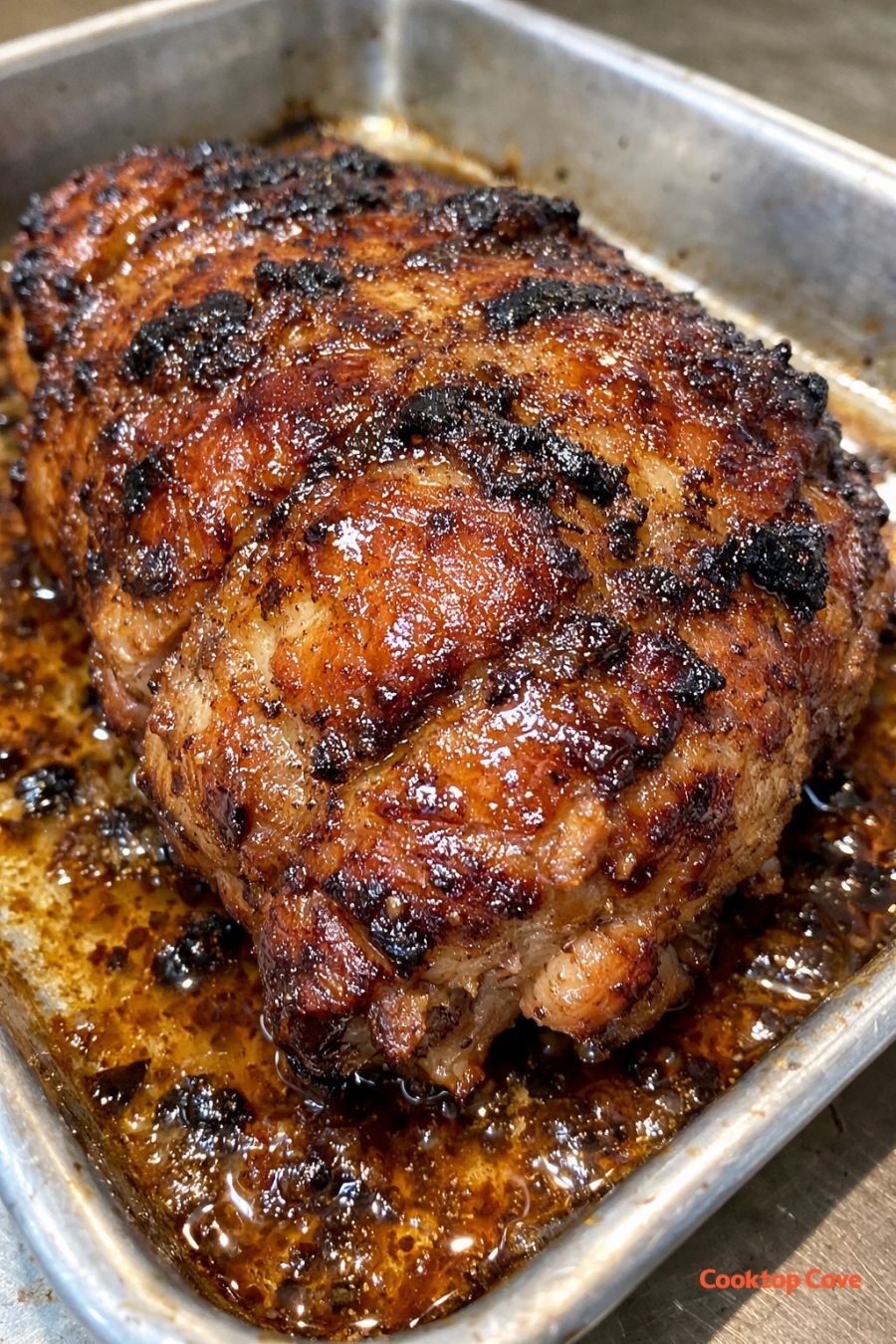
This is my long weekend lifesaver: a pan of deeply roasted, savory protein that practically cooks itself while I’m off doing anything but hovering over a grill. With just three ingredients and a hot oven, you get a sheet pan of glistening, caramelized meat that can feed a crowd in sandwiches, tacos, or piled over salads. The technique borrows from slow-roast methods you see in everything from Mexican carnitas to Italian porchetta, but it’s stripped down for real life—no special equipment, no long marinade, and no fussing at the stove.
Serve the roasted protein piled into soft rolls with a simple slaw, pickles, and mustard for a no-fuss sandwich bar, or set it out with warm tortillas, lime wedges, and chopped onions for DIY tacos. It’s also great over rice or roasted potatoes with a bright green salad on the side. For a larger gathering, I like to offer a few bowls of crunchy things—shredded cabbage, sliced radishes, pickled jalapeños—plus a creamy element like sour cream or a yogurt sauce so people can build their own plates without any last-minute cooking from you.
3-Ingredient Long Weekend Roasted Protein
Servings: 8–10
Ingredients
4–5 lb boneless, well-marbled protein roast (such as pork shoulder, beef chuck, or lamb shoulder), patted dry
2 tbsp coarse kosher salt (or 1 1/2 tbsp fine sea salt)
2 tbsp neutral high-heat oil (such as canola, grapeseed, or vegetable oil)
Directions
Heat your oven to 300°F (150°C). Set a rack in the lower third of the oven so there’s room above for air to circulate. Line a large metal baking sheet with heavy-duty foil for easier cleanup, then place a wire rack inside the sheet if you have one. If you don’t, you can roast the protein directly on the foil-lined sheet.
Pat the protein roast very dry with paper towels. This is important for browning; surface moisture will steam instead of letting the exterior crisp. If there are large, loose flaps of fat, you can trim them slightly, but keep a good fat cap—this is what will render and give you that glistening, succulent look and flavor.
Rub the roast all over with the oil, making sure to coat every surface, including any crevices. Sprinkle the salt evenly over all sides, using your hands to press it gently into the meat so it adheres. Place the roast on the prepared rack or directly on the foil-lined baking sheet, fat side up. Starting fat side up encourages the fat to slowly baste the meat as it renders.
Slide the baking sheet into the oven and roast, uncovered, for 3 to 4 hours, depending on the size and type of protein. You’re aiming for a deeply browned, blistered exterior and very tender interior. As it cooks, the fat will slowly render and pool around the meat, and the surface will go from pale to golden to a rich mahogany color. Avoid opening the oven too often; every time you do, you lose heat and slow down the roasting.
Around the 2 1/2-hour mark, start checking for doneness. For pork shoulder or beef chuck, the roast should be fork-tender and shred easily, with an internal temperature of at least 190°F (88°C) in the thickest part. For lamb shoulder, you can go for a slightly lower internal temperature if you want slices instead of shreds, but for that pull-apart texture, the 190°F range is a good guide. If the top is browning too quickly before the meat is tender, loosely tent the roast with foil and continue cooking until done.
Once the roast is tender and the top is deeply browned and glistening with rendered fat, remove the baking sheet from the oven. Let the protein rest on the pan for at least 20–30 minutes. This rest is key: it allows the juices to redistribute so the meat stays moist when you slice or shred it. Don’t skip this, even if everyone is hungry.
After resting, decide how you want to serve it. For a more anonymous, versatile protein, I like to roughly chop or shred the meat so it becomes a pile of caramelized bits and tender pieces. Use two forks or a sharp knife to break it down directly on the baking sheet, tossing the meat with some of the rendered fat and browned bits from the pan for maximum flavor. Taste and add a pinch more salt if needed.
Transfer the chopped or shredded protein to a warm serving dish or keep it right on the baking sheet for a casual buffet-style presentation. Spoon a little of the pan fat over the top to keep it glistening and juicy. Serve immediately, or cover loosely with foil and hold in a low oven (about 200°F/95°C) for up to an hour while you set out buns, tortillas, or sides. Stir occasionally so the edges don’t dry out.
Variations & Tips
This base recipe is intentionally minimal so it can flex in whatever direction your menu needs. For a smoky barbecue feel, rub the protein with 1–2 tablespoons of your favorite dry rub in place of some of the salt (just be mindful of the rub’s salt content so you don’t over-season). For a Mediterranean spin, add 2 teaspoons dried oregano and 1 teaspoon cracked black pepper to the salt before rubbing it on. If you want more of a taco-style filling, sprinkle on 2 teaspoons ground cumin and 1 teaspoon smoked paprika along with the salt. You can also deglaze the baking sheet with a splash of broth, beer, or dry white wine after roasting and drizzle that over the meat for extra moisture and flavor.
If you’re cooking for a smaller group, you can halve the roast; just start checking for doneness after about 2 hours, as smaller pieces cook faster. Leftovers keep well: cool quickly, store in a shallow container, and refrigerate within 2 hours of cooking. Reheat gently in a covered dish in a low oven or in a skillet with a spoonful of the reserved fat or a splash of broth to prevent drying out.
Food safety tips: Always thaw frozen protein in the refrigerator, not on the counter, and start with meat that is cold but not icy. Use a clean cutting board and knife reserved for raw meat, and wash your hands and surfaces thoroughly after handling it. Cooking to at least 190°F (88°C) for shoulder cuts ensures both tenderness and safety; use an instant-read thermometer inserted into the thickest part away from bone. Do not leave the cooked roast at room temperature for more than 2 hours (or 1 hour if it’s a very hot day). When reheating, bring leftovers to at least 165°F (74°C) before serving.
