
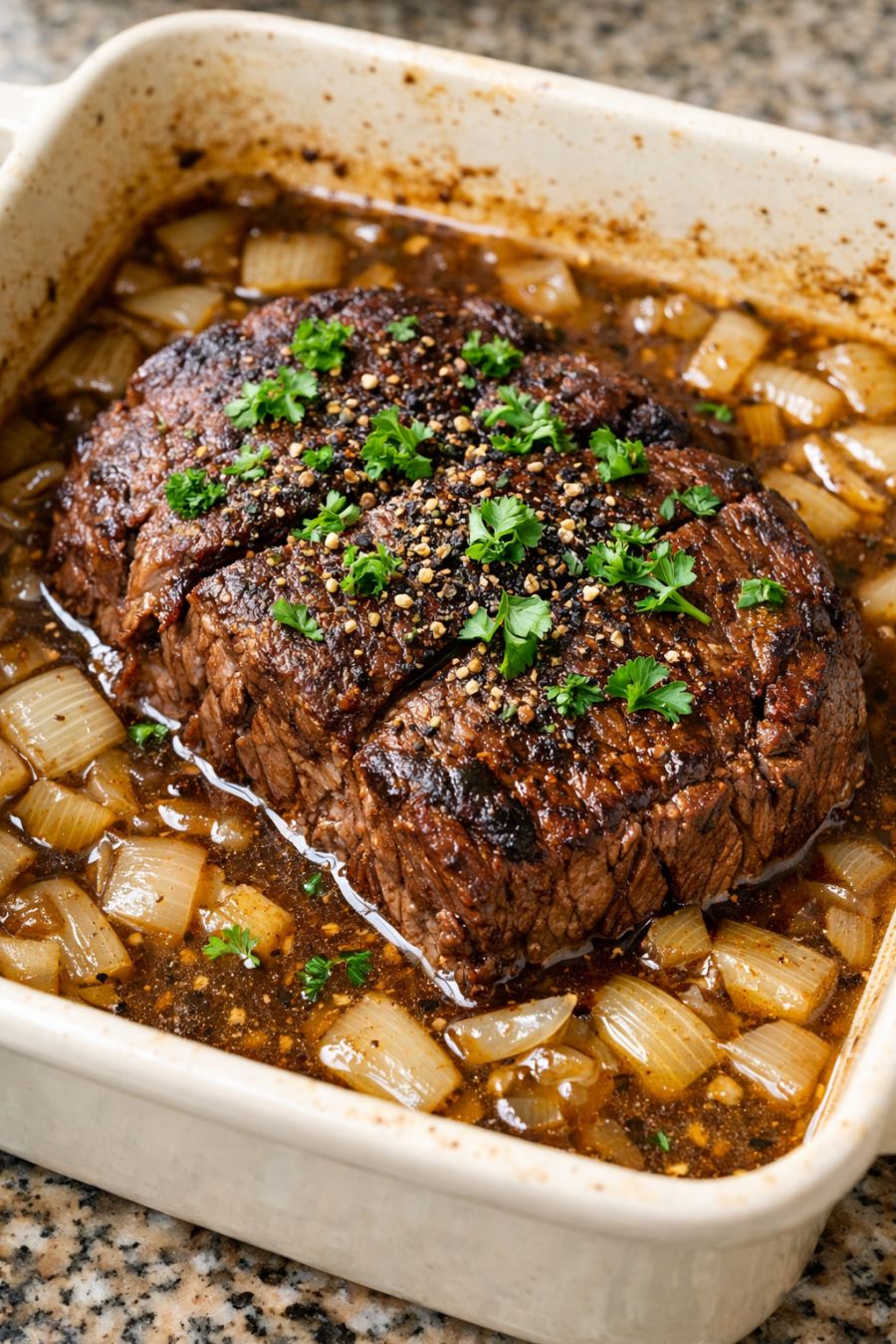
This 4-ingredient oven beef using raw beef chuck roast is the kind of no-fuss, big-reward dish I lean on when life is busy but I still want real, slow-cooked flavor. Chuck roast is a classic Midwestern cut—rich with connective tissue that melts into tenderness when given time and low heat. Here, we lean into that natural flavor and let the oven do the work: you literally toss the raw roast into a deep ceramic baking dish, add just three pantry-friendly items, cover, and walk away. What emerges is a deeply savory, spoon-tender beef that tastes like you hovered over the stove all afternoon, even though you barely lifted a finger.
Serve this fall-apart beef piled over creamy mashed potatoes, buttered egg noodles, or simple steamed rice to soak up the juices. A crisp green salad or roasted vegetables—think carrots, Brussels sprouts, or green beans—adds freshness and color to balance the richness. If you enjoy bread at the table, a crusty baguette or soft dinner rolls are perfect for mopping up every last bit of the savory pan juices. Leftovers make excellent sandwiches on toasted rolls with a swipe of mustard or horseradish.
4-Ingredient Oven Beef Chuck Roast
Servings: 6
Ingredients
1 (3 to 4 pound) beef chuck roast, raw
1 (1-ounce) packet dry onion soup mix
1 cup beef broth (low-sodium preferred)
2 tablespoons olive oil (or any neutral cooking oil)
Directions
Preheat your oven to 300°F (150°C). Place a rack in the center of the oven so there is room for a deep ceramic baking dish.
Set a deep ceramic baking dish (at least 3-quart capacity with a lid or foil cover) on the counter. Lightly drizzle 1 tablespoon of the olive oil into the bottom of the dish and swirl to coat.
Pat the raw beef chuck roast dry with paper towels. This helps it brown lightly in the oven and keeps the seasoning from sliding off.
Place the raw chuck roast directly into the center of the deep ceramic baking dish. This is your base—no searing needed.
Drizzle the remaining 1 tablespoon olive oil evenly over the top and sides of the roast, rubbing it in with clean hands or a spoon so the surface is lightly coated.
Sprinkle the dry onion soup mix evenly over the top of the roast, pressing gently so it adheres. Let some of the mix fall around the roast into the dish; it will season the juices as they cook.
Pour the beef broth around the sides of the roast into the bottom of the dish, avoiding rinsing the seasoning off the top. The liquid should come up the sides slightly but not cover the roast.
Cover the baking dish tightly with its lid. If your dish does not have a lid, cover it very snugly with a double layer of aluminum foil, crimping the edges to trap steam.
Transfer the covered dish to the preheated oven and bake for 3 to 3 1/2 hours, or until the beef is very tender and easily pulls apart with a fork. Avoid opening the dish during the first 2 1/2 hours so the steam and moisture stay inside.
Carefully remove the dish from the oven and uncover it away from your face to avoid the hot steam. Check the roast: it should be fork-tender. If it still feels firm, re-cover and return to the oven in 20–30 minute increments until tender.
Once tender, use two forks to gently pull the beef into large chunks or shreds right in the baking dish, mixing it with the savory juices and softened onion bits from the soup mix.
Taste the juices and adjust seasoning if needed with a pinch of salt or black pepper. Serve the beef hot, spooning some of the pan juices over each portion.
Variations & Tips
For a slightly richer flavor, you can swap half of the beef broth for dry red wine, keeping the total liquid to about 1 cup; this adds depth without complicating the recipe. If you prefer a thicker gravy-style sauce, remove the cooked beef to a plate, whisk 1 to 2 tablespoons of cornstarch into a small bowl with a splash of cold water, then stir that slurry into the hot pan juices and return the dish to the oven for 5–10 minutes until slightly thickened, stirring once or twice. To lean into more herbaceous notes, add a teaspoon of dried thyme or rosemary on top of the roast along with the soup mix (this technically adds another ingredient, so consider it optional rather than part of the core four). For a lighter option, use low-sodium broth and trim any large exterior fat from the roast before cooking; you can also chill the cooked juices, then skim off any solidified fat before reheating and serving. Food safety tips: Always start with a fully thawed roast—cooking from frozen in this covered, low-and-slow method can lead to uneven heating. Use a clean cutting board and utensils reserved for raw meat, and wash your hands thoroughly after handling the raw chuck roast. The internal temperature of the beef should reach at least 145°F (63°C), though for pull-apart tenderness it will typically be well above 190°F (88°C) by the time it is done. Refrigerate leftovers within 2 hours in shallow containers and use within 3 to 4 days, or freeze for up to 3 months, reheating until steaming hot before serving.
