
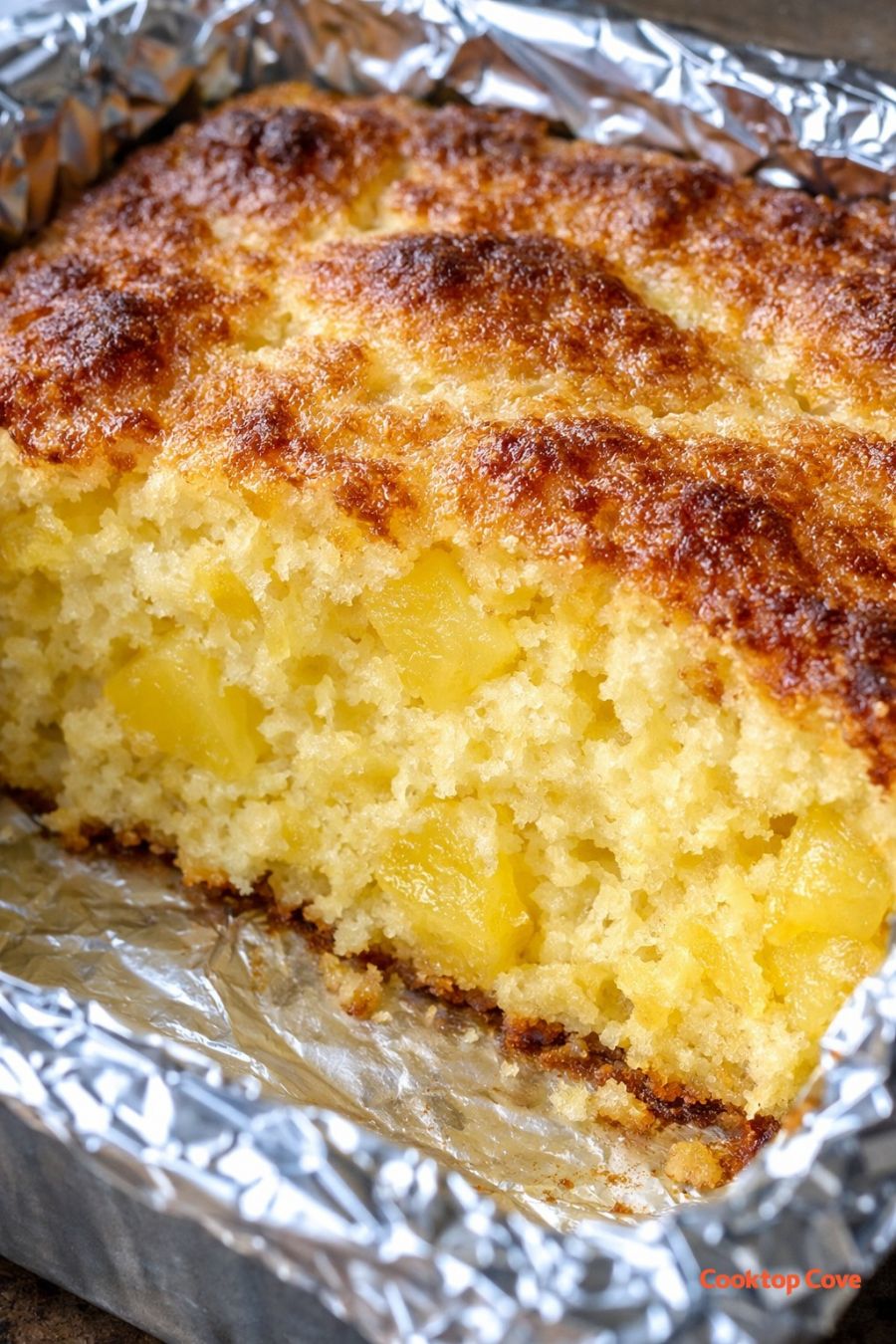
This 2-ingredient pineapple angel food cake is one of those almost-too-easy recipes that still feels a little bit magical. My grandmother swore by this sweet trick for spring potlucks and church suppers, and she was right—it bakes up incredibly fluffy, with juicy bits of pineapple and a golden, caramelized top that always disappears in minutes. All you need is a box of angel food cake mix and a can of crushed pineapple, and you’ll have a bright yellow, spongy, moist cake that looks and tastes like you fussed way more than you actually did—perfect for busy weeks when you still want to show up with something homemade.
Serve this pineapple angel food cake straight from the foil-lined pan, cut into squares so it’s easy to grab at potlucks, picnics, and office parties. It’s great at room temperature, but I love it slightly chilled from the fridge on a warm day. Pair it with a dollop of whipped cream or a scoop of vanilla or coconut ice cream, and maybe a handful of fresh berries for color. Coffee, iced tea, or a light sparkling drink all work really well alongside this cake because it’s sweet, fruity, and airy enough to not feel heavy after a big meal.
2-Ingredient Pineapple Angel Food Cake
Servings: 12
Ingredients
1 box (about 15–16 oz) angel food cake mix (one-step, just-add-water type)
1 can (20 oz) crushed pineapple in juice, undrained
Directions
Preheat your oven to 350°F (175°C). Line a 9x13-inch baking pan with aluminum foil, letting some foil hang over the edges to create handles. Lightly mist the foil with nonstick cooking spray to help prevent sticking.
In a large mixing bowl, pour in the dry angel food cake mix. Add the entire can of crushed pineapple, including all the juice—do not drain it.
Stir the pineapple and cake mix together by hand with a spatula or wooden spoon. The mixture will foam up and become very light and fluffy as the pineapple juice activates the angel food mix. Keep stirring just until everything is evenly combined and no dry pockets of mix remain.
Pour the batter into the prepared, foil-lined baking pan. Use the spatula to spread it gently into an even layer, smoothing the top as best you can. The batter will be airy and a bit bubbly, which is exactly what you want for that fluffy texture.
Bake on the center rack of the preheated oven for 28–35 minutes, or until the top is a deep golden brown, the edges look slightly caramelized, and the center springs back lightly when touched. A toothpick inserted in the middle should come out mostly clean or with a few moist crumbs.
Remove the pan from the oven and set it on a cooling rack. Let the cake cool completely in the pan; this helps it set up and keeps that spongy, moist texture without collapsing.
Once cooled, use the foil overhang to carefully lift the entire cake out of the pan onto a cutting board. Peel the foil away from the sides and bottom. Slice into squares with a sharp knife, wiping the blade between cuts for cleaner pieces. Serve plain or with your favorite toppings.
Variations & Tips
For a lighter presentation, dust the cooled cake with powdered sugar right before serving or top each square with a spoonful of light whipped topping and a few fresh berries. If you like extra texture, gently fold in 1/2 cup of shredded unsweetened coconut or finely chopped maraschino cherries along with the pineapple, being careful not to deflate the batter too much. You can also bake the batter in a well-greased or parchment-lined muffin tin for individual mini cakes; start checking for doneness around 18–20 minutes. For a more tropical flavor, add a teaspoon of coconut extract or a squeeze of lime juice to the batter. Food safety tips: Make sure the cake bakes fully in the center—underdone batter will look wet and can collapse. Always cool the cake completely before tightly covering or storing to prevent excess moisture and spoilage. Store leftovers covered in the refrigerator for up to 3 days, and avoid leaving the cake out at room temperature for more than 2 hours if you’ve topped it with whipped cream or dairy-based toppings. Use only canned pineapple in juice (not fresh pineapple), because fresh pineapple contains enzymes that can interfere with the cake’s ability to set properly.
