
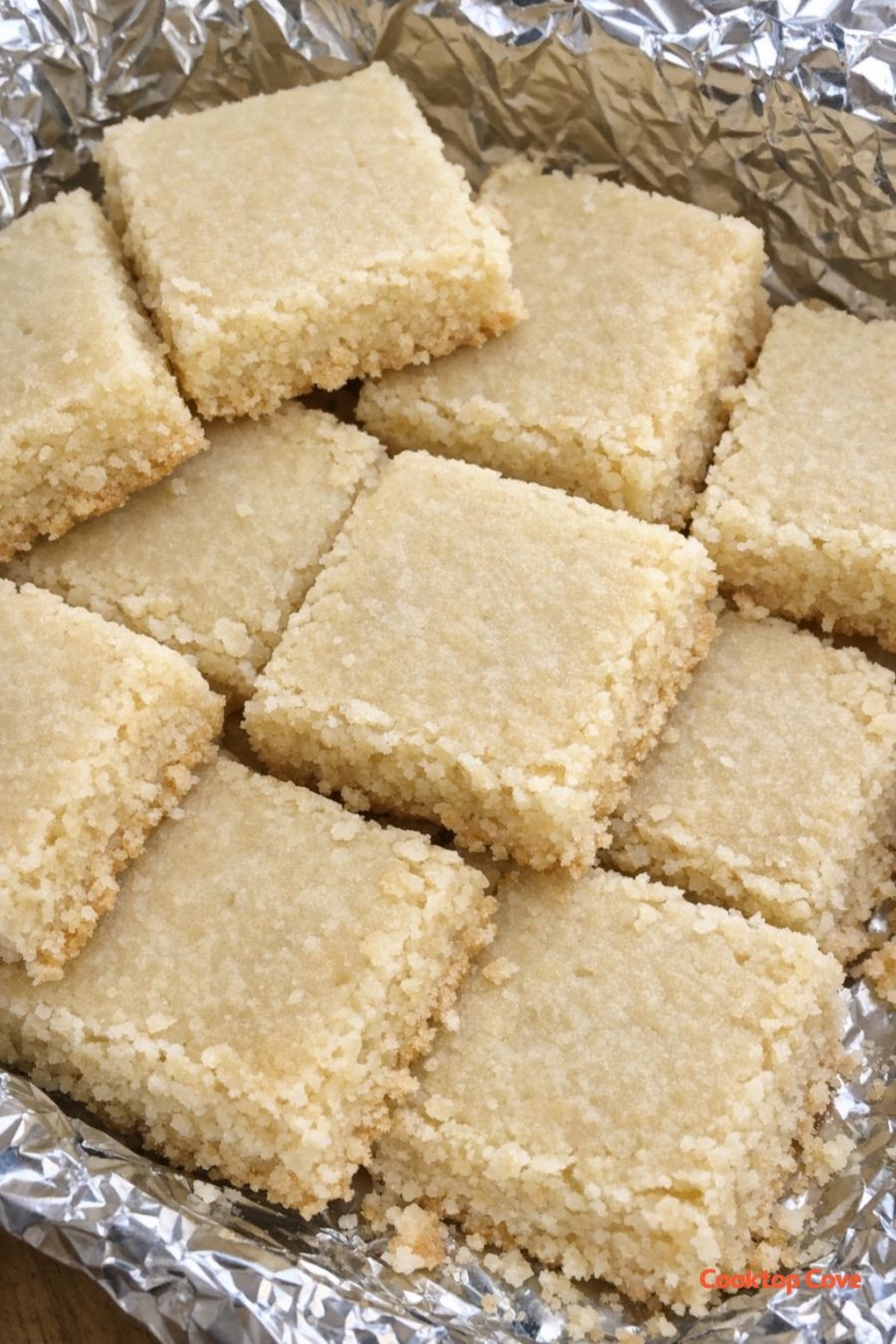
This 3-ingredient shortbread cookie recipe is the one my mom always whipped up for us growing up. She’d press the pale dough into a foil-lined pan, bake it until just golden at the edges, and cut it into neat little squares once it cooled. It’s the most requested treat at all our family get-togethers—simple, buttery, and full of those cozy memories that make a dessert feel like home. You don’t need any special equipment or fancy ingredients, just a few pantry staples and a little patience while they bake.
These shortbread squares are lovely on their own with a cup of coffee, tea, or a cold glass of milk. For a family party, I like to pile them back into the foil-lined pan or onto a platter and tuck in a few fresh berries or sliced strawberries around the edges. They also work beautifully on a holiday cookie tray, next to something chocolatey or a tart fruit dessert. If you’re serving kids, set out small bowls of sprinkles, mini chocolate chips, or jam so they can top their own pieces and make it feel extra special.
3-Ingredient Shortbread Cookies
Servings: 16
Ingredients
1 cup (2 sticks / 226 g) unsalted butter, softened to room temperature
1/2 cup (100 g) granulated sugar
2 cups (240 g) all-purpose flour
Directions
Line an 8x8-inch (20x20 cm) baking pan with aluminum foil, letting the foil hang over the sides to create handles. Lightly grease the foil with a thin layer of butter or nonstick spray. This is how my mom always did it so the cookies could be lifted out and served right in the foil-lined pan.
Preheat your oven to 325°F (165°C). Give it a full preheat so the shortbread bakes evenly and keeps its pale golden color.
In a medium mixing bowl, beat the softened butter and granulated sugar together with a wooden spoon or hand mixer until the mixture looks creamy and slightly fluffy, about 1–2 minutes. Scrape down the sides of the bowl as needed.
Add the all-purpose flour to the bowl and mix gently until the dough comes together into a soft, crumbly ball. It may look dry at first, but keep pressing and folding with a spoon or your hands until there are no dry patches of flour. The dough should hold together when squeezed.
Transfer the dough to the prepared foil-lined pan. Crumble it in evenly, then use clean hands or the bottom of a measuring cup to press it firmly and evenly into the pan. Take a moment to smooth the surface so it looks level and neat—this gives you those classic smooth-topped squares.
Using a fork, gently prick the surface of the dough all over. This helps the steam escape and keeps the shortbread from puffing up too much as it bakes.
Place the pan in the preheated oven and bake for 28–35 minutes, or until the shortbread is set and the edges are just turning a light golden color. The top should still look pale and matte, not shiny. Every oven is a little different, so start checking around 25 minutes.
Remove the pan from the oven and place it on a cooling rack. While the shortbread is still warm and soft, use a sharp knife to lightly score the surface into 16 squares (4 rows by 4 rows). Don’t cut all the way through yet—just mark the lines. This makes it much easier to cut cleanly later.
Let the shortbread cool completely in the pan until firm, about 1–2 hours. Once cooled, use the foil overhang to lift the whole slab out of the pan and onto a cutting board. Follow your scored lines to cut all the way through into neat squares with a sharp knife.
Transfer the finished shortbread squares back into the foil-lined pan or onto a foil-lined serving platter, keeping them close together so you get that cozy, full-pan look. Serve at room temperature and store any leftovers in an airtight container at room temp for up to 5 days.
Variations & Tips
To make these shortbread cookies feel special for different occasions, you can add small touches without losing the simple, 3-ingredient heart of the recipe. For picky eaters, leave them plain and buttery—this is usually the biggest hit with kids. If you’d like to dress them up a bit, you can very lightly dust the cooled squares with powdered sugar or drizzle a small amount of melted chocolate over the top, letting it set before serving. Around the holidays, my family sometimes presses the dough into the pan, then gently sprinkles a handful of colored sugar on top before baking for a festive look. If you want a subtle flavor change, you can swap 1–2 tablespoons of the flour for cocoa powder for a light chocolate shortbread, or stir in a pinch of salt or vanilla extract, though that will technically add extra ingredients beyond the basic three. For a slightly crisper edge, bake toward the longer end of the time range, watching closely so the cookies stay pale golden and don’t brown too much. Food safety tips: Use clean hands and utensils when mixing and pressing the dough, and make sure the butter is fresh and has been stored properly in the refrigerator before softening at room temperature. Do not leave the dough or baked cookies in a hot or sunny spot for long periods; store cooled cookies in an airtight container at room temperature, away from moisture and strong odors. If baking with young helpers, keep them back from the hot oven and handle the pan and foil yourself to avoid burns.
