
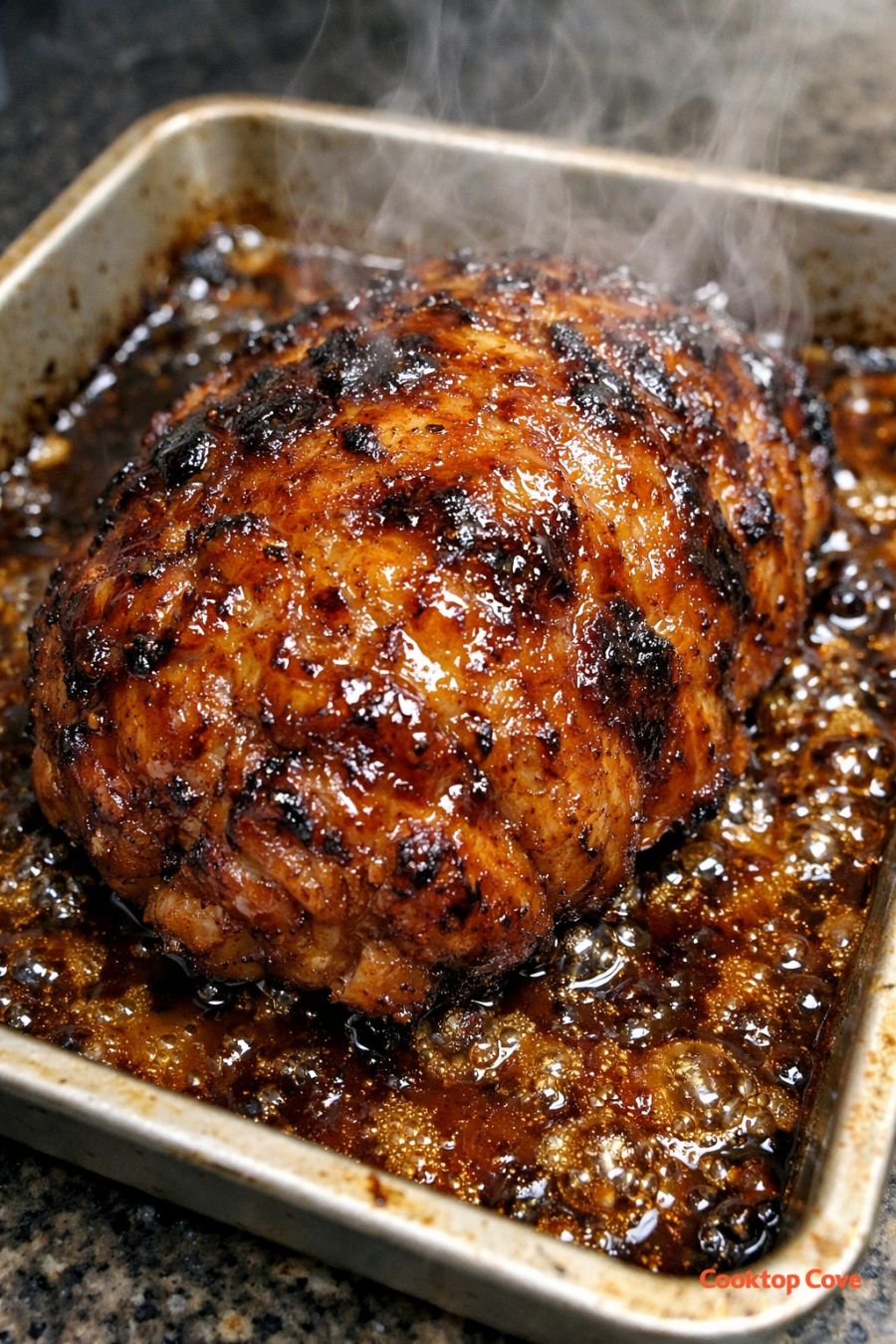
This little Early June Delight is the kind of supper I lean on when the garden is just waking up but the days are already too long and busy to fuss much in the kitchen. It’s just three ingredients and the oven does nearly all the work, leaving you with a glistening, charred-around-the-edges roast bathed in a bubbling amber glaze. It reminds me of the simple baked meats my mother used to slide into the oven before heading out to the fields—no fancy steps, just a reliable, comforting roast that perfumes the whole house and feels like home when you pull it from the oven.
I like to serve this roast sliced thick with a scoop of buttery mashed potatoes or plain boiled new potatoes, so they can soak up that sweet-salty caramelized glaze. Early June peas, green beans, or a simple lettuce salad from the garden make a fresh, crisp partner for the rich meat. If you’re keeping it extra simple, warm dinner rolls or thick slices of country bread are perfect for mopping the pan juices, and a dish of applesauce or coleslaw on the side keeps the plate feeling light and balanced.
3-Ingredient Early June Delight Roast
Servings: 6
Ingredients
3 to 3 1/2 lb boneless pork shoulder roast (or Boston butt, well-marbled)
1 cup thick brown sugar–based barbecue sauce
1/2 cup packed light brown sugar
Directions
Preheat your oven to 325°F (165°C). Set a rack in the center of the oven. Choose a metal baking pan or rimmed baking sheet just big enough to hold the roast with a little space around it; this helps the glaze bubble and caramelize instead of steaming.
Pat the pork shoulder dry with paper towels and place it in the center of the metal baking pan, fat side up. The fat cap will baste the meat as it cooks and help create that glistening, charred finish.
In a small bowl, stir together the barbecue sauce and brown sugar until you have a thick, glossy mixture. It should look like a rich, pourable caramel. Spoon or pour this mixture evenly over the top and sides of the pork, coating it as well as you can. Don’t worry if some of it slides off into the pan—that will become your sticky amber glaze.
Cover the pan tightly with heavy-duty aluminum foil, sealing the edges well so the steam stays in. Slide the pan into the preheated oven and bake, covered, for 2 1/2 hours. During this time the roast will gently cook and tenderize in its own juices and the sweet sauce.
After 2 1/2 hours, carefully remove the pan from the oven and peel back the foil away from you to avoid the hot steam. The meat should be mostly tender but not yet deeply browned. Spoon some of the pan juices and glaze back over the top of the roast.
Increase the oven temperature to 375°F (190°C). Return the uncovered roast to the oven and continue baking for 30 to 45 minutes, basting once or twice with the bubbling sauce. Watch during the last 10 minutes: you want the top and edges to look deeply browned, slightly charred in spots, and covered in a thick, caramelized amber glaze, but not burned.
When the roast is dark, glossy, and a little charred at the high points, and an instant-read thermometer inserted into the thickest part reads at least 190°F (88°C) for pull-apart tenderness, remove the pan from the oven. Let the roast rest in the pan, loosely tented with foil, for 15 to 20 minutes so the juices can settle.
Transfer the roast to a cutting board. Slice or pull the meat into chunks, then spoon some of the thick, sticky pan glaze over the top to make it shine. Serve right away, passing any extra glaze from the pan at the table for drizzling.
Variations & Tips
You can swap the pork shoulder for a similarly sized boneless beef chuck roast; it will cook in about the same time and give you a rich, beefy twist under that same amber glaze. For a slightly lighter option, use a pork loin roast and shorten the covered baking time to about 1 1/2 hours before uncovering to brown; just know it won’t be quite as fall-apart tender as shoulder. If you prefer more tang than sweetness, replace a few tablespoons of the brown sugar with apple cider vinegar, or stir in a spoonful of Dijon mustard to the sauce-sugar mixture before pouring it over the meat. Add a little crushed red pepper or hot sauce if your family likes a gentle kick. For easier cleanup, you can line the metal pan with heavy-duty foil, but keep it metal so the bottom can get hot enough to caramelize the glaze properly. Food safety tips: Always start with a fresh, cold roast kept refrigerated until you’re ready to cook. Wash your hands, cutting board, and any utensils that touch the raw meat with hot, soapy water before using them for anything else. Use an instant-read thermometer to be sure the pork reaches at least 145°F (63°C) internally for safety, though for this style of tender roast I prefer 190°F or higher. Refrigerate leftovers within 2 hours of cooking and reheat them thoroughly until steaming hot before eating.
