
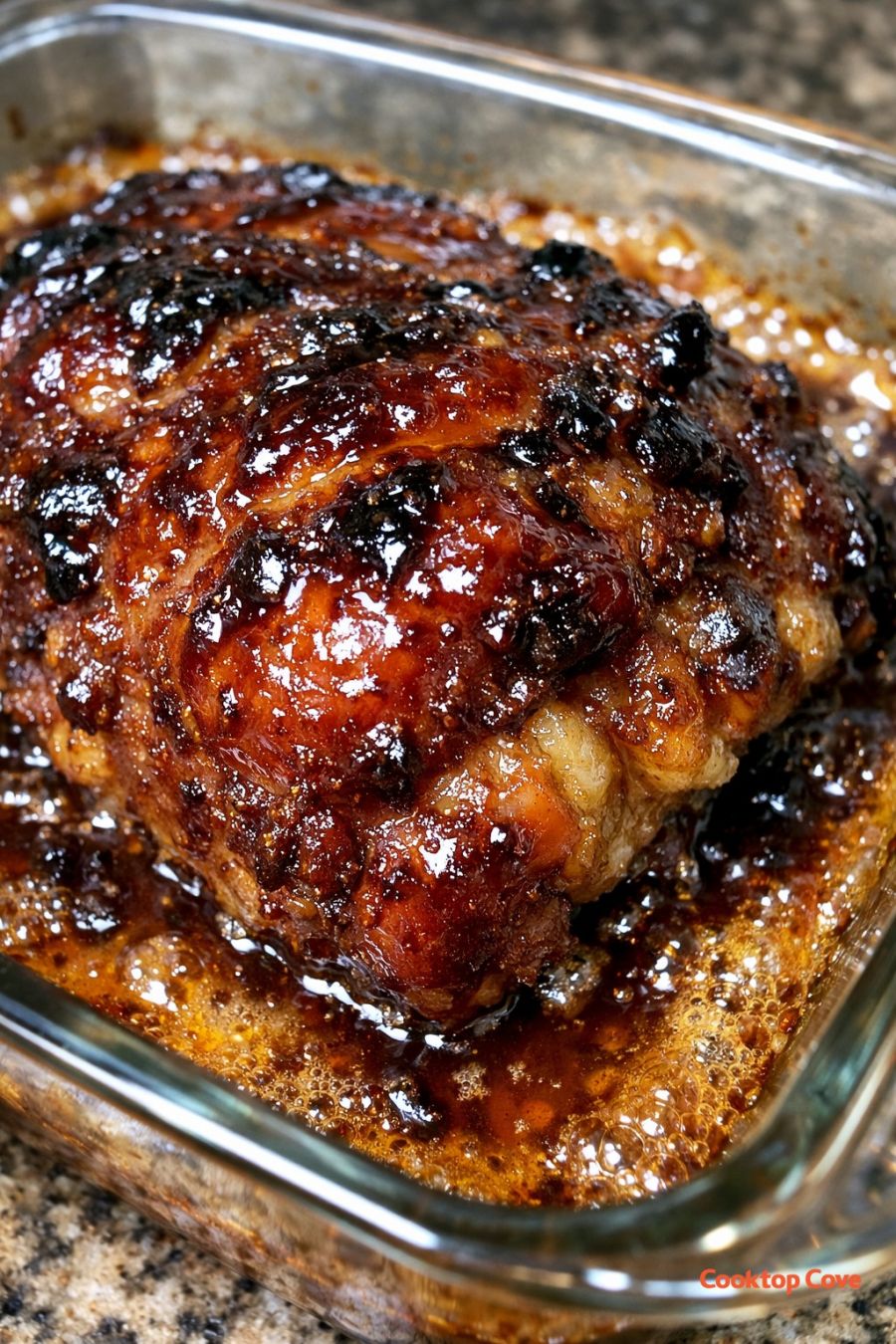
This is my super simple, very retro “June Evening Bake” chicken: just three ingredients, all tossed into a glass baking dish hours before dinner so the oven does the work while you sit on the porch and watch the sun go down. It’s inspired by those 1960s church cookbook casseroles where a bottle of something sweet and sticky meets a packet of something savory and magically turns into a glossy, bubbling glaze. The chicken comes out deeply caramelized, with that old-school, heavily glazed look that makes the whole dish shimmer in the pan.
I like to spoon this sticky, glazed chicken over plain white rice or buttered egg noodles so all the extra sauce has somewhere to go. A crisp green salad or cold cucumber-tomato salad balances the sweetness and makes the plate feel lighter for a warm summer night. If you’re grilling veggies outside anyway, this chicken is great alongside grilled corn or asparagus. For a true porch-supper vibe, add a basket of soft dinner rolls or store-bought biscuits to swipe through the amber, bubbly edges of the glaze.
3-Ingredient June Evening Porch Chicken
Servings: 4
Ingredients
2 to 2 1/2 pounds bone-in, skin-on chicken thighs (about 6–8 pieces), patted dry
1 (12-ounce) bottle thick, sweet barbecue sauce (any classic, not “thin and vinegary” style)
1 (1-ounce) packet dry onion soup mix
Directions
Lightly grease a 9x13-inch glass baking dish so the glaze doesn’t weld itself to the corners. Pat the chicken thighs very dry with paper towels so the skin can render and the glaze clings instead of sliding off.
In a medium bowl, whisk together the barbecue sauce and the dry onion soup mix until the soup mix is evenly distributed and the sauce looks speckled and slightly thickened.
Arrange the chicken thighs in a single layer in the glass baking dish, skin side up, leaving a little space between pieces so the heat can circulate.
Pour the barbecue-onion mixture evenly over the chicken, using a spoon or spatula to coat every piece and tuck some of the sauce under the chicken so it can bubble up around the sides.
Cover the dish tightly with foil and refrigerate for at least 1 hour and up to 6 hours if you want dinner handled ahead of time. The longer rest helps the flavors soak in a bit and makes this perfect for assembling earlier in the day before you head out to the porch.
When you’re ready to bake, remove the dish from the fridge and let it sit at room temperature while you preheat the oven to 375°F (190°C). This takes the chill off the glass and helps the chicken cook more evenly.
Bake the chicken, still covered with foil, for 30 minutes. This lets the chicken cook through gently while the fat starts to render into the sauce.
Carefully remove the foil (watch for hot steam), baste the chicken with some of the sauce from the pan, and return the dish to the oven uncovered. Bake for another 25 to 35 minutes, basting once more if you like, until the chicken is cooked through (internal temperature reaches 165°F/74°C in the thickest part without touching bone) and the glaze is thick, glossy, and bubbling with caramelized, amber edges.
If you want extra-deep color and a more dramatic, heavily glazed look like a vintage cookbook photo, switch the oven to broil on high for 2 to 4 minutes at the very end, watching closely so the sugars in the sauce don’t burn. The glaze should be sticky and lacquered, with little bubbles of rendered fat around the sides of the glass dish.
Let the chicken rest in the hot pan for about 5 to 10 minutes before serving so the juices settle and the glaze thickens even more. Spoon the glossy sauce from the bottom of the dish over the chicken and serve straight from the glass casserole to keep that cozy, 1960s summer-porch feel.
Variations & Tips
You can swap chicken thighs for drumsticks or a mix of bone-in, skin-on pieces; just keep the total around 2 to 2 1/2 pounds and adjust baking time slightly if pieces are very large. If you prefer a less sweet glaze, use half barbecue sauce and half tomato sauce or crushed tomatoes, keeping the onion soup mix the same. For a smokier, more old-school flavor, choose a hickory or mesquite barbecue sauce. If your sauce is very thick, you can thin it with 1 to 2 tablespoons of water so it spreads more easily, but don’t overdo it or the glaze won’t cling and caramelize. To make cleanup easier, you can line just the bottom of the glass dish with a thin smear of oil, but avoid parchment or foil under the chicken if you want that bubbling, amber edge against the glass. Food safety tips: Always keep raw chicken refrigerated until you’re ready to bake, and don’t marinate at room temperature. After the initial chill, don’t leave the raw chicken in the fridge for more than about 6 hours with this sweet glaze, as sugar and salt can start to change the texture. Use a clean spoon each time you baste to avoid cross-contamination, and never reuse leftover marinade or pan juices from raw chicken unless they’ve been fully cooked in the oven. Check that the thickest part of each piece reaches at least 165°F (74°C); if some pieces are done sooner, you can pull them out and keep them loosely tented with foil while the rest finishes. Leftovers should be cooled quickly, refrigerated within 2 hours, and eaten within 3 to 4 days, reheating until steaming hot before serving.
