
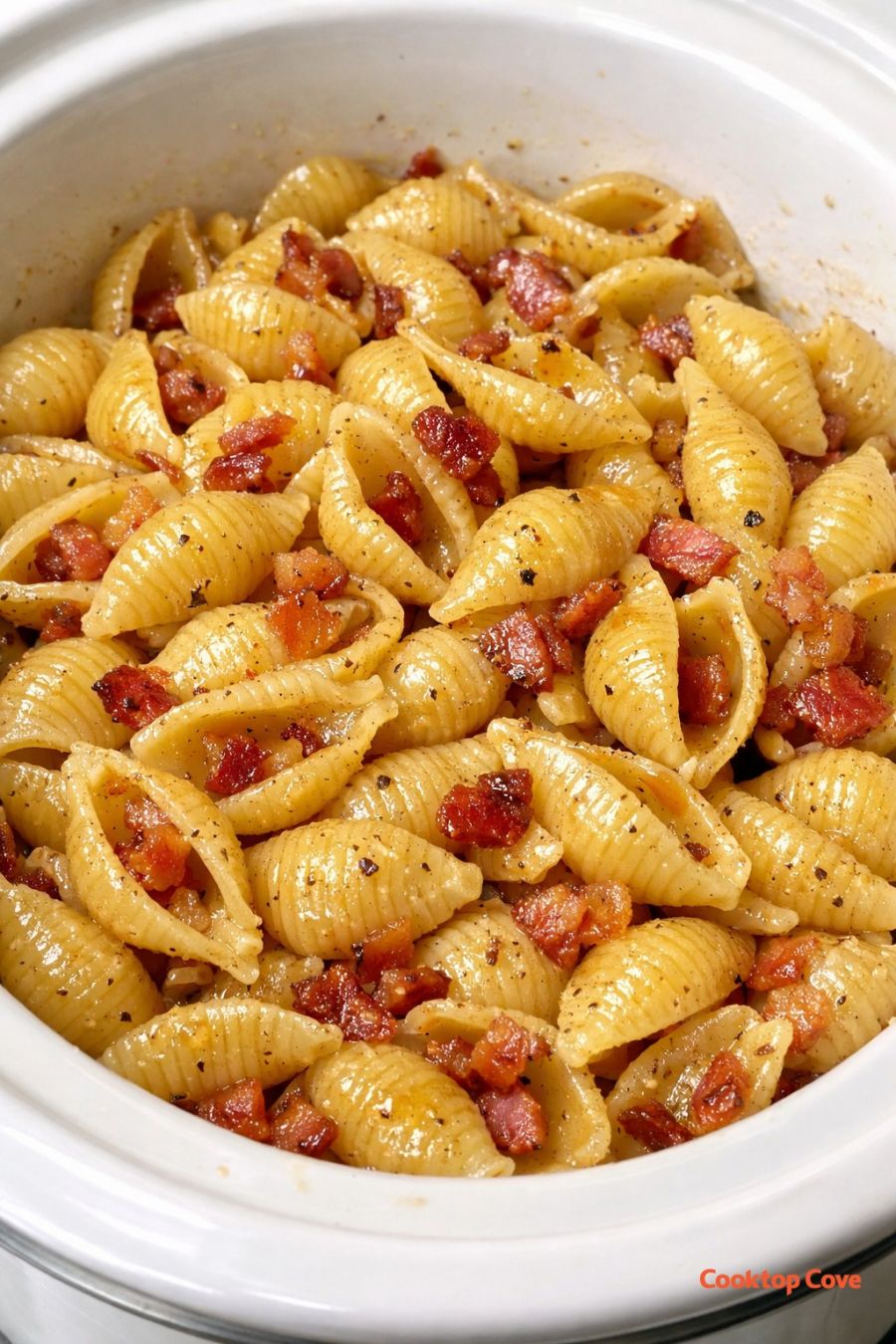
This is the kind of thing my grandma would pull together on a Friday night when the week’s money had run thin but she still wanted something that felt like a treat. She’d save every spoonful of bacon drippings in a jar by the stove, then stretch a handful of pantry pasta into a silky, stick-to-your-ribs supper. The slow cooker does the gentle work here, letting the rendered bacon fat melt into the shells until every curve is shiny and golden, with little crispy bits and black pepper speckling the whole pot. It’s humble, it’s filling, and it tastes like the kind of comfort that got a lot of Midwestern families through hard times.
Serve these bacon fat shells straight from the slow cooker while they’re still glossy and warm, with a big spoon so folks can scoop down to the crispy bits at the bottom. A simple side of canned green beans or frozen peas warmed in a little butter keeps with the spirit of lean pantry cooking. If you have it, a basic lettuce salad with vinegar and oil cuts through the richness nicely. Plain white bread or dinner rolls are perfect for wiping up the silky fat left on the plate, and a glass of cold milk or iced tea fits the old-fashioned farmhouse table just right.
Slow Cooker Poor Man Bacon Fat Shells
Servings: 4
Ingredients
8 oz medium pasta shells (about 2 1/2 cups dry)
1 cup rendered bacon fat, cooled but still pourable (or gently warmed to liquefy)
1 1/2 cups water
1 tsp kosher salt (or 1/2 tsp table salt), plus more to taste
1 tsp freshly ground black pepper, divided
Directions
Set a small slow cooker (2–4 quart size works best) on LOW. If your bacon fat has solidified, gently warm it on the stove or in the microwave until just melted but not sizzling.
Pour the rendered bacon fat into the slow cooker crock. Add the water, salt, and about half of the black pepper. Stir gently to combine; it will look cloudy at first, which is just fine.
Add the dry pasta shells to the slow cooker and stir until every shell is coated in the bacon fat and water mixture. Try to press the shells down so they’re mostly submerged; some may float a bit, but they’ll soften as they cook.
Cover the slow cooker with the lid and cook on LOW for 1 hour. Do not open the lid during this first hour so the heat and steam can stay trapped inside and soften the shells evenly.
After 1 hour, lift the lid and stir the shells well, scraping along the bottom and sides to make sure nothing is sticking. The shells will be partially cooked and the mixture will look loose and shiny.
Continue cooking on LOW for another 30–45 minutes, stirring every 15 minutes. As the pasta finishes cooking, it will absorb some of the water and fat, and the mixture will thicken into a glossy, silky coating on each shell. If the shells are still too firm and the pot looks dry, add a splash of hot water (2–3 tablespoons at a time), stir, and keep going until the pasta is just tender.
When the shells are cooked to your liking and coated in a rich, golden sheen, turn off the slow cooker. Taste and adjust salt if needed. Stir in the remaining black pepper, letting some of it stay visible on the shells for that old-fashioned speckled look.
Let the pasta sit uncovered in the warm slow cooker for 5–10 minutes. This short rest helps the sauce cling even more tightly to the shells and allows any tiny bacon bits in the fat to settle and crisp slightly against the warm crock.
Serve the bacon fat shells straight from the slow cooker while hot and glossy, making sure each spoonful includes some of the fat pooled at the bottom for the silkiest texture.
Variations & Tips
If you’re lucky enough to have real bacon bits left in your rendered fat, don’t strain them out; they’ll settle and crisp a little in the slow cooker, giving you those tiny, salty nuggets scattered throughout the shells. If your fat is very clean, you can mimic grandma’s style by finely chopping 1–2 strips of cooked bacon and stirring them in during the last 10–15 minutes of cooking. For a slightly lighter version, replace 1/4 cup of the bacon fat with water, then stir in a spoonful of the reserved fat at the end until the shells shine. You can also add a small pinch of garlic powder or onion powder with the salt for a little extra depth without straying too far from the three-ingredient spirit. For those who like a bit of heat, a pinch of crushed red pepper stirred in at the end plays nicely with the smokiness of the fat.
Food safety tips: Always store rendered bacon fat in a covered container in the refrigerator, not on the counter. Strain out any large food particles before chilling to help it keep longer. If the fat smells sour or off, or shows signs of mold, discard it. When reheating leftovers, warm them thoroughly until steaming hot, and refrigerate any cooled leftovers within 2 hours of cooking. Because this dish is rich, serve modest portions and keep it as an occasional comfort meal, especially for anyone watching their saturated fat intake.
