
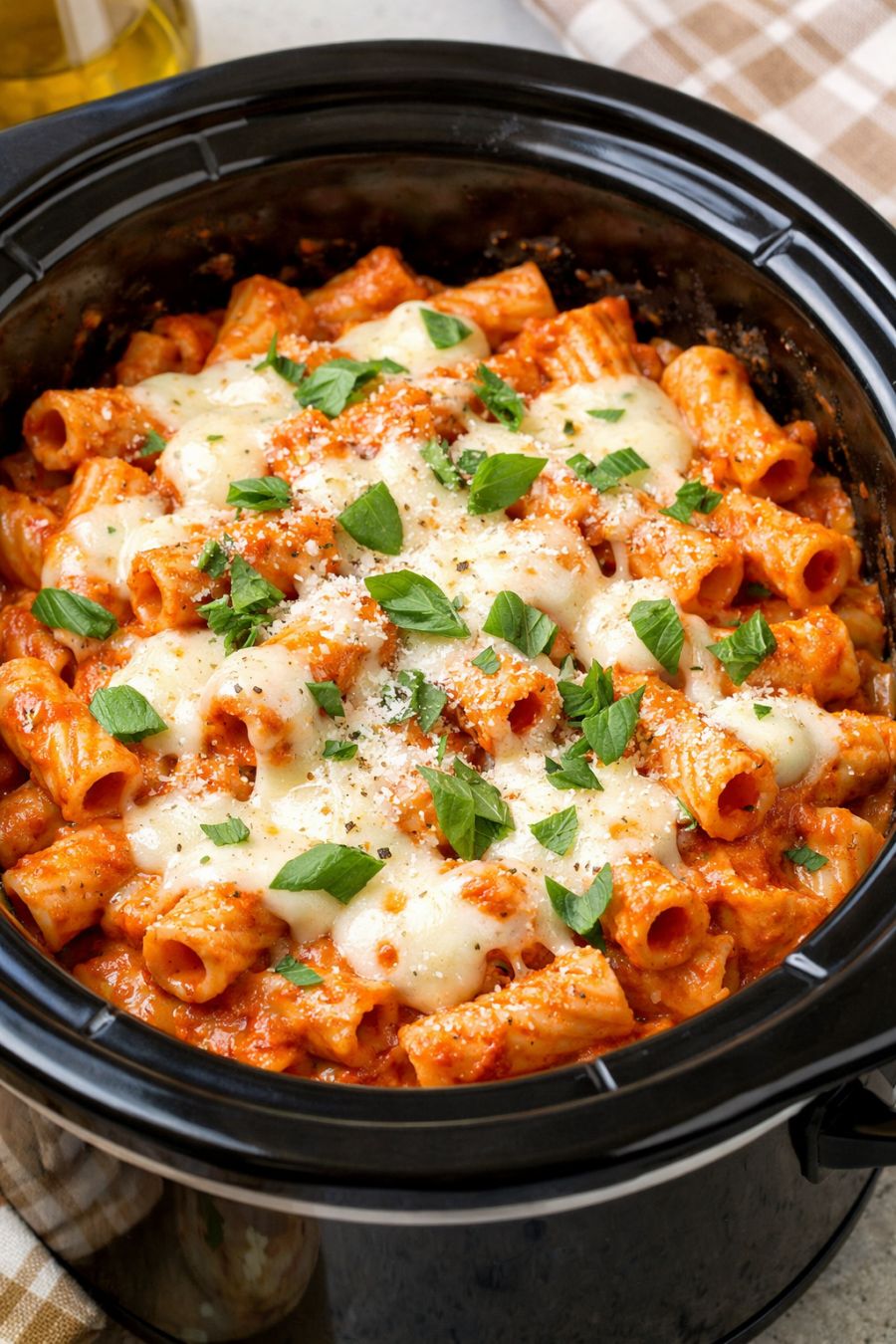
This slow cooker tortiglioni is the kind of easy, stick-to-your-ribs dish I lean on when the day is busy and the family still expects a hot, comforting supper. It starts just the way the headline promises: you pour dry tortiglioni straight into the slow cooker, then add only four more familiar ingredients. This style of one-pot pasta isn’t something my mother had a slow cooker for back on the farm, but the spirit is the same as those old Midwestern bake-and-forget casseroles—simple pantry staples, cozy flavors, and a pot that practically cleans itself because everyone scrapes up every last bite.
Serve this creamy tortiglioni straight from the slow cooker with a green salad dressed in a simple vinaigrette to cut through the richness, and a side of garlic toast or buttered rolls to mop up the sauce. A dish of steamed green beans or peas fits that classic Midwestern table nicely. If you like, sprinkle a little extra shredded cheese on top right before serving and let it melt under the lid for a minute or two, then carry the slow cooker right to the table so folks can help themselves.
Slow Cooker 5-Ingredient Tortiglioni
Servings: 6
Ingredients
1 pound dry tortiglioni pasta
4 cups low-sodium chicken broth
2 cups jarred marinara or pasta sauce
1 cup heavy cream
2 cups shredded mozzarella cheese, divided
Directions
Lightly grease the inside of a 5- to 6-quart slow cooker with a bit of oil or nonstick spray so the pasta is less likely to stick along the edges.
Pour the dry tortiglioni evenly across the bottom of the slow cooker, just as you see in those process photos where the uncooked pasta is scattered in a single layer.
In a large bowl or measuring pitcher, whisk together the chicken broth, marinara sauce, and heavy cream until well blended. This mixture will be thin, but the pasta will soak it up as it cooks.
Pour the broth, sauce, and cream mixture over the dry tortiglioni, stirring gently to be sure all the pasta is moistened and none is left completely dry on top. Smooth the pasta back into an even layer.
Sprinkle 1 cup of the shredded mozzarella evenly over the top of the pasta mixture. Reserve the remaining 1 cup of mozzarella in the refrigerator for later.
Cover the slow cooker with the lid and cook on LOW for 2 to 3 hours, stirring once about halfway through. Cooking times can vary by slow cooker, so begin checking for doneness around the 2-hour mark. The pasta should be tender but not mushy, and the sauce should be creamy and slightly thickened.
When the tortiglioni is just tender, sprinkle the remaining 1 cup of mozzarella over the top. Cover again and let it cook on LOW for another 5 to 10 minutes, just until the cheese is melted and gooey.
Taste and adjust seasoning if needed; depending on your broth and sauce, you may want a pinch of salt or black pepper. Stir gently to mix some of the melted cheese into the pasta while leaving a bit on top for a stretchy layer.
Turn the slow cooker to WARM and serve the tortiglioni straight from the pot, making sure each scoop gets plenty of sauce and cheese.
Variations & Tips
For a little extra heartiness, you can stir in up to 2 cups of cooked, crumbled Italian sausage or ground beef along with the dry pasta, as long as it is fully cooked and drained first; this keeps the recipe safe and prevents excess grease from breaking the sauce. If you prefer a lighter dish, you can swap half-and-half for the heavy cream, understanding the sauce will be a bit thinner. A vegetarian version is simple: use vegetable broth instead of chicken and choose a marinara sauce without meat. For a touch of that old-fashioned Midwestern flair, sprinkle a handful of grated Parmesan over the top along with the last addition of mozzarella. If your slow cooker runs hot, check the pasta early to avoid overcooking—it should be just tender when you add the final cheese. Always keep perishable ingredients like cream and cheese refrigerated until you are ready to use them, and refrigerate leftovers within 2 hours of cooking; reheat thoroughly until steaming hot before serving again, adding a splash of broth or milk if the pasta has absorbed too much sauce.
