
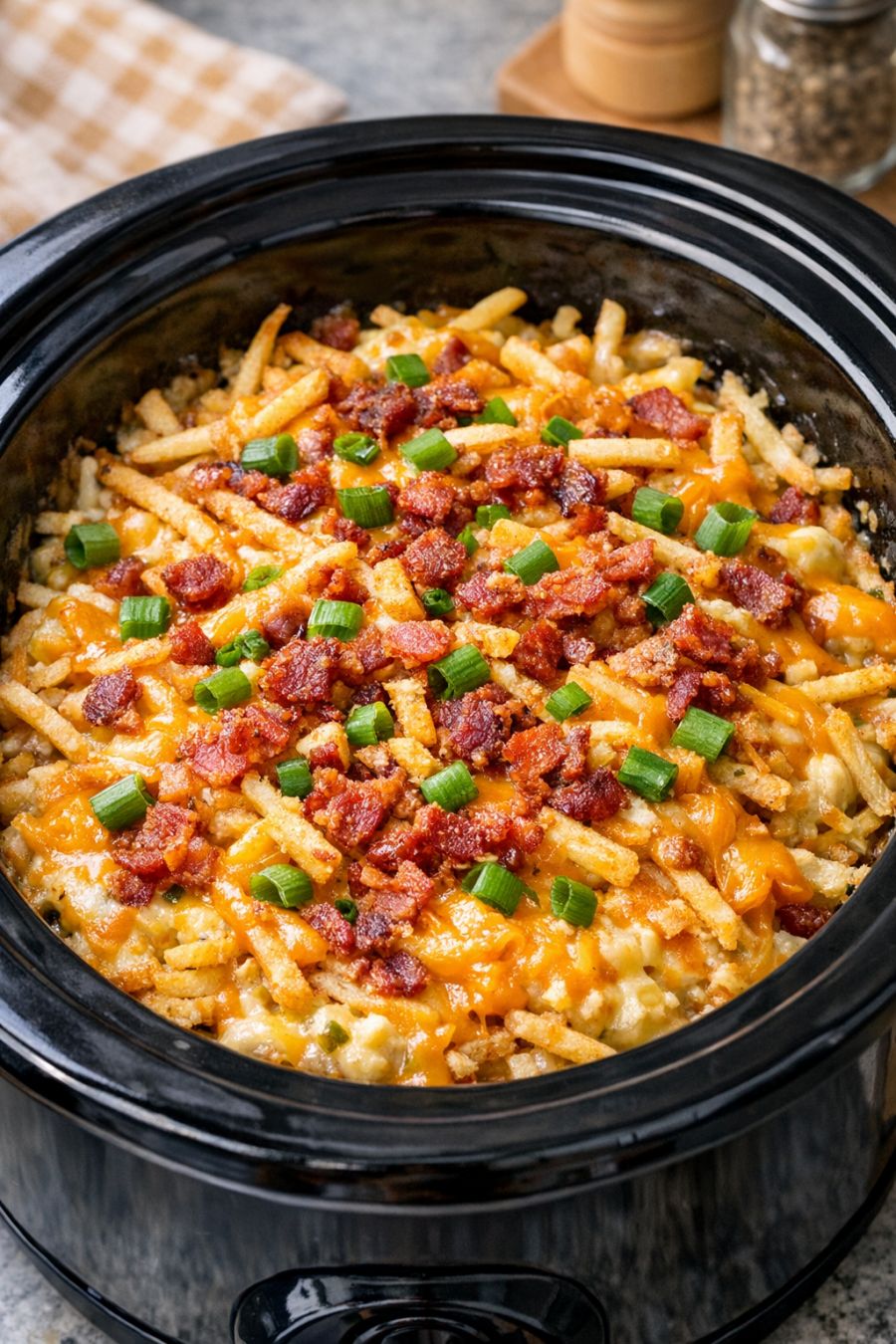
This slow cooker jubilee side dish is one of those almost-too-easy recipes that still feels a little bit magical. You literally pour frozen shoestring fries into the slow cooker, add four pantry-friendly ingredients, and let low, gentle heat transform everything into a creamy, savory, almost gratin-style potato dish. It leans on the American love affair with casseroles and convenience foods from the mid-20th century—think church potlucks and holiday buffets—updated just enough for a modern kitchen. The result is a comforting, crowd-pleasing side that tastes like you fussed, even though you barely lifted a finger.
Serve this slow cooker jubilee fries casserole alongside roasted or grilled meats, baked ham, or rotisserie chicken. It’s especially good on a holiday or Sunday table next to green beans, a crisp salad, or roasted Brussels sprouts to balance the richness. The texture is soft and creamy, so pair it with something that has a bit of crunch—like a slaw or simple cucumber salad. Leftovers also reheat well and make a cozy base for a fried egg or leftover chili spooned over the top.
Slow Cooker Jubilee Fries Casserole
Servings: 6
Ingredients
1 (28–32 oz) bag frozen shoestring fries
1 (10.5 oz) can condensed cream of chicken soup
1 cup sour cream
1 1/2 cups shredded sharp cheddar cheese, divided
1 teaspoon garlic powder
1/2 teaspoon kosher salt (optional, to taste)
1/4 teaspoon black pepper (optional, to taste)
Nonstick cooking spray, for the slow cooker
Directions
Lightly coat the inside of a 4- to 6-quart slow cooker with nonstick cooking spray. This helps keep the potatoes from sticking and makes cleanup easier.
Pour the frozen shoestring fries straight into the bottom of the slow cooker, spreading them into an even layer. There’s no need to thaw them; they should be added straight from the freezer for the best texture.
In a medium bowl, whisk together the condensed cream of chicken soup, sour cream, 1 cup of the shredded cheddar cheese, garlic powder, salt (if using), and black pepper until smooth and well combined.
Pour the soup and cheese mixture evenly over the frozen fries in the slow cooker. Use a spatula to gently nudge the mixture so it settles down into the fries, but don’t worry about coating every strand—things will meld as they cook.
Cover the slow cooker with the lid and cook on LOW for 4 to 5 hours, or on HIGH for 2 to 3 hours, until the fries are very tender and the mixture is bubbly around the edges. Avoid lifting the lid frequently, as that releases heat and slows cooking.
Once the fries are tender and the sauce is hot and creamy, sprinkle the remaining 1/2 cup shredded cheddar cheese evenly over the top. Cover and cook for an additional 10 to 15 minutes, just until the cheese is melted.
Turn off the slow cooker and let the casserole stand, covered, for about 5 to 10 minutes to set slightly before serving. Scoop the jubilee fries casserole straight from the pot and serve warm.
Variations & Tips
You can take this basic slow cooker jubilee fries casserole in several directions without changing the core idea of frozen shoestring fries plus four simple add-ins. For a slightly smokier flavor, swap half of the cheddar for smoked cheddar or gouda. To keep things vegetarian, use condensed cream of mushroom or cream of celery soup instead of cream of chicken. If you like a bit of color and sweetness, fold in 1/2 cup of thawed frozen peas or corn during the last 30 minutes of cooking so they warm through without overcooking. For extra crunch, you can sprinkle crushed kettle-cooked potato chips or buttered panko over the top just before serving (do this after the slow cooking is finished so they don’t get soggy). If you need to reduce sodium, choose a low-sodium condensed soup and taste before adding any extra salt; the cheese and soup are already seasoned. Food-safety-wise, keep the fries frozen until you’re ready to assemble, and don’t leave the slow cooker on the “warm” setting for more than 2 hours after cooking, as cooked potatoes and dairy-based sauces should not sit in the temperature danger zone (40°F–140°F) for extended periods. Always reheat leftovers to at least 165°F and store them in the refrigerator within 2 hours of cooking, in shallow containers so they chill quickly.
