
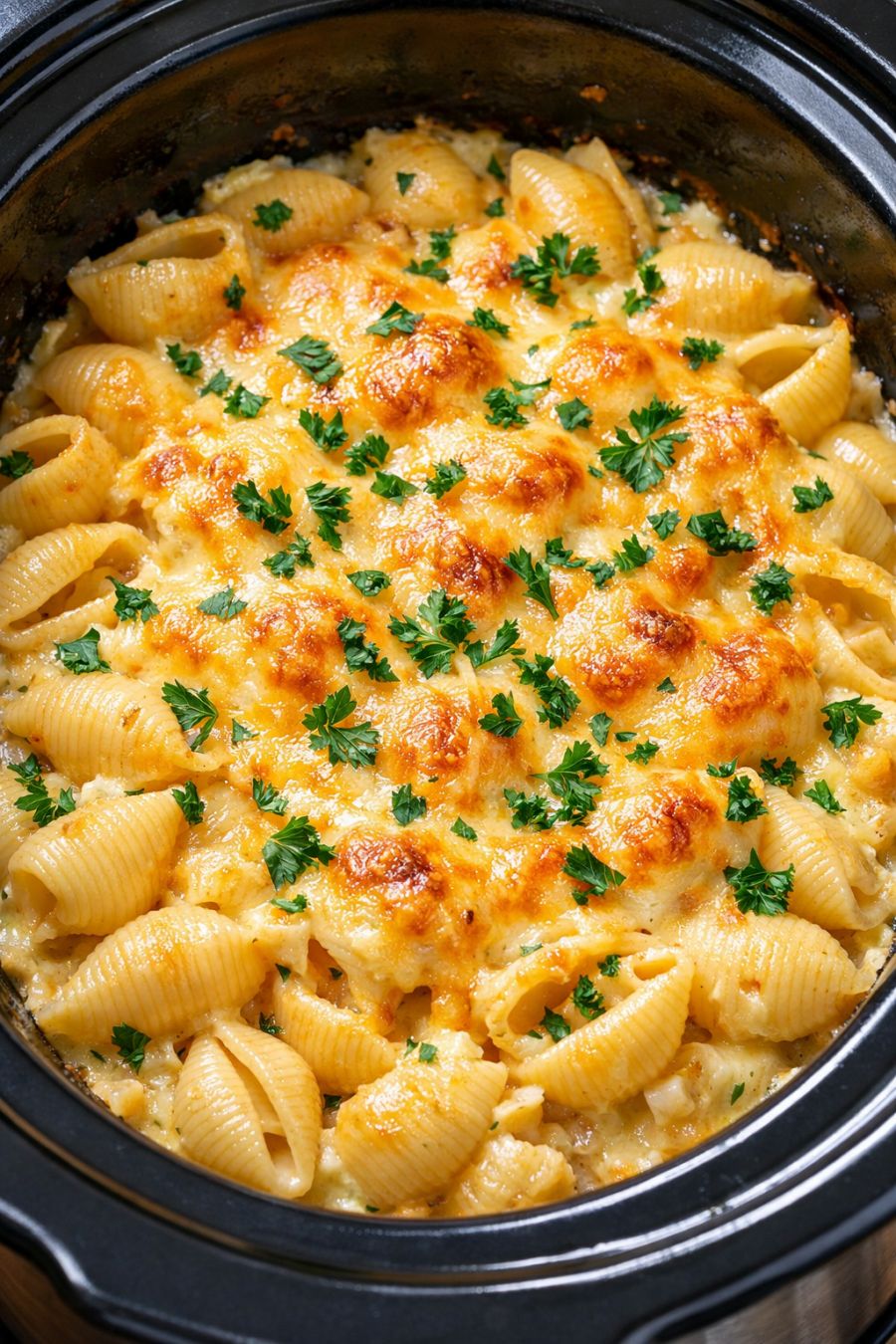
This 3-ingredient slow cooker shells supper is the kind of weeknight recipe I lean on when the day has completely gotten away from me. Dry medium pasta shells go straight into the crock pot—no boiling, no straining—and soak up a creamy, savory sauce as they cook. While there’s no grand Italian nonna story behind this one, it does borrow from the idea of pasta al forno, where pasta cooks in sauce until tender and comforting. It’s the sort of dish grandkids (and tired adults) happily pile into bowls, and it relies on pantry-friendly staples you can keep on hand.
Serve the creamy shells hot, straight from the slow cooker, with a simple green salad dressed in a sharp vinaigrette to cut through the richness. Garlic bread or warm crusty rolls are perfect for scooping up any extra sauce. If you’d like more color on the plate, add steamed green beans or roasted broccoli on the side. A sprinkle of extra shredded cheese and a crack of black pepper at the table makes it feel a bit more special without adding any real work.
3-Ingredient Slow Cooker Shells Supper
Servings: 6
Ingredients
12 ounces dry medium pasta shells
4 cups low-sodium chicken broth
2 1/2 cups shredded cheese blend (such as cheddar-jack or Italian blend), divided
Directions
Lightly coat the inside of a 4- to 6-quart slow cooker with nonstick spray or a thin film of neutral oil to help prevent sticking.
Pour the dry medium pasta shells into the bottom of the slow cooker so they form an even, single layer. The raw shells should clearly cover the base, as in a process shot, ready for the next step.
Pour the chicken broth evenly over the dry shells, pressing down gently with a spoon to make sure all the pasta is moistened and submerged as much as possible. This ensures more even cooking.
Sprinkle 2 cups of the shredded cheese over the top of the shells and broth. Do not stir; leaving the layers intact allows the cheese to melt down into the pasta as it cooks.
Cover the slow cooker with the lid and cook on HIGH for 1 1/2 to 2 1/2 hours, or on LOW for 3 to 4 hours. Cooking times vary by slow cooker, so begin checking at the earliest time. The shells are done when they are just tender (al dente) and most of the liquid has been absorbed into a creamy sauce.
Once the shells are tender, quickly stir the mixture well from the bottom to the top to distribute the cheese and sauce evenly. If the pasta seems too loose, let it sit on WARM for 5 to 10 minutes with the lid on; it will thicken as it stands.
Sprinkle the remaining 1/2 cup shredded cheese over the top, cover again, and let it sit on WARM or LOW for about 5 minutes until the cheese melts into a gooey topping.
Taste and adjust seasoning at the table with salt and freshly ground black pepper, if desired, then serve the shells hot, scooping from the bottom so everyone gets plenty of sauce and cheese.
Variations & Tips
For a little more nutrition and color without complicating the recipe, you can stir in 1 to 2 cups of thawed frozen peas or mixed vegetables during the last 20 to 30 minutes of cooking; they will heat through while the pasta finishes. To make it more protein-rich, fold in about 1 1/2 cups of cooked, shredded rotisserie chicken or cooked crumbled sausage at the end, when you stir the pasta and sauce together. If you prefer a milder dish, choose a mozzarella-based cheese blend; for more tang, try sharp cheddar or an Italian blend with provolone and Parmesan. You can also swap vegetable broth for chicken broth to keep it vegetarian (provided your cheese is vegetarian-friendly). For a creamier texture, reduce the broth to 3 1/2 cups and add 1/2 cup of heavy cream or evaporated milk with the broth, but be sure to keep the slow cooker on LOW if using dairy to reduce the chance of curdling.
Food safety tips: Use low-sodium broth so you can control the final seasoning at the table, especially if serving children or older family members who need to watch their salt intake. Keep the slow cooker covered while cooking to maintain a safe, even temperature; avoid lifting the lid frequently, as that can extend cooking time and keep the food in the temperature “danger zone” longer. If you add cooked meats, make sure they are already fully cooked and reheated to at least 165°F before serving. Refrigerate leftovers within 2 hours of cooking in shallow containers, and reheat thoroughly until steaming hot before eating. Discard any pasta that has been left at room temperature for more than 2 hours.
