
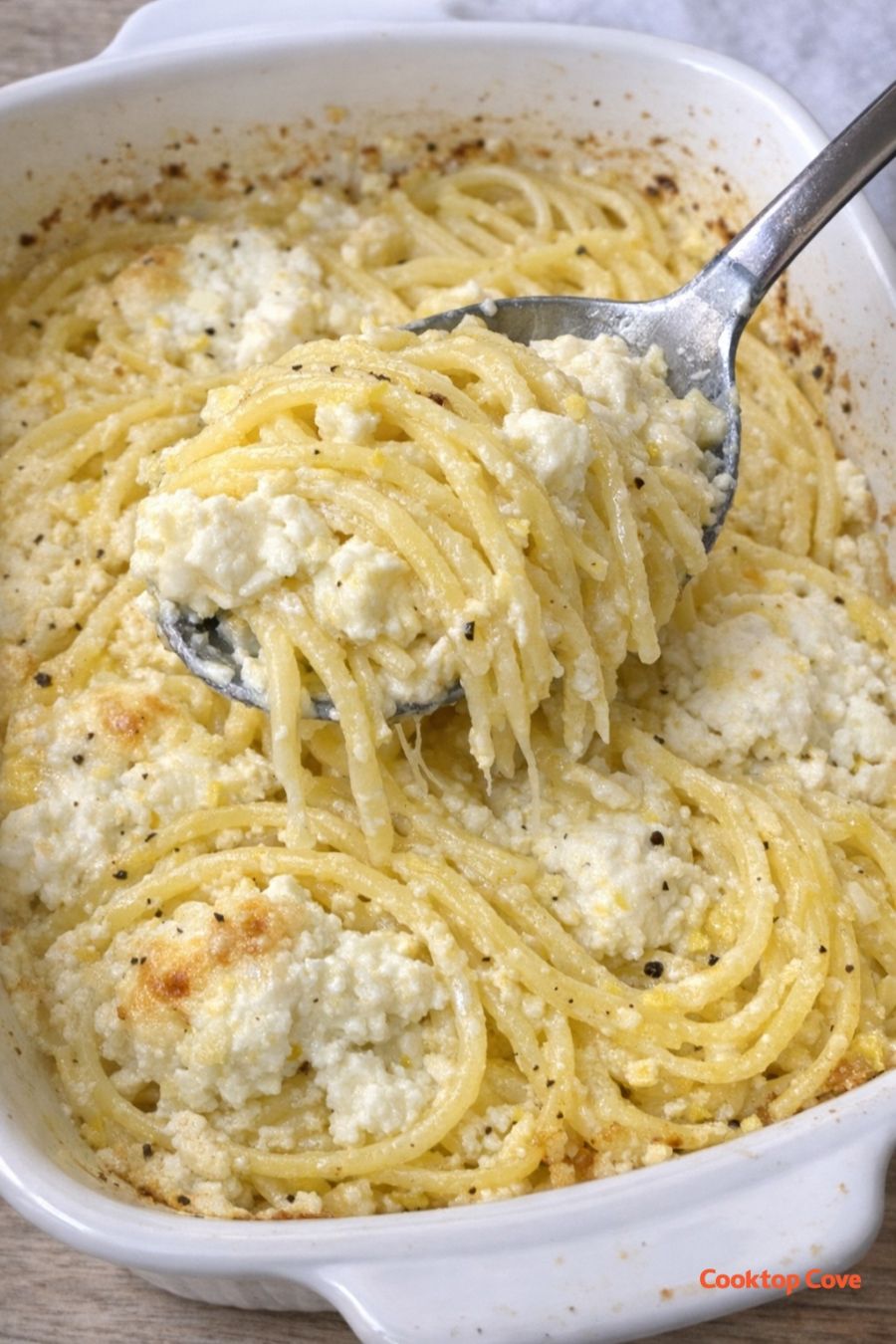
My sister shared this 4‑ingredient spring dish with me years ago, and it’s been a quiet little miracle at every church potluck and family gathering since. It tastes like sunshine after a long Midwestern winter—bright with lemon, cozy with ricotta, and simple enough to throw together when the fields are muddy and you’re tired to the bone. Everything bakes in one white casserole dish until the noodles are tender, the ricotta turns into creamy little pockets, and the whole thing comes out looking golden and cheerful, even if the photo you snap with your phone is a bit crooked and imperfect, just like real life.
This lemon ricotta pasta is lovely on its own with a green salad—think crisp lettuce, cucumbers, and a light vinaigrette—to balance the richness. A bowl of steamed or roasted spring vegetables like asparagus, peas, or broccoli makes a natural partner. At bigger gatherings, I set it alongside baked ham or roasted chicken, a basket of warm dinner rolls, and maybe a simple fruit salad. Serve it warm right from the casserole dish with a big serving spoon so folks can help themselves family-style.
Oven Baked 4-Ingredient Lemon Ricotta Pasta
Servings: 6
Ingredients
12 oz dry pasta (short shape like penne, rigatoni, or fusilli)
1 1/2 cups whole-milk ricotta cheese
2 large lemons (zest and juice)
1/3 cup olive oil
1 1/2 teaspoons kosher salt
1/2 teaspoon black pepper
1 1/2 cups hot water (from the tap or recently boiled, as needed for baking)
Directions
Preheat your oven to 375°F (190°C). Lightly grease a medium white ceramic casserole dish (about 9x13 inches or similar) with a little olive oil so the pasta doesn’t stick.
In a large mixing bowl, whisk together the ricotta, olive oil, lemon zest, lemon juice, salt, and black pepper until fairly smooth. It’s fine if there are still some small ricotta chunks; those bake up into creamy little pockets.
Add the dry pasta to the bowl and toss well to coat every piece in the lemon ricotta mixture. The pasta will look thickly coated and a bit stiff—that’s what you want.
Transfer the coated pasta into the prepared casserole dish and spread it into an even layer. Scrape every bit of the lemon ricotta mixture from the bowl over the top so nothing goes to waste.
Pour 1 cup of the hot water evenly over the pasta in the dish. Gently stir and press the pasta down with a spoon so most of it is submerged in liquid and sauce. If the pasta still looks too dry on top, add up to another 1/2 cup hot water, a little at a time. You want it saucy but not soupy.
Cover the casserole dish tightly with foil to trap the steam. Place it on the middle rack of the preheated oven and bake for 25 minutes.
After 25 minutes, carefully remove the foil (watch for steam). Stir the pasta well, scraping the bottom of the dish to loosen any bits, and smooth it back into an even layer. If the pasta seems dry or still too firm, add a splash more hot water and stir again.
Return the dish to the oven, uncovered, and bake another 10–15 minutes, or until the pasta is just tender and the sauce is creamy and bubbling around the edges. The top may pick up a few golden spots, which adds nice flavor.
Remove from the oven and let the pasta rest for 5–10 minutes. The sauce will thicken slightly as it cools, clinging to the bright yellow noodles. Give it one last gentle stir, then serve straight from the casserole dish with a big spoon, scooping up the creamy ricotta chunks with each portion.
Variations & Tips
If your crowd likes a little extra richness, you can sprinkle a small handful of grated Parmesan or crumbled goat cheese over the top during the last 10 minutes of baking, though that technically makes it more than 4 ingredients. For added spring color, stir in a cup of thawed peas or blanched asparagus pieces when you mix the pasta with the lemon ricotta. You can also swap in whole-wheat pasta for a heartier, nuttier flavor; just keep an eye on the water and baking time, as whole-wheat shapes sometimes need a bit more liquid and a few extra minutes to soften. If you prefer a milder lemon flavor, use the zest of only one lemon and taste the ricotta mixture before adding more juice. For those who like a little kick, a pinch of red pepper flakes stirred into the sauce is nice. Food safety tips: Use only pasteurized ricotta and keep it refrigerated until you’re ready to mix the sauce. Don’t leave the baked pasta sitting out at room temperature for more than 2 hours; refrigerate leftovers promptly in a shallow container and reheat thoroughly until steaming hot before serving again. When reheating, you may want to add a spoonful of water or a drizzle of olive oil to loosen the sauce so it turns creamy instead of dry.
