
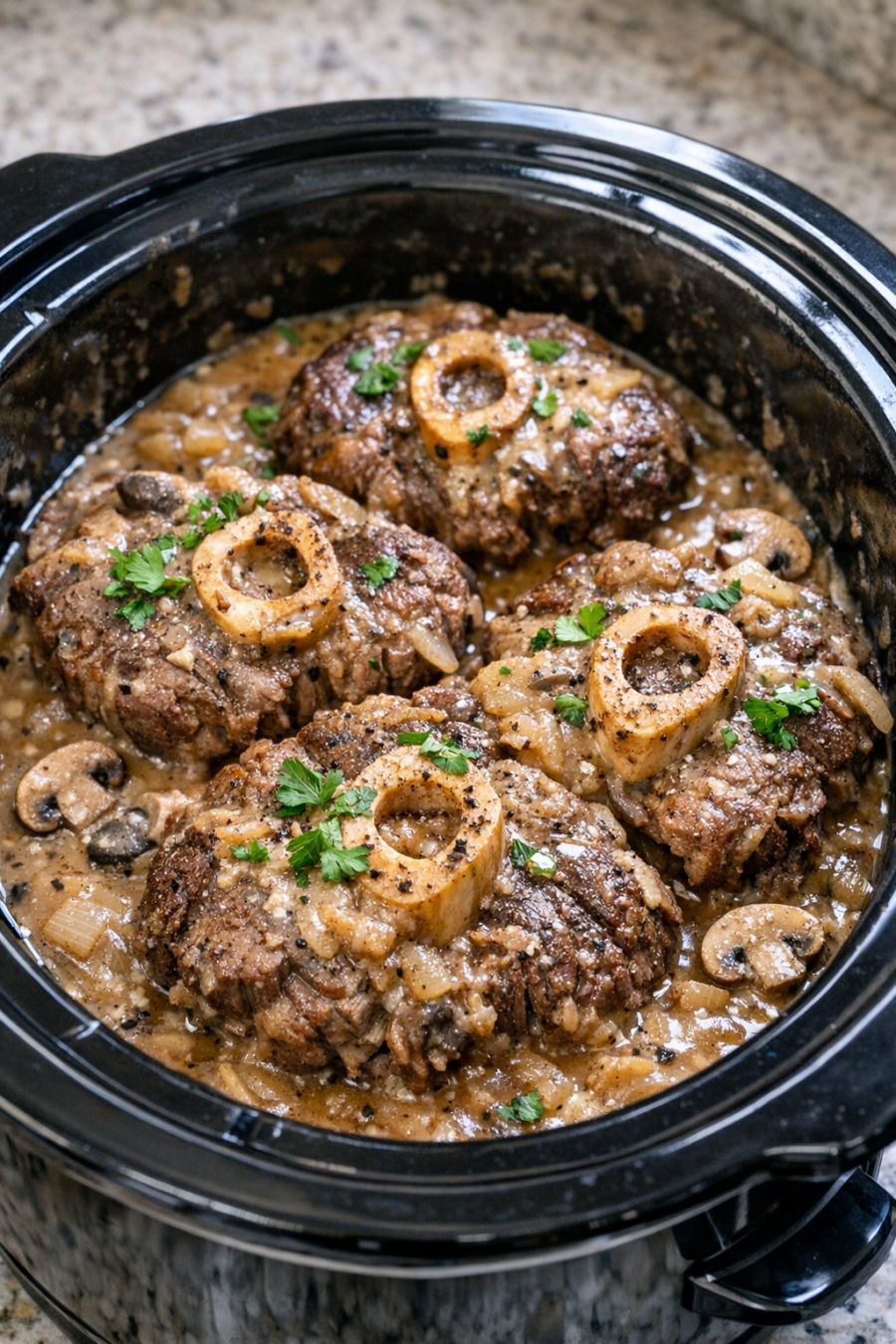
This 4-ingredient slow cooker beef shank recipe is the kind of set-it-and-forget-it meal that works on the busiest weekdays. You literally place the raw beef shanks straight into the crock, add three everyday pantry ingredients, and let low, slow heat transform a tough cut into something silky and rich. Beef shanks come from the leg, so they’re naturally full of connective tissue and marrow—perfect for long braises that likely originated in rustic European and Asian kitchens where nothing went to waste. Here, we let the slow cooker do that traditional low-and-slow work for you, with almost no prep and maximum payoff.
Serve the tender beef shanks over mashed potatoes, buttered egg noodles, or steamed white rice to soak up all the savory juices from the pot. A simple green vegetable—like sautéed green beans, roasted Brussels sprouts, or a crisp side salad with a bright vinaigrette—balances the richness. Warm crusty bread is wonderful for dipping into the broth, and if you enjoy wine, a medium-bodied red like a Merlot or Cabernet Franc pairs nicely with the deep beef flavor.
4-Ingredient Slow Cooker Beef Shanks
Servings: 4
Ingredients
2 to 2 1/2 pounds bone-in beef shanks (about 2 large pieces), raw
1 (10.5-ounce) can condensed cream of mushroom soup
1 (1-ounce) packet dry onion soup mix
1 cup low-sodium beef broth or water
Directions
Place the raw beef shanks in a single layer on the bottom of the slow cooker crock, bone side down if possible. They should rest flat against the ceramic insert, with the marrow bones visible in the center.
In a medium bowl, whisk together the condensed cream of mushroom soup, dry onion soup mix, and beef broth (or water) until mostly smooth and evenly combined. This creates a simple, flavorful cooking sauce.
Pour the sauce mixture evenly over the beef shanks, making sure the tops and sides are coated. The liquid does not need to fully cover the meat; it will create more juices as it cooks.
Cover the slow cooker with the lid and cook on LOW for 8 to 10 hours, or on HIGH for 4 to 5 hours, until the beef shanks are very tender and easily pull apart with a fork. The connective tissue should have melted into the cooking liquid, creating a rich gravy.
Once cooked, carefully remove the beef shanks from the slow cooker with a large spoon or tongs—they will be very tender and may fall off the bone. Skim excess fat from the surface of the cooking liquid if desired, then taste the sauce and adjust with a splash of water or broth if it’s thicker or saltier than you like.
Serve the beef shank pieces with the marrow bones (if you enjoy marrow, scoop it out at the table) and spoon the onion-mushroom gravy generously over the top. Discard any large bones and connective tissue that you don’t wish to serve.
Variations & Tips
For a slightly lighter version, you can substitute a reduced-fat condensed cream of mushroom soup and use water instead of beef broth. If you prefer a deeper mushroom flavor, add 1 cup of sliced fresh mushrooms on top of the raw shanks before pouring over the sauce—this keeps the ingredient list simple but adds texture. For a garlic-forward version, stir 2 to 3 minced garlic cloves into the sauce mixture before adding it to the crock. If you want a bit of acidity to balance the richness, finish the cooked sauce with 1 to 2 teaspoons of red wine vinegar or lemon juice just before serving. To turn the cooking liquid into a thicker gravy, transfer 2 cups of the hot liquid to a saucepan, whisk in 1 to 2 tablespoons of cornstarch mixed with 2 tablespoons of cold water, and simmer until thickened, then pour back over the meat. Food safety tips: Always start with fresh or properly thawed beef shanks—never cook partially frozen shanks in the slow cooker, as they may stay too long in the temperature “danger zone.” Keep the lid on the slow cooker during cooking to maintain a safe, steady temperature, and do not cook on the “warm” setting from the start, as it isn’t hot enough to bring the meat through the danger zone quickly. Refrigerate leftovers within 2 hours of cooking in shallow containers, and reheat to at least 165°F before serving again.
