
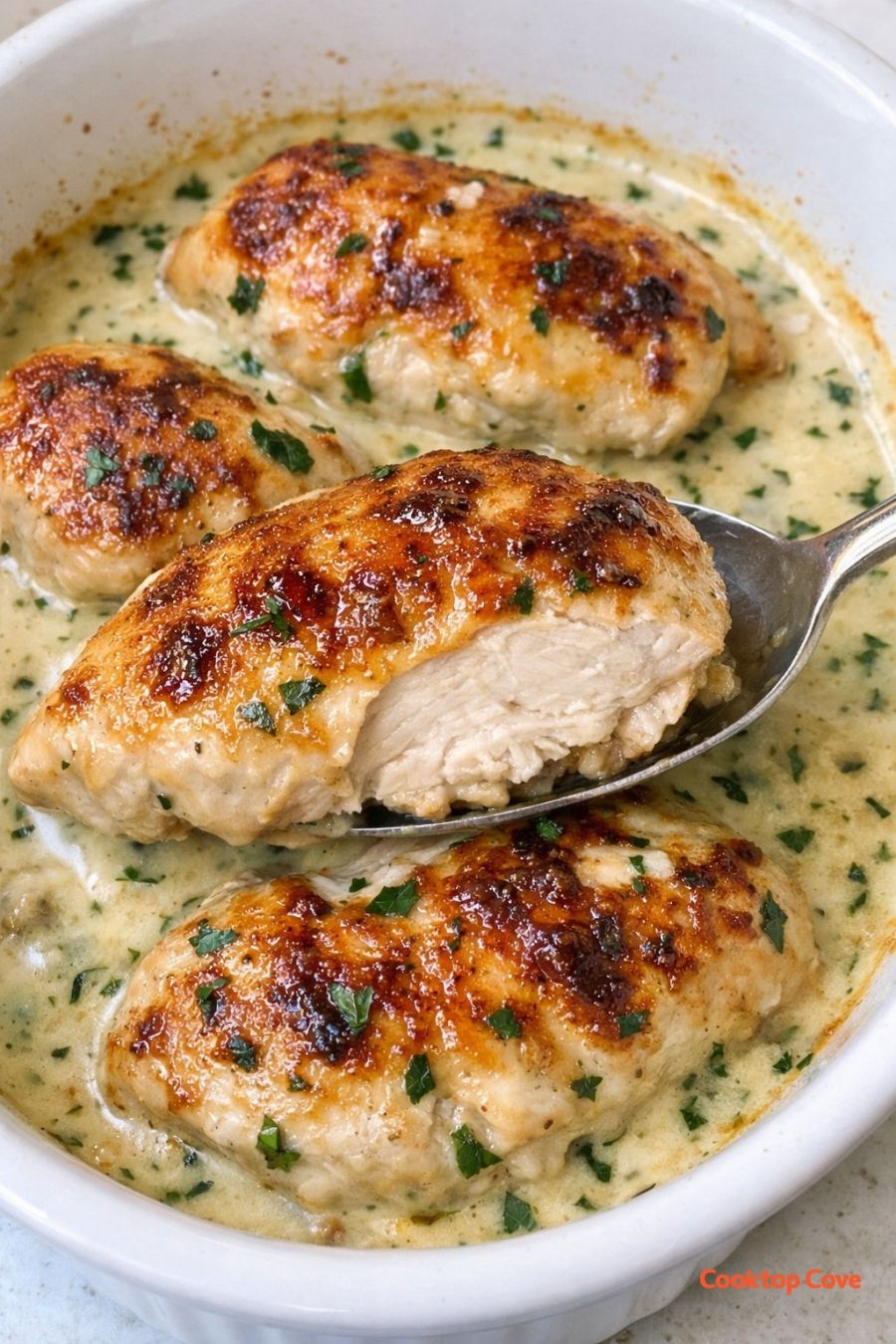
This oven baked 3-ingredient Chicken Marlborough is adapted from a recipe my grandmother clipped from a glossy women’s magazine in 1962. She made it for every garden party she hosted, and the combination of tender chicken, a tangy-creamy sauce, and a golden, caramelized top felt downright sophisticated for its time. The name likely nods to the old-fashioned pairing of poultry with wine and cream in British and American entertaining menus of the mid-20th century. It’s the kind of practical, no-fuss dish you can slide into the oven while you set the table, yet it comes out looking like you spent all afternoon fussing over it.
Serve this Chicken Marlborough straight from the baking dish, spooning the creamy, herb-flecked sauce over each portion. It’s especially good with buttered egg noodles, mashed potatoes, or a simple rice pilaf to catch all the juices. A crisp green salad with a sharp vinaigrette balances the richness, and lightly steamed green beans or asparagus keep the plate fresh and colorful. If you’d like a drink pairing, a chilled Sauvignon Blanc or a light, fruity Pinot Noir works well with the tangy cream sauce and roasted chicken.
Oven Baked 3-Ingredient Chicken Marlborough
Servings: 4
Ingredients
2 pounds boneless, skinless chicken breasts (about 4 medium pieces)
1 1/2 cups bottled creamy herb dressing (such as creamy Italian or creamy herb vinaigrette)
1/2 cup dry white wine (such as Sauvignon Blanc or Pinot Grigio)
Directions
Preheat your oven to 375°F (190°C). Lightly grease an oval or rectangular ceramic baking dish large enough to hold the chicken breasts in a single layer.
Pat the chicken breasts dry with paper towels. This helps them brown better and keeps excess water from thinning the sauce.
Arrange the chicken breasts in the prepared baking dish in a single layer, with a little space between each piece so the heat circulates evenly.
In a small bowl or measuring cup, whisk together the creamy herb dressing and the dry white wine until smooth and well combined. The mixture should look like a pourable, slightly thick sauce.
Pour the dressing-and-wine mixture evenly over the chicken breasts, making sure each piece is well coated and some sauce pools around them in the dish.
Cover the baking dish tightly with foil and place it on the middle rack of the preheated oven. Bake, covered, for 20 minutes to gently cook the chicken and start melding the flavors.
Remove the foil, spoon some of the sauce from the dish over the tops of the chicken breasts, and return the dish to the oven uncovered.
Continue baking, uncovered, for 20 to 25 minutes more, or until the chicken is cooked through (an instant-read thermometer should read 165°F / 74°C in the thickest part) and the tops are golden with some caramelized spots. The sauce will be bubbly, slightly thickened, and flecked with herbs.
If you’d like a deeper caramelized top, switch the oven to broil for 2 to 3 minutes at the end of baking, watching closely so the sauce browns but does not burn.
Remove the dish from the oven and let the chicken rest for 5 to 10 minutes. This helps the juices redistribute so the meat stays tender when sliced.
To serve, use a large spoon or serving spoon to lift each chicken breast from the dish, tilting slightly so the golden sauce clings to the top. Spoon extra sauce from the baking dish over each portion at the table.
Variations & Tips
You can easily nudge this vintage recipe in a few directions while keeping its three-ingredient spirit. For a slightly richer version, use a thicker, cream-based herb dressing (such as creamy Italian or ranch with herbs); for a brighter, lighter profile, choose a tangy, yogurt-based herb dressing. If you prefer to skip wine, substitute an equal amount of low-sodium chicken broth plus 1 teaspoon of lemon juice to keep that gentle acidity that helps balance the creaminess. For smaller households, halve the recipe and use a smaller baking dish so the sauce doesn’t spread too thin and burn around the edges. If your chicken breasts are very thick, you can either pound them lightly to an even thickness of about 3/4 inch or increase the covered baking time by 5 to 10 minutes before uncovering; always rely on an instant-read thermometer to confirm doneness at 165°F (74°C). Food safety tips: Keep raw chicken refrigerated until you’re ready to bake, and avoid rinsing it, as that can spread bacteria. Use a dedicated cutting board and knife for the raw poultry, and wash them thoroughly with hot, soapy water before using them for anything else. Do not reuse any marinade or sauce that has been in contact with raw chicken unless it’s been fully cooked. Leftovers should be cooled promptly, refrigerated within 2 hours, and eaten within 3 to 4 days; reheat until steaming hot before serving.
