
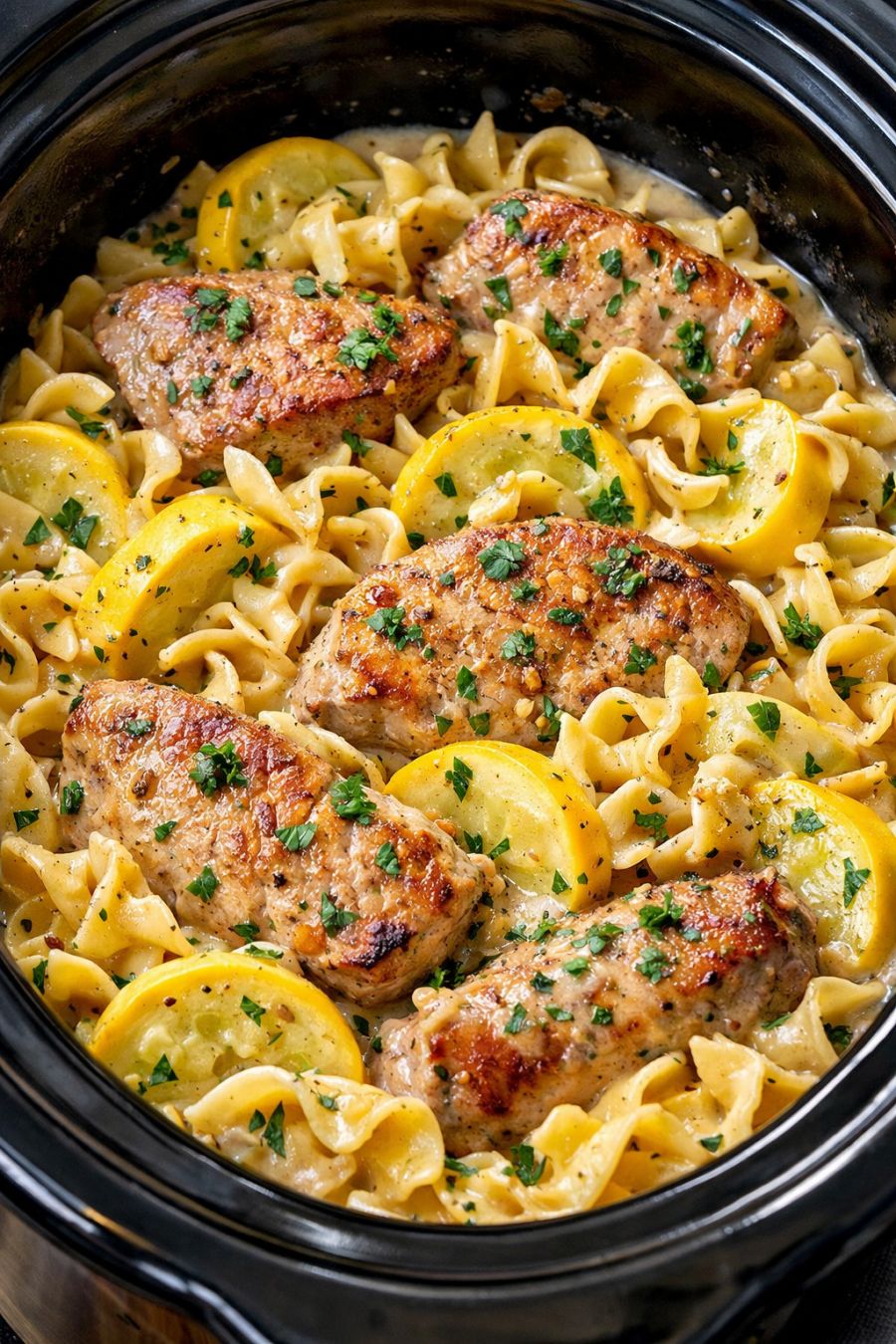
This slow cooker yellow squash pork pasta is the kind of easy summer supper I lean on when the garden is overflowing and I don’t feel like fussing with a hot stove. The whole idea is as simple as the headline says: you lay raw pork chops in the slow cooker, dump sliced yellow squash right over the top, add just three more pantry ingredients, and let it putter away all afternoon. It reminds me of the thrifty Amish-style meals I grew up around in the rural Midwest—stretching a few chops and garden squash into a comforting bowl of pasta that everyone seems to ask for again.
Serve this saucy pork and squash over hot buttered egg noodles or your favorite short pasta, with a sprinkle of black pepper and maybe a spoonful of the cooking juices over the top. A simple sliced tomato salad or cucumber and onion salad on the side keeps the meal light and summery. Warm dinner rolls or a hunk of crusty bread are handy for soaking up the extra sauce, and iced tea or lemonade fits the farmhouse feel of this easy supper.
Slow Cooker Yellow Squash Pork Pasta
Servings: 4
Ingredients
4 boneless pork chops (about 1 to 1 1/2 pounds total)
4 cups thinly sliced yellow summer squash (about 3 medium squash)
1 (10.5-ounce) can cream of mushroom soup
1 (12-ounce) can evaporated milk
8 ounces dry egg noodles or other short pasta, cooked and drained
Directions
Lightly grease the inside of a 4- to 6-quart slow cooker with a bit of oil or nonstick spray to help with cleanup.
Lay the raw pork chops in a single layer on the bottom of the slow cooker. It’s fine if the edges overlap a little.
Spread the thinly sliced yellow squash evenly over the pork chops, just as if you were dumping a big bowl of garden squash right on top. The squash should mostly cover the meat.
In a medium bowl, whisk together the cream of mushroom soup and evaporated milk until smooth and well blended. This makes a simple, creamy sauce.
Pour the sauce evenly over the squash and pork chops, making sure everything is lightly coated. Do not stir; leave the layers as they are.
Cover the slow cooker with the lid and cook on Low for 6 to 7 hours, or on High for 3 to 4 hours, until the pork chops are very tender and the squash is soft. The sauce will thin slightly as the squash releases its juices.
Near the end of the cooking time, cook the egg noodles or other pasta according to package directions, then drain well.
When the pork is done, gently break the chops into large bite-size pieces with a spoon or fork right in the slow cooker. Stir the pork and squash together so they’re coated in the sauce.
Add the hot, drained pasta to the slow cooker and toss gently until the noodles are coated and the pork and squash are evenly distributed. Taste and add a little salt and black pepper if you like.
Serve warm straight from the slow cooker, making sure each bowl gets some pork, plenty of squash, and a good spoonful of the creamy sauce over the pasta.
Variations & Tips
You can swap the cream of mushroom soup for cream of chicken or cream of celery if that’s what you keep on hand, and it will still have that cozy Amish-style creaminess. Boneless pork loin chops or thick-cut boneless pork steaks both work well; just avoid very thin chops, as they can dry out. If you have zucchini along with your yellow squash, you can mix the two for a pretty two-tone dish. For extra flavor without adding more ingredients, sprinkle the pork lightly with salt, black pepper, or a pinch of garlic powder before layering on the squash. If you’d rather not stir the pasta into the slow cooker, you can ladle the pork, squash, and sauce over individual bowls of noodles instead. Food safety tips: Always start with fresh, fully thawed pork chops—never put frozen meat directly into the slow cooker, as it can stay too long in the temperature danger zone. Make sure the pork reaches at least 145°F in the center, though in a slow cooker it will usually go higher and become very tender. Keep the lid on while cooking so the temperature stays steady, and refrigerate leftovers within 2 hours in shallow containers. Reheat leftovers until steaming hot before serving.
