
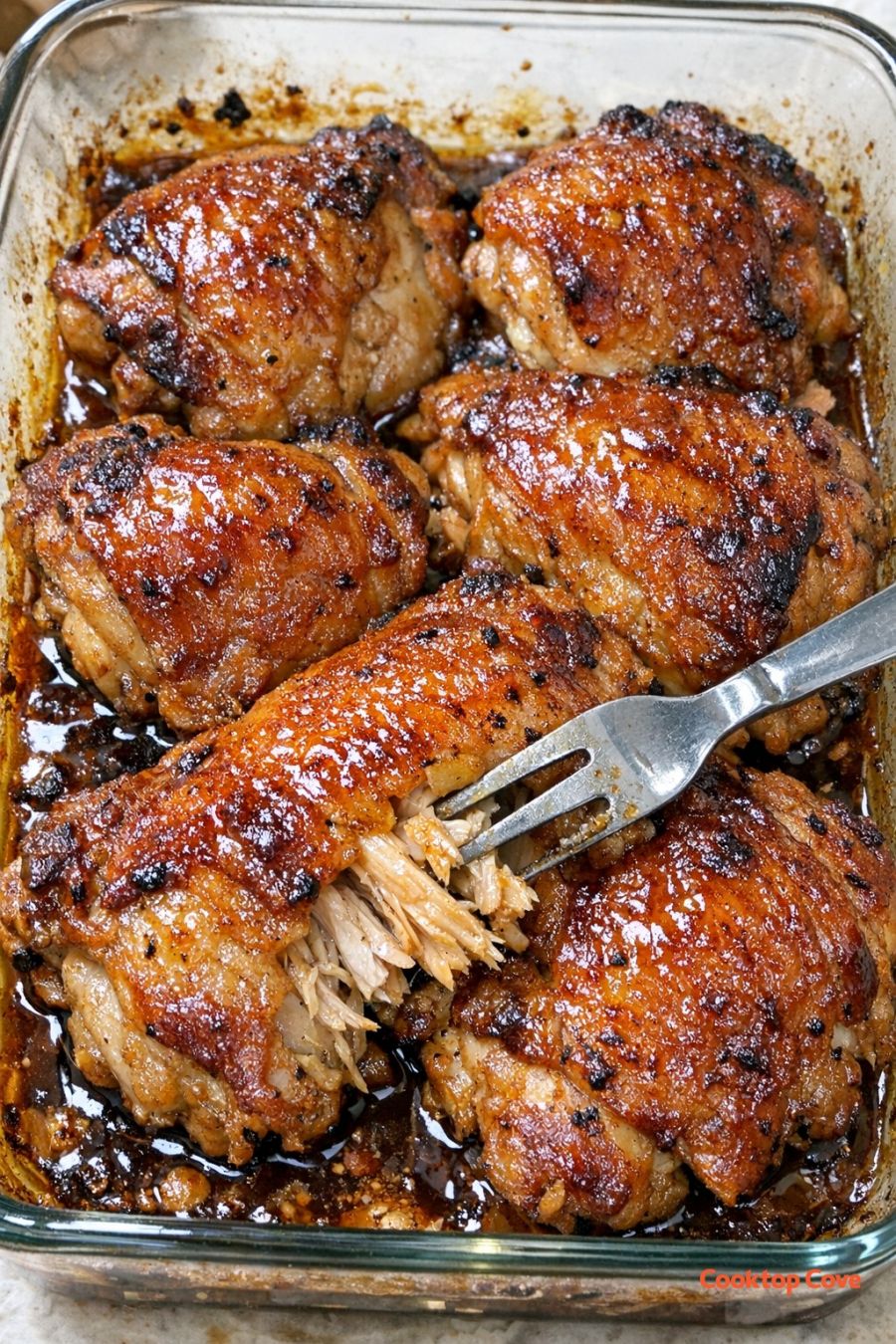
This oven baked 4-ingredient chicken fontaine is one of those shy little recipes that used to be passed around on notepaper at church luncheons and bridge club, back when ladies wore gloves and brought a covered dish. I copied it from a card in my aunt’s recipe box, dated 1958, stained with splashes of sauce and written in her tidy schoolteacher hand. She served this every summer for her ladies’ luncheons, set out in a glass baking dish right on the table, and no one ever left without asking for the recipe. It’s simple as can be—just chicken thighs, a sweet‑tangy brown sugar and French dressing glaze, and a packet of dry onion soup mix—but it bakes up into the most beautiful caramelized, amber‑glossed chicken with crisp skin and tender meat that practically falls off the bone.
Serve this chicken fontaine straight from the glass baking dish, spooning that glossy amber sauce over each piece. It’s lovely with plain buttered rice or fluffy mashed potatoes to soak up the drippings, and a simple green vegetable—peas, green beans, or a crisp lettuce salad with a light vinaigrette—keeps it feeling like the luncheon fare my aunt favored. Warm dinner rolls or soft white bread fit the vintage mood and are perfect for swiping up every last bit of sauce. For a summer table, add sliced garden tomatoes and iced tea with lemon, and you’ll have the kind of spread that makes folks linger and ask for seconds—and the recipe.
Oven Baked 4-Ingredient Chicken Fontaine
Servings: 6
Ingredients
3 pounds bone-in, skin-on chicken thighs (about 6–8 pieces)
1 cup bottled French dressing (thick, orange, 1950s-style)
1 cup light brown sugar, packed
1 (1-ounce) packet dry onion soup mix
Directions
Preheat your oven to 350°F (175°C). Set out a 9x13-inch glass or Pyrex baking dish so it’s ready. You don’t need to grease it; the chicken and dressing will provide plenty of fat.
Pat the chicken thighs dry with paper towels. This helps the skin crisp and the sauce cling. Arrange the thighs in a single layer, skin side up, in the glass baking dish, leaving just a little space between pieces so the heat can circulate.
In a medium bowl, stir together the French dressing, brown sugar, and dry onion soup mix until the sugar is mostly dissolved and the soup mix is evenly distributed. The mixture will be thick and a bit grainy—that’s just right and very true to the 1950s style of cooking.
Pour the sauce evenly over the chicken thighs, making sure each piece is coated. Use a spoon to scoop some sauce over the tops so the skin gets a good layer. The sauce will settle around the chicken as it bakes and turn into a glossy, amber glaze.
Place the baking dish on the center rack of the preheated oven. Bake uncovered for 30 minutes, then carefully pull the dish out and spoon the sauce from the bottom of the pan back over the chicken pieces. This basting step encourages that caramelized, sticky finish and keeps the meat moist.
Return the dish to the oven and continue baking, still uncovered, for another 25–35 minutes, or until the chicken skin is deep golden and crisp, the sauce is thick and bubbly with caramelized edges, and an instant-read thermometer inserted into the thickest part of a thigh (not touching bone) reads at least 165°F (74°C). Total baking time will be about 55–65 minutes, depending on the size of your thighs and your oven.
If you’d like the tops extra caramelized, you can place the dish under the broiler for 2–3 minutes at the end, watching closely so the sugar in the sauce doesn’t burn. The goal is a rich amber color with some darker, sticky spots around the edges.
Let the chicken rest in the baking dish for 5–10 minutes before serving. The sauce will thicken slightly as it cools. To serve in true luncheon style, bring the glass dish right to the table and use a serving fork and spoon to lift out the thighs, pulling back the tender meat and spooning plenty of that glossy sauce over each portion.
Variations & Tips
This old-fashioned recipe is forgiving and welcomes small changes while keeping its 1950s charm. For a lighter version, you can use bone-in, skin-on chicken breasts or drumsticks instead of thighs; just watch the timing, as breasts may cook a bit faster and can dry out if overbaked. If you absolutely must skip the skin, understand you’ll lose some crispness and that classic look—cover skinless pieces loosely with foil for the first 30 minutes to keep them moist, then uncover to let the sauce thicken. You can swap Catalina or Russian dressing for the French if that’s what you have; just keep it a thick, sweet-tangy, orange dressing in the spirit of the era. For a touch of heat, add a pinch of red pepper flakes to the sauce, or for extra savory depth, stir in a teaspoon of Worcestershire sauce (this keeps the recipe close to what home cooks might have done in the late 1950s). If the sauce seems to be caramelizing too quickly around the edges, loosely tent just the edges of the dish with foil to prevent scorching while the chicken finishes cooking. For food safety, always thaw chicken in the refrigerator, never on the counter, and avoid rinsing raw chicken to prevent spreading bacteria around your sink. Use a clean cutting board and utensils for the cooked chicken, and wash your hands well after handling it. Make sure the internal temperature reaches 165°F (74°C) in the thickest part of the meat, and refrigerate leftovers within 2 hours in shallow containers. Leftovers reheat nicely, covered, at 325°F until warmed through, or gently in a skillet with a spoonful of water to loosen the sauce.
