
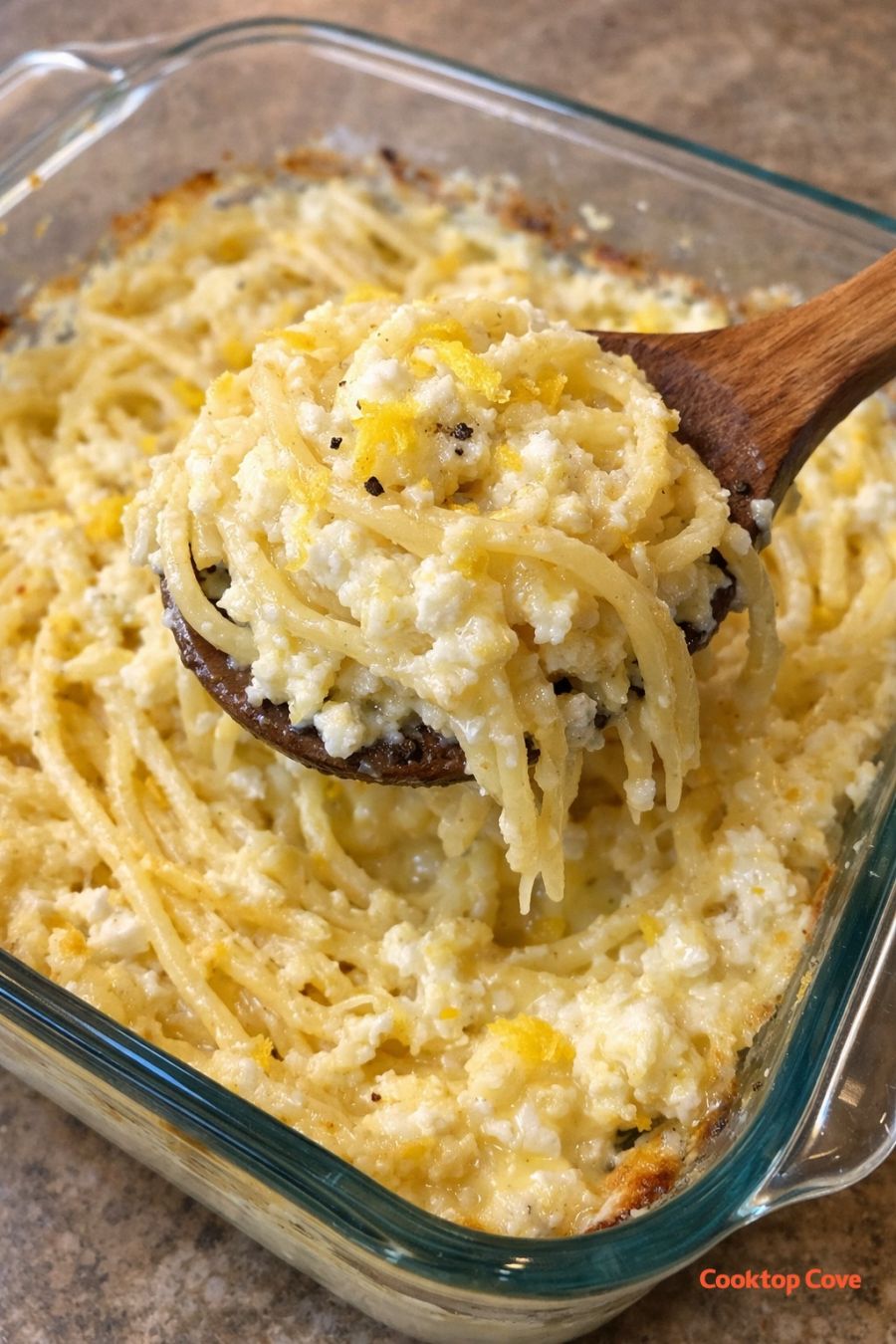
This oven baked 4-ingredient lemon ricotta pasta is the kind of weeknight lifesaver my sister would absolutely text me about at 4:30 p.m. when everyone’s hungry and the day has gotten away from you. Everything comes together in one glass casserole dish, bakes into creamy, bright yellow noodles, and hits the table with almost no hands-on time. It tastes like something you fussed over, but it’s really just pantry pasta, ricotta, lemon, and a little olive oil working together in the oven while you help with homework or switch the laundry.
Serve this lemon ricotta pasta straight from the glass casserole dish with a big wooden spoon for scooping. It pairs nicely with a simple green salad, steamed broccoli, or roasted vegetables. Garlic bread or warm dinner rolls are great for soaking up the creamy sauce. For adults, a crisp white wine or sparkling water with lemon fits the bright flavors, while kids usually like it with apple juice or milk. If you want to bulk it up, add a side of rotisserie chicken or grilled sausage.
Oven Baked 4-Ingredient Lemon Ricotta Pasta
Servings: 4
Ingredients
12 oz dried short pasta (such as penne, rotini, or fusilli)
1 1/2 cups whole milk ricotta cheese
2 medium lemons (zest and juice)
3 tbsp olive oil
1 1/2 tsp kosher salt, plus more to taste
1/2 tsp black pepper, optional
1/2 cup reserved pasta cooking water (as needed)
Directions
Preheat your oven to 375°F (190°C). Lightly grease a 9x13-inch glass casserole dish with a little of the olive oil so the pasta doesn’t stick.
Bring a large pot of salted water to a boil. Cook the pasta 2 minutes less than the package directions for al dente. You want it just shy of done since it will finish in the oven. Before draining, scoop out at least 1 cup of the hot pasta water and set it aside. Drain the pasta well.
While the pasta cooks, zest both lemons into a medium bowl, then cut them in half and squeeze out the juice, removing any seeds. You should have about 1/4 cup lemon juice. Set aside.
In the greased glass casserole dish, add the ricotta cheese and remaining olive oil. Use a spoon to loosely spread the ricotta around the bottom of the dish, but it doesn’t have to be perfect. Sprinkle in the kosher salt and black pepper if using.
Add the hot, drained pasta directly into the casserole dish on top of the ricotta mixture. Pour the lemon juice and lemon zest over the pasta.
Pour in about 1/4 cup of the reserved hot pasta water to start. Using a wooden spoon, gently toss and fold everything together right in the dish until the pasta is lightly coated in a creamy mixture. If it seems too thick or dry, add more reserved pasta water a tablespoon at a time until the noodles look glossy and lightly saucy. The sauce will loosen more as it bakes.
Spread the pasta into an even layer in the glass casserole dish. Don’t worry if it looks a little rustic or streaky with ricotta; those pockets will melt into creamy bites in the oven.
Bake, uncovered, for 15–20 minutes, or until the pasta is heated through, the ricotta looks melted and creamy, and the top noodles just start to turn lightly golden in spots. The overall look should be a bright, creamy yellow from the lemon and ricotta.
Remove the dish from the oven and let it rest for about 5 minutes. This helps the sauce thicken slightly so it clings to the noodles.
Right before serving, give the pasta a gentle stir with a wooden spoon to pull up the extra creamy sauce from the bottom and mix it through. Taste and add a pinch more salt or a squeeze of lemon if needed, then serve warm straight from the glass dish.
Variations & Tips
For picky eaters, you can dial back the lemon by using the zest from just one lemon and adding the juice gradually, tasting as you go. If your kids like things extra creamy, stir in an extra few spoonfuls of ricotta after baking and a splash of warm pasta water to loosen it. To add protein without adding more ingredients, serve this alongside rotisserie chicken or leftover grilled meat. If you’re okay stretching beyond four ingredients, a handful of grated Parmesan on top before baking or a sprinkle of garlic powder mixed into the ricotta is wonderful. A few handfuls of baby spinach can be stirred into the hot pasta right before baking; it wilts in the oven and adds color. For a little crunch, top with toasted breadcrumbs after baking. Food safety tips: Always cook the pasta in clean, fresh water and drain it with clean utensils and colanders. Keep the ricotta refrigerated until you’re ready to use it, and don’t leave the baked pasta out at room temperature for more than 2 hours; refrigerate leftovers promptly in a covered container. Reheat leftovers until steaming hot all the way through before serving. If you’re zesting and juicing lemons, wash and dry them first, and be careful when using a microplane or zester to avoid scraping your fingers.
