
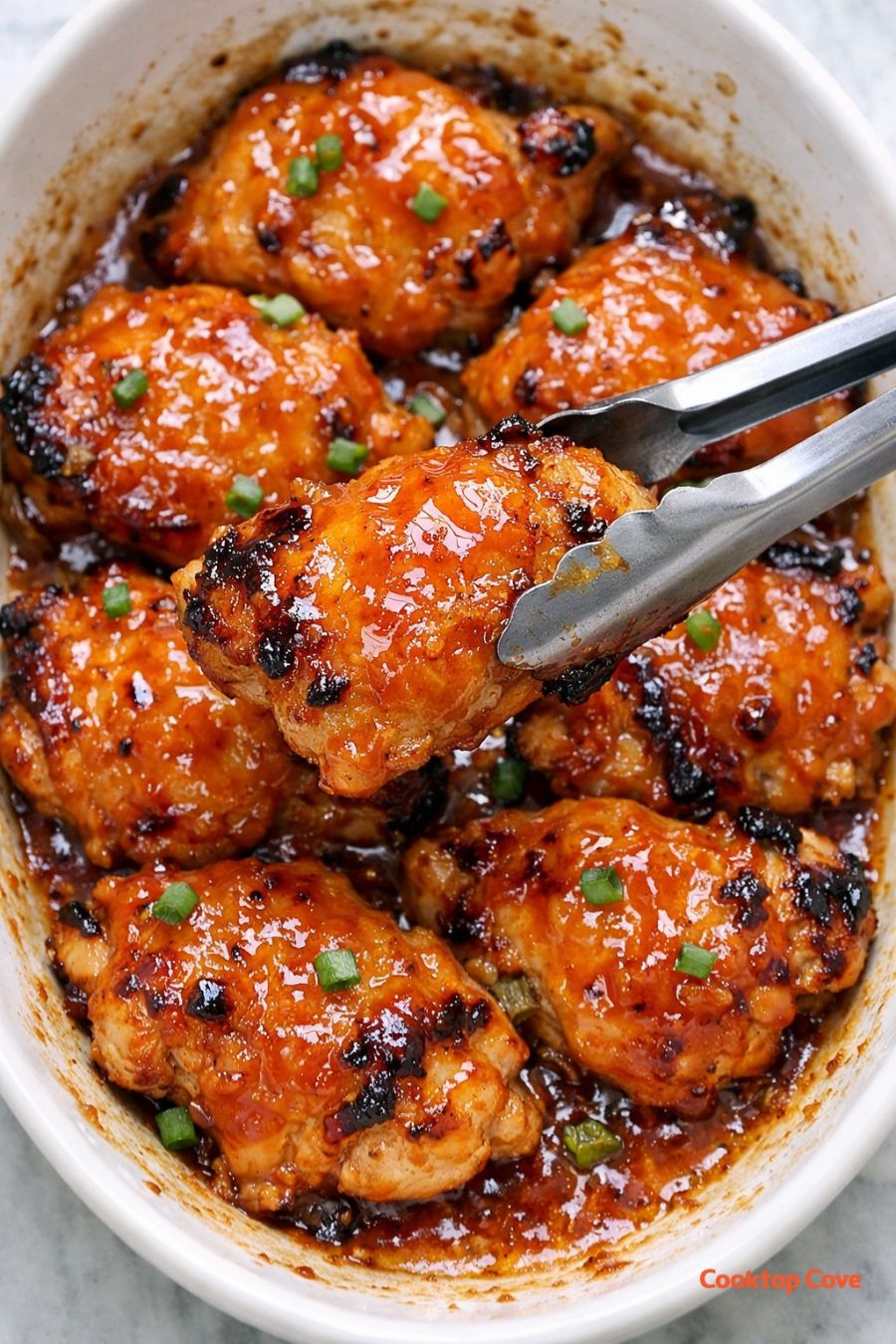
This oven baked 4-ingredient chicken gala is my streamlined take on the apricot-glazed chicken that’s been passed through three generations of church cookbooks. My grandmother first clipped a version from a 1950s ladies’ auxiliary newsletter, baked it in a white casserole dish, and carried it to every potluck. In 1959, she entered it in the county fair and walked away with a blue ribbon, thanks to its glossy, sweet-tangy glaze and irresistibly sticky edges. It’s the kind of practical, no-fuss recipe Midwestern church kitchens embraced: pantry staples, minimal prep, and a comforting flavor that somehow feels both nostalgic and a little bit special.
Serve this apricot-glazed chicken with simple sides that soak up the extra sauce—steamed white or brown rice, buttered egg noodles, or fluffy mashed potatoes all work beautifully. A crisp green vegetable, like roasted green beans or a tossed salad with a sharp vinaigrette, helps balance the sweetness of the glaze. At potlucks, I like to set the baking dish right on the table with a big serving spoon, alongside a basket of warm dinner rolls or cornbread so people can mop up every last bit of that caramelized sauce.
Oven-Baked 4-Ingredient Chicken Gala
Servings: 4
Ingredients
2 1/2 to 3 pounds bone-in chicken pieces (thighs and drumsticks preferred), skin on
1 cup apricot preserves or apricot jam
1 (1-ounce) envelope dry onion soup mix
1/2 cup bottled Russian or Catalina salad dressing
Directions
Preheat your oven to 350°F (175°C). Lightly grease a 9x13-inch or similar white oval baking dish so the chicken doesn’t stick and the glaze can caramelize nicely around the edges.
Pat the chicken pieces dry with paper towels. This helps the skin crisp and the glaze cling. Arrange the chicken in a single layer in the prepared baking dish, skin side up, leaving a little space between pieces so heat can circulate.
In a medium bowl, combine the apricot preserves, dry onion soup mix, and Russian or Catalina dressing. Stir until the mixture is smooth and the soup mix granules are evenly distributed. It will look thick and glossy—that’s exactly what you want for good coverage and caramelization.
Pour the apricot mixture evenly over the chicken, using a spatula or spoon to coat each piece well. Make sure some of the sauce settles around the chicken in the bottom of the dish; this will thicken into a sticky, spoonable glaze as it bakes.
Bake the chicken, uncovered, for 45 to 55 minutes, basting once or twice with the pan juices. The glaze will bubble, darken, and become glossy, and the edges of the chicken will turn caramelized and slightly sticky. If your pieces are large, they may need a few extra minutes.
Check for doneness: the thickest part of the chicken should reach 165°F (74°C) on an instant-read thermometer, and the juices should run clear when pierced. If the top needs more color, you can bake for an additional 5 to 10 minutes, watching closely so the sugars in the glaze don’t burn.
Once done, remove the dish from the oven and let the chicken rest for 5 to 10 minutes. This allows the juices to settle and the glaze to thicken slightly. Use tongs to lift the glistening pieces from the dish, spooning some of the sticky apricot-onion sauce over each serving.
Variations & Tips
This old church-basement favorite has seen a lot of small tweaks over the decades. If you can’t find Russian dressing, Catalina or French dressing both give a similar sweet-tangy profile. For a slightly less sweet version, use 3/4 cup apricot preserves and add 1 to 2 tablespoons of apple cider vinegar or fresh lemon juice. To introduce a gentle kick, stir 1 teaspoon of crushed red pepper flakes or a spoonful of prepared horseradish into the glaze. Boneless, skinless chicken thighs also work; reduce the baking time to about 30 to 40 minutes and check early, since they cook faster and lack the protective skin. If you’re cooking for a crowd, you can double the recipe and use a large roasting pan, rotating it halfway through baking to promote even browning. For food safety, always thaw chicken completely in the refrigerator (never on the counter), avoid rinsing raw chicken to prevent splashing bacteria, and wash your hands, cutting boards, and utensils thoroughly after handling it. Use a thermometer to confirm the internal temperature reaches 165°F (74°C), and refrigerate leftovers within 2 hours in shallow containers. Leftover chicken is excellent shredded over rice or tucked into sandwiches with a bit of the extra glaze spooned on top.
