
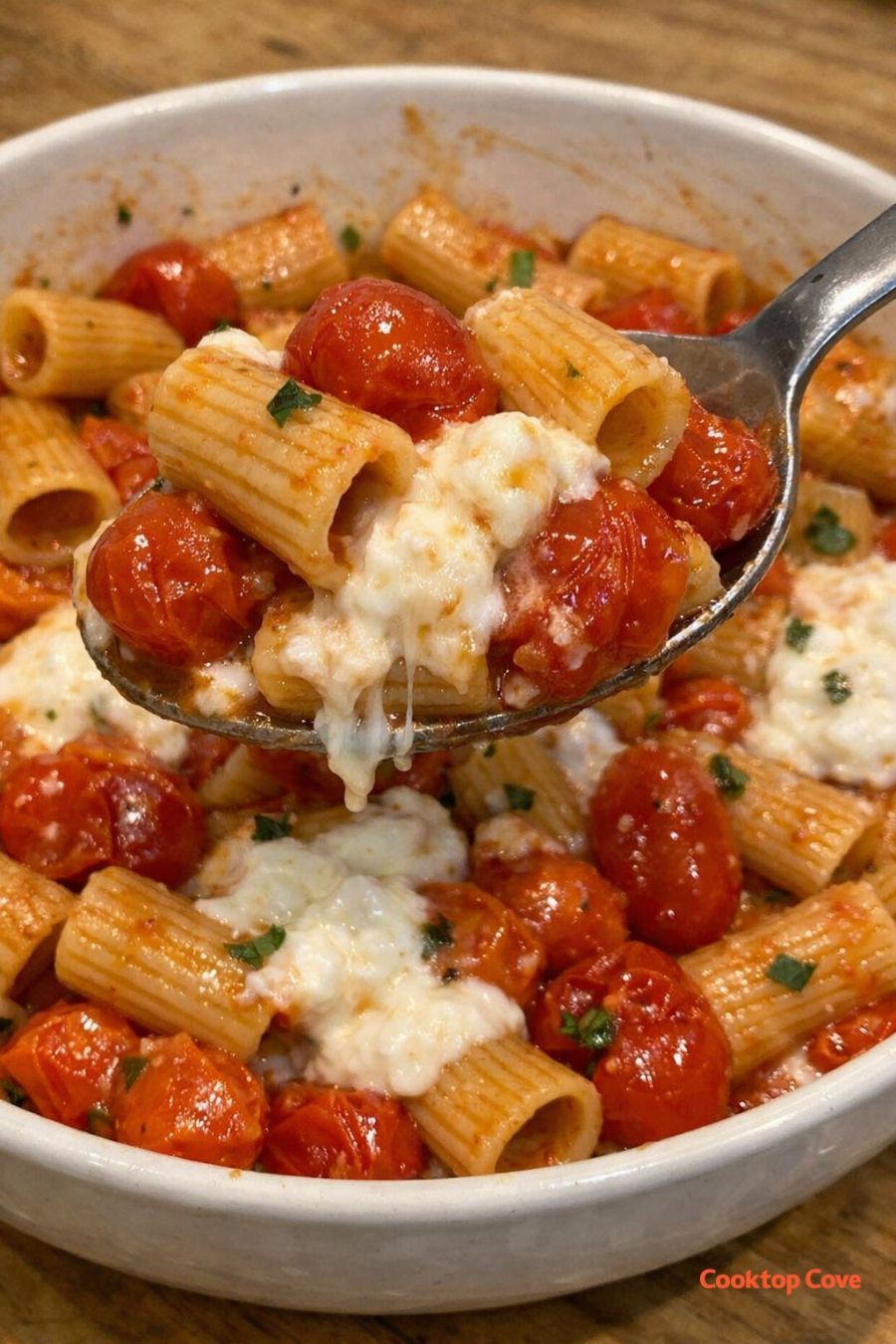
This oven baked 4-ingredient tomato burrata pasta is one of those hand-me-down dishes that proves how little you actually need to make something outrageously good. My aunt started making it in the late ’80s when cherry tomatoes became easy to find year-round in our Midwestern grocery stores. She loved the way they burst in the oven and turn into a ready-made sauce, and she always said, “Let the cheese and tomatoes do the work.” The whole thing bakes in one pan while you boil pasta, and then it all gets tossed together into a big serving bowl—creamy, saucy, and deeply comforting with almost no effort.
Serve this tomato burrata pasta in a large warm bowl with a simple green salad dressed in lemon and olive oil, or a classic Caesar if you want something more substantial. Crusty bread is lovely for swiping up the creamy tomato-cheese sauce that pools at the bottom of the bowl. A light, crisp white wine like Pinot Grigio or a dry rosé pairs nicely, but sparkling water with a squeeze of citrus is just as refreshing. Keep sides minimal so the sweetness of the roasted tomatoes and richness of the burrata stay center stage.
Oven-Baked Tomato Burrata Pasta
Servings: 4
Ingredients
12 oz dried rigatoni (or other short pasta)
1.5 lb cherry or grape tomatoes
8 oz burrata cheese (2 medium balls, drained)
1/4 cup extra-virgin olive oil
1 1/4 tsp kosher salt, plus more for pasta water
1/2 tsp freshly ground black pepper (optional but recommended)
Directions
Preheat your oven to 400°F (200°C). Place a large pot of water on the stove but wait to bring it to a boil until the tomatoes are in the oven.
In a 9x13-inch baking dish (or similar oven-safe pan), add the cherry tomatoes. Drizzle with the olive oil, then sprinkle with 1 teaspoon of the kosher salt and the black pepper, if using. Toss gently so the tomatoes are well coated and spread into an even layer.
Bake the tomatoes for 20–25 minutes, stirring once halfway through, until many of them have burst and released their juices and the edges of the pan look slightly caramelized. They should be soft and saucy but not completely collapsed.
While the tomatoes bake, bring the large pot of water to a rolling boil. Salt the water generously (it should taste pleasantly salty). Add the rigatoni and cook according to package directions until just al dente. Reserve about 1/2 cup of the starchy pasta water, then drain the pasta.
When the tomatoes are done, carefully remove the baking dish from the oven. Use a spoon to gently press on any tomatoes that haven’t burst, releasing their juices into the pan to create a loose sauce.
Add the hot drained pasta directly to the baking dish with the roasted tomatoes. Sprinkle with the remaining 1/4 teaspoon kosher salt. Toss well so the pasta is coated in the tomato juices and olive oil, adding a splash or two of the reserved pasta water if the mixture looks dry. You want a glossy, slightly loose sauce clinging to the rigatoni.
Tear the burrata into large bite-size pieces and scatter them over the hot pasta and tomatoes. Let it sit for 1–2 minutes so the residual heat from the pasta starts to melt and soften the cheese.
Very gently fold the burrata into the pasta, just enough to marble the creamy centers through the tomatoes without completely disappearing the pieces. Taste and adjust seasoning with more salt or pepper, if needed.
Transfer the pasta to a large serving bowl. Serve immediately, making sure each portion has some of the burst tomatoes and pockets of melted burrata. Expect it to look a bit messy and rustic—that’s part of the charm.
Variations & Tips
You can keep the spirit of this 4-ingredient hand-me-down while adjusting a few details to suit your kitchen. If you can’t find burrata, use fresh mozzarella pearls or torn fresh mozzarella; it won’t be quite as creamy but still delicious. Any short pasta works—penne, fusilli, or shells all catch the tomato juices nicely. If your tomatoes are out of season and a bit dull, add an extra pinch of salt and a drizzle more olive oil after roasting to boost the flavor. For a little heat, sprinkle in a pinch of red pepper flakes when you season the tomatoes (this technically adds a fifth ingredient, so consider it optional). You can also finish the dish with a few torn basil leaves or a shower of grated Parmesan when serving, but again, those are extras beyond the core four ingredients. For food safety, keep the burrata refrigerated until you’re ready to tear it into the hot pasta, and don’t leave any leftovers at room temperature for more than 2 hours. Store cooled leftovers in an airtight container in the refrigerator and eat within 2–3 days, reheating gently over low heat with a splash of water or olive oil to loosen the sauce; the cheese will melt more fully on reheating, which changes the texture but is still very enjoyable.
