
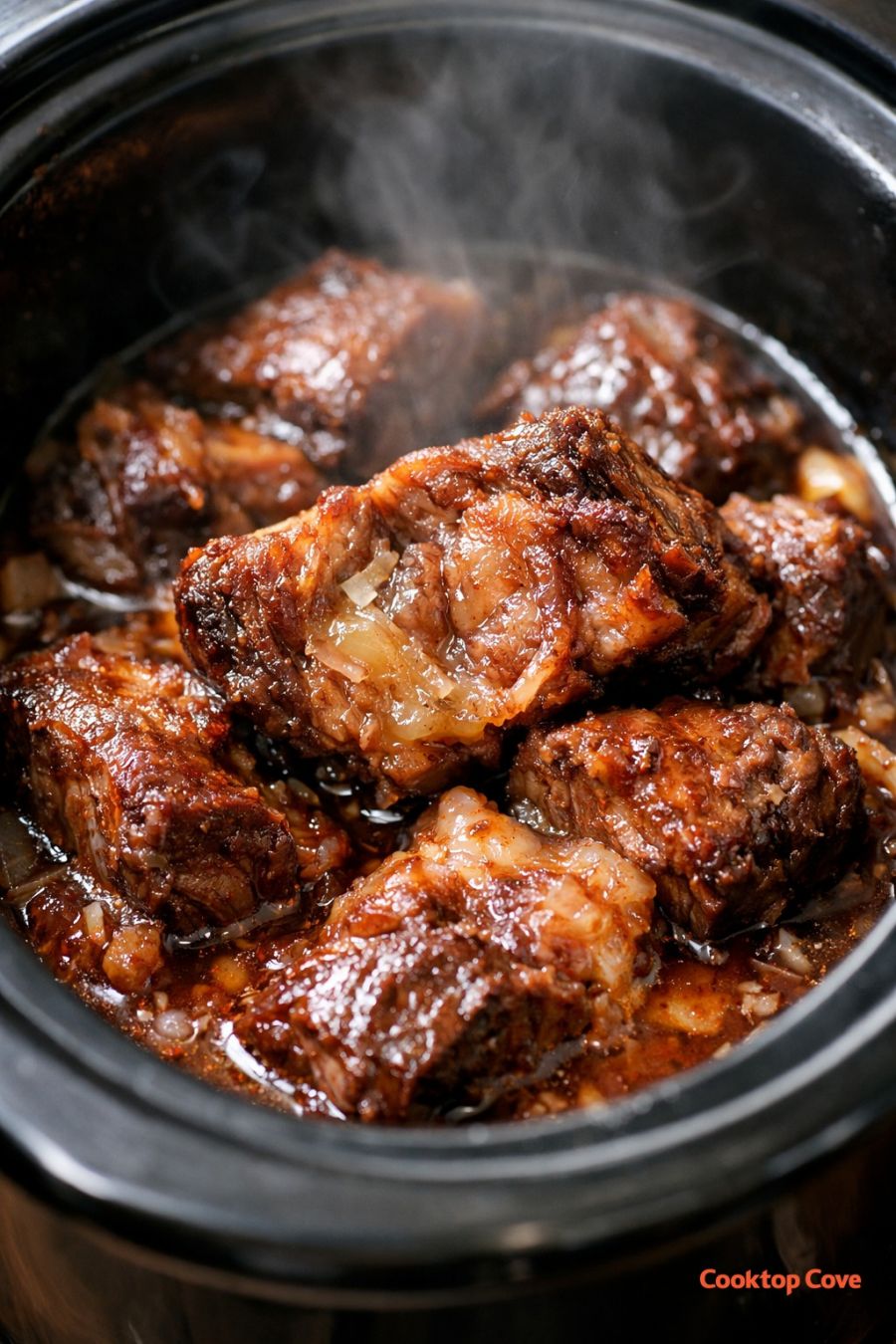
This 4-ingredient slow cooker corned beef is my go-to when I want a platter of sandwich-ready meat handled hours ahead without heating up the kitchen. It uses a raw corned beef brisket, the same cut that traveled from Irish preservation traditions into American deli culture, and lets the slow cooker do the work. The result is a succulent, sliceable brisket with a glistening, marbled interior—perfect for piling onto bread, tucking into rolls, or chopping into salads later in the week.
Chill the cooked corned beef until firm for the cleanest slices, then layer it on rye or crusty rolls with mustard, pickles, and maybe a slice of Swiss. For something lighter, serve thin slices over a simple cabbage slaw or mixed greens with a tangy vinaigrette. Leftovers are excellent diced into hash with potatoes and onions, or folded into omelets. A side of potato salad, coleslaw, or a simple tray of raw vegetables and pickles rounds out the picnic feel without adding more heat to the kitchen.
4-Ingredient Slow Cooker Corned Beef Brisket
Servings: 8–10
Ingredients
3–4 pounds raw corned beef brisket, with spice packet
1 large yellow onion, sliced into thick rounds
1 cup low-sodium beef broth or water
2 tablespoons whole-grain or Dijon mustard, plus more for serving if desired
Directions
Layer the sliced onion rounds in an even layer on the bottom of a large slow cooker. This acts as a flavorful rack to keep the brisket slightly elevated and infuses the meat with gentle sweetness.
Remove the raw corned beef brisket from its packaging, reserving the spice packet. Rinse the brisket briefly under cold running water to remove excess surface brine if you prefer a slightly less salty result, then pat dry with paper towels.
Place the brisket on top of the onion slices in the slow cooker, fat side up. Sprinkle the contents of the spice packet evenly over the top of the brisket, pressing lightly so they adhere.
In a small bowl, whisk together the beef broth (or water) and the mustard until fairly smooth. Pour this mixture around the sides of the brisket in the slow cooker, trying not to wash the spices off the top of the meat.
Cover the slow cooker with its lid and cook on LOW for 8–10 hours, or until the brisket is very tender when pierced with a fork and the interior looks moist, gelatinous, and marbled but still sliceable. Avoid lifting the lid more than necessary, as heat loss will lengthen cooking time.
When the brisket is tender, carefully transfer it to a cutting board, keeping it in one piece if possible. Tent loosely with foil and let it rest at room temperature for 15–20 minutes so the juices redistribute and the surface steam subsides.
For the cleanest slices for sandwiches, let the brisket cool until just warm, then wrap and chill it in the refrigerator for at least 2 hours or up to overnight. Slice the chilled brisket thinly against the grain for tender, neat slices ideal for sandwiches and picnic platters.
Strain the cooking liquid, discarding the onion and whole spices if you like. Skim any excess fat from the surface. Use a little of this flavorful broth to moisten sliced meat when reheating gently, or reduce it on the stovetop to drizzle over warm servings.
Store sliced corned beef in an airtight container in the refrigerator for up to 4–5 days. Keep it chilled until you’re ready to build sandwiches or gently reheat portions for warm meals.
Variations & Tips
For a slightly sweeter profile, add 2–3 tablespoons of brown sugar to the broth and mustard mixture before pouring it into the slow cooker. If you prefer a more aromatic, deli-style flavor, tuck 3–4 smashed garlic cloves and a few extra whole peppercorns around the brisket with the onions. To keep the kitchen even cooler on hot days, cook the brisket overnight and chill it in the morning so it’s ready for slicing by lunchtime. For leaner sandwiches, trim some of the fat cap after cooking and chilling, when it’s firm and easy to remove, but leave enough for moisture and flavor. Food safety tips: Always start with a fully thawed brisket—never slow cook from frozen, as it may linger in the temperature danger zone (40–140°F / 4–60°C) too long. Cook on LOW only; the gentle heat helps the connective tissue break down safely and evenly. Use a food thermometer if in doubt: the internal temperature should reach at least 190°F for fork-tender texture, even though the meat is technically safe at a lower temperature. Cool leftovers promptly; refrigerate within 2 hours of cooking (1 hour if your kitchen is very warm). Reheat only the portions you need to at least 165°F, and discard any leftovers that have been left out at room temperature too long or show signs of spoilage (off odors, sliminess, or discoloration).
