
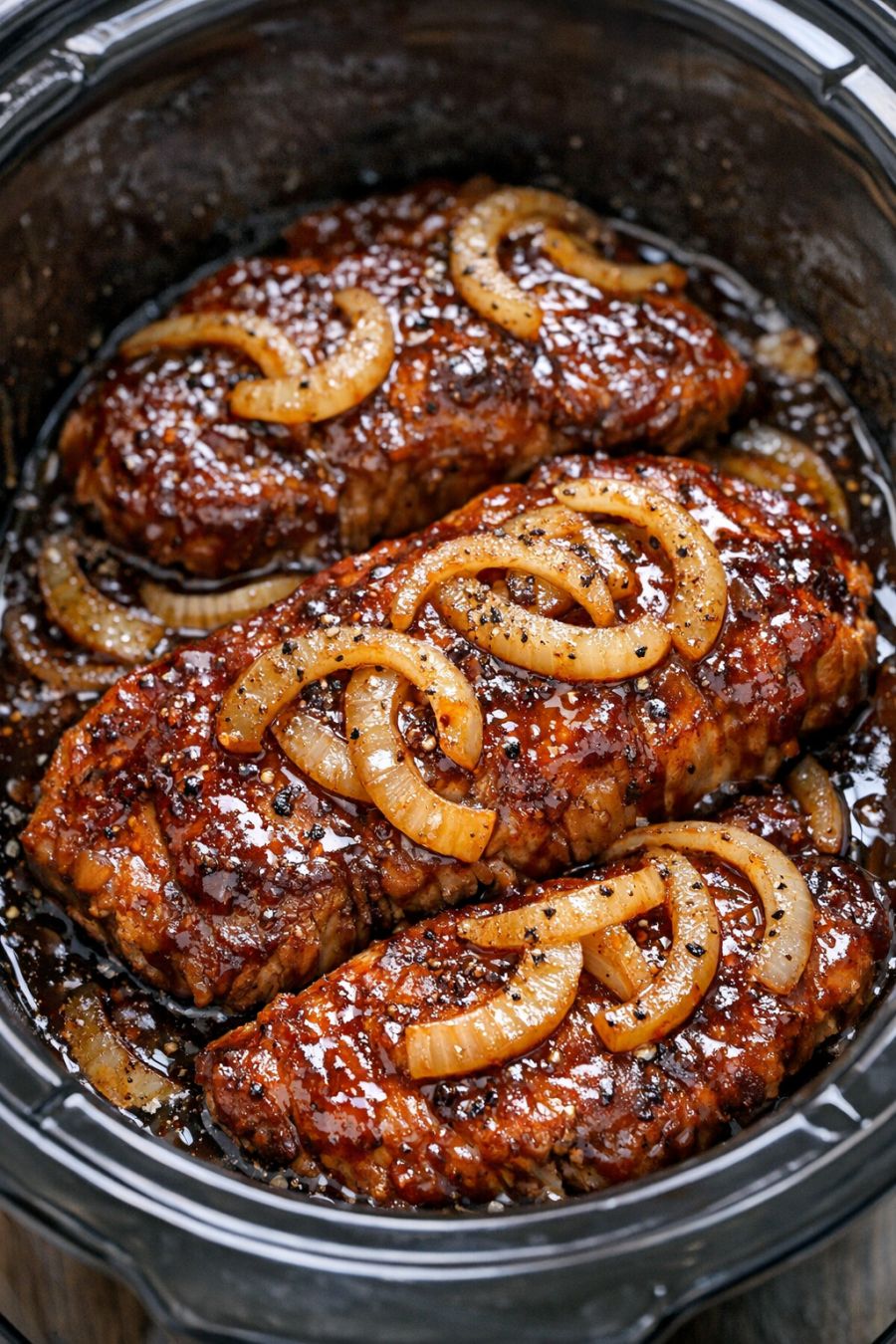
This 4-ingredient slow cooker celebration steak recipe is the sort of no-fuss, big-reward meal I lean on when the house is full and the day’s been long. Around here in the rural Midwest, pork steaks have always been a budget-friendly cut that feel like a treat when you do them right. This version starts exactly how the headline promises: you simply dump frozen pork steaks straight into the slow cooker, toss in three big handfuls of pantry staples, and let the slow heat work its magic. By suppertime, you’ve got tender, saucy pork that tastes like you fussed all afternoon, even though you barely lifted a finger.
These celebration steaks are rich and saucy, so they’re wonderful spooned over mashed potatoes, buttered egg noodles, or simple white rice to soak up every drop. Add a pan of green beans, sweet corn, or a crisp lettuce salad to balance the plate. Warm dinner rolls or sliced bread are handy for mopping up the gravy. For a more old-fashioned Sunday-style spread, serve with coleslaw and a dish of baked apples or applesauce on the side.
4-Ingredient Slow Cooker Celebration Steaks
Servings: 4
Ingredients
2 to 2 1/2 pounds frozen pork steaks (about 4 medium steaks, straight from the freezer)
2 heaping handfuls (about 2 cups) sliced onions (fresh or frozen)
1 generous handful (about 1 1/2 cups) barbecue sauce
1 generous handful (about 1 cup) cola or lemon-lime soda
Directions
Place the frozen pork steaks in a single layer in the bottom of your slow cooker insert. They can overlap slightly, but try to keep them fairly even so they cook at the same pace.
Scatter the sliced onions over the top of the frozen pork steaks, letting some fall down around the sides so the flavor works its way through the meat as it cooks.
Pour the barbecue sauce over the onions and pork in a slow, even stream, making sure most of the steaks get at least a light coating. Don’t worry about spreading it perfectly; the heat and steam will do that for you.
Slowly pour the cola (or lemon-lime soda) over everything. You’ll see it thin the barbecue sauce a bit and settle down around the pork to make a sweet, tangy cooking liquid that turns into a rich sauce.
Cover the slow cooker with the lid and cook on LOW for 7 to 8 hours, or on HIGH for 3 1/2 to 4 hours, until the pork steaks are very tender and easily pulled apart with a fork. Avoid lifting the lid during the first few hours so the heat stays consistent.
Once the pork is tender, taste the sauce and adjust if you like—if it’s too tangy, you can stir in a spoonful of barbecue sauce; if it’s too thick, splash in a little water or more soda. Gently turn the pork steaks in the sauce so they’re well coated.
Serve the pork steaks hot, spooning plenty of the onion-rich sauce over each piece. If you’d like a neater presentation, you can transfer the steaks to a platter and ladle the sauce over the top.
Variations & Tips
You can change the character of these celebration steaks just by swapping out your handful ingredients. Try using a smoky or spicy barbecue sauce for more kick, or a honey-style sauce for extra sweetness. Instead of cola, you can use root beer, ginger ale, or even apple juice for a more autumnal flavor that pairs nicely with pork. If your family loves onions, add a third handful and let them melt down into the sauce. For a little heat, sprinkle crushed red pepper flakes or a dash of hot sauce over the pork before cooking. If you prefer a thicker gravy-like sauce, remove the cooked pork steaks to a plate, stir 1 tablespoon of cornstarch mixed with 2 tablespoons of cold water into the hot liquid in the slow cooker, cover, and cook on HIGH for about 15 minutes until thickened, then return the pork to the pot. For food safety, always start with pork steaks that have been kept fully frozen or properly refrigerated, and keep them in the safe zone by cooking immediately after loading the slow cooker. Cook on LOW or HIGH as directed without using the WARM setting to start, and do not leave the slow cooker open or partially covered while cooking. The pork should reach at least 145°F in the thickest part, though for tenderness in this recipe you’ll typically be closer to 190–200°F. Refrigerate leftovers within 2 hours of serving and reheat thoroughly before eating.
