
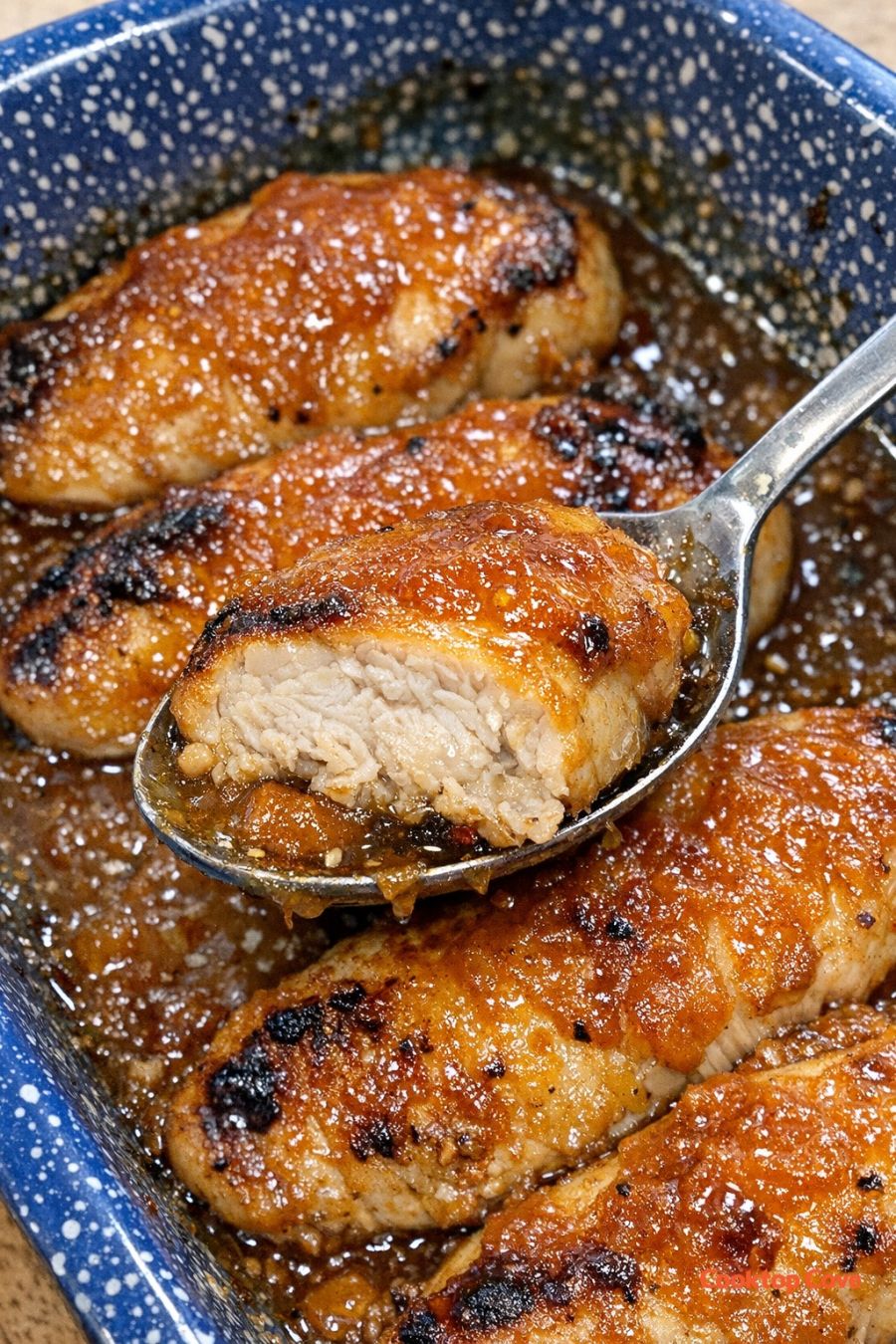
This oven baked 3-ingredient chicken patrician is one of those quietly legendary neighborhood recipes. My neighbor Helen swore she made it every summer for 40 years for block parties and graduation open houses, and everyone always assumed she’d been in the kitchen all day. In reality, it’s just chicken breasts baked in a glossy apricot glaze that caramelizes around the edges while the meat stays super tender and moist. It’s the kind of no-fuss, no-chop recipe you can throw together after work, but it still feels special enough for company.
Serve these apricot-glazed chicken breasts with simple sides that soak up the extra sauce—steamed white or brown rice, buttered egg noodles, or roasted baby potatoes all work really well. A crisp green salad or some roasted green beans or asparagus balance the sweetness of the glaze. If you’re feeding a crowd, slice the chicken and pile it onto a platter with extra sauce spooned over the top, then add a basket of crusty bread so people can mop up every bit.
Oven Baked 3-Ingredient Chicken Patrician
Servings: 4
Ingredients
2 pounds boneless, skinless chicken breasts (about 4 medium breasts)
1 1/2 cups apricot preserves (or apricot jam)
1 packet (1 ounce) dry onion soup mix
Directions
Preheat your oven to 350°F (175°C). Lightly grease a 9x13-inch baking dish; if you have a blue speckled enamel pan, this is its moment to shine.
Pat the chicken breasts dry with paper towels and trim any excess fat. Arrange them in a single layer in the prepared baking dish, leaving a little space between each piece so the glaze can flow around them.
In a medium bowl, stir together the apricot preserves and the dry onion soup mix until well combined and mostly smooth. It will look thick and glossy.
Pour the apricot-onion mixture evenly over the chicken breasts, using a spatula or the back of a spoon to spread it so each piece is fully coated. Scoop any extra glaze into the spaces around the chicken—this will turn into a saucy layer as it bakes.
Cover the baking dish tightly with foil and bake for 20 minutes. This helps the chicken start cooking gently and keeps it moist.
Remove the foil, baste the chicken with some of the pan juices, and return the uncovered dish to the oven. Bake for another 20–25 minutes, or until the chicken is cooked through and the glaze is bubbling and caramelized around the edges. The internal temperature should reach 165°F (74°C) at the thickest part of the breast.
For extra caramelized edges like Helen’s, switch the oven to broil for 2–3 minutes at the end, watching closely so the glaze doesn’t burn. You’re looking for deep golden, slightly sticky spots on the surface.
Let the chicken rest in the baking dish for 5–10 minutes. This helps the juices redistribute and keeps the interior moist. Then use a large serving spoon to scoop each breast out with plenty of the glossy apricot glaze from the pan.
Serve the chicken whole or sliced, spooning extra sauce over the top. Store any leftovers in an airtight container in the refrigerator and use within 3–4 days; reheat gently in the oven or microwave with a spoonful of extra sauce to keep the meat from drying out.
Variations & Tips
If you want to change things up without adding more than three core ingredients, you can swap the apricot preserves for peach or orange marmalade for a slightly different flavor while keeping the same easy method. For a bit more tang, stir a spoonful of Dijon mustard into the glaze (this technically adds a fourth ingredient, but it’s a nice twist when you’re not strictly counting). You can also use chicken thighs instead of breasts; boneless, skinless thighs will be extra juicy and may need an extra 5–10 minutes of baking time, while bone-in pieces will take even longer—always go by internal temperature rather than the clock. For meal prep, bake a double batch and slice the cooled chicken to use in salads, grain bowls, or sandwiches throughout the week; the sweet-savory glaze is great served cold. Food safety tips: Always start with fully thawed chicken so it cooks evenly, and avoid rinsing raw chicken to prevent spreading bacteria around your sink. Use a clean cutting board and utensils just for the raw meat, and wash your hands and surfaces thoroughly afterward. Check that the thickest part of each chicken breast reaches 165°F (74°C) with a meat thermometer before serving. If you cool and store leftovers, refrigerate them within 2 hours of cooking and reheat to at least 165°F before eating.
