
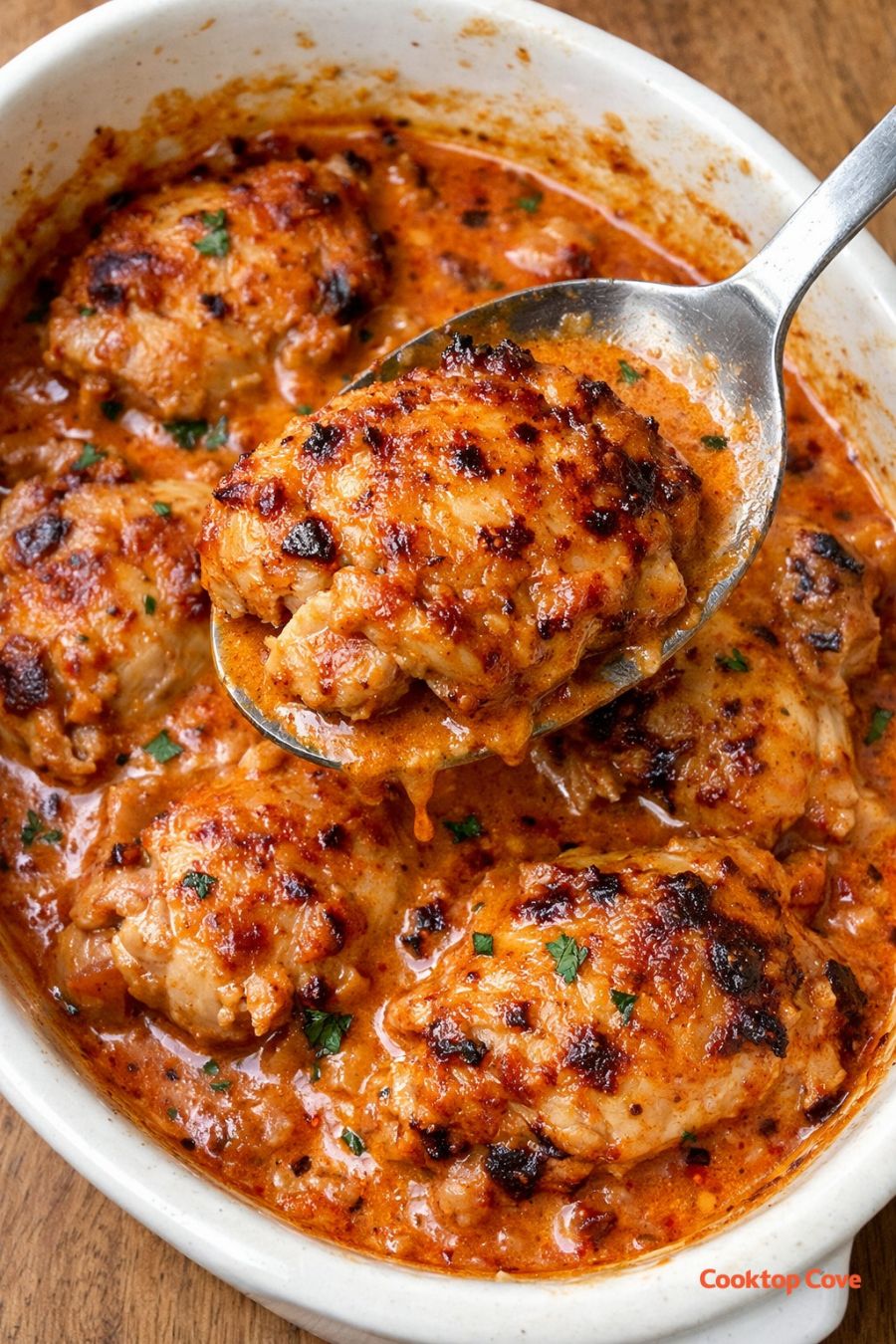
This oven baked 3-ingredient chicken cardinal is pure Midwest comfort and absolutely the kind of thing someone’s aunt would bring to every reunion from the 70s on. It’s rich, saucy, and turns out golden brown and bubbly with almost no effort. The story behind this one is that my aunt really did show up with a big, heavy casserole dish of this chicken every single summer—same faded pan, same red-tinted creamy sauce, same fights over who got to scrape the caramelized bits off the corners. It’s the definition of a back-pocket recipe: three ingredients you can keep on hand, a few minutes of prep, and the oven does the rest. If you’re juggling work, kids, or just life, this is the kind of no-brainer dinner that still feels special and nostalgic.
This chicken is all about the sauce, so serve it with something that can soak it up. Buttered egg noodles, mashed potatoes, or simple white rice are perfect. I like to add a green side—steamed green beans, a quick salad, or roasted broccoli—to balance the richness. A slice of crusty bread is great for swiping through the caramelized edges in the casserole dish. If you’re cooking for a crowd, pair it with a big pasta salad and some corn on the cob and you’ve basically recreated a full-on family reunion spread.
Oven Baked 3-Ingredient Chicken Cardinal
Servings: 4
Ingredients
2 to 2 1/2 pounds bone-in, skin-on chicken pieces (thighs, drumsticks, or a mix)
1 (10.5-ounce) can condensed cream of tomato soup
1 cup heavy cream
Directions
Preheat your oven to 375°F (190°C). Lightly grease a deep ceramic casserole dish that will hold the chicken pieces in a snug single layer.
Pat the chicken pieces dry with paper towels. This helps the skin brown and keeps the sauce from getting too watery. Arrange the chicken in the prepared casserole dish, skin side up, leaving a little space between each piece.
In a medium bowl, whisk together the condensed cream of tomato soup and the heavy cream until smooth and fully combined. The mixture should be a pale, rosy red color.
Pour the creamy tomato mixture evenly over the chicken pieces, making sure each piece is coated. The sauce should mostly surround the chicken but leave the very tops of the skin peeking out so they can brown in the oven.
Cover the casserole dish tightly with foil and bake for 35 minutes. This covered time helps the chicken cook through gently and keeps the sauce from reducing too quickly.
After 35 minutes, carefully remove the foil (watch out for steam). Baste the chicken by spooning some of the sauce over the pieces, then return the dish to the oven uncovered.
Bake uncovered for another 25 to 35 minutes, or until the chicken is cooked through (the thickest part reaches 165°F/74°C) and the sauce is thickened, bubbly, and a deeper red with caramelized edges around the dish. The exposed chicken skin should be golden brown.
If you want extra browning on top, switch the oven to broil for 2 to 3 minutes at the end, watching closely so the sauce and skin don’t burn. The sauce should look rich and slightly clingy, not runny.
Let the chicken rest in the hot dish for about 5 to 10 minutes before serving. This helps the sauce settle and thicken a bit more. Serve straight from the casserole dish, spooning plenty of the red-tinted creamy sauce over each piece of chicken.
Variations & Tips
If you want to keep the spirit of the original reunion dish but tweak it a little, you have options. For a slightly lighter version, you can swap the heavy cream for half-and-half, though the sauce will be a bit thinner and less rich. Boneless, skinless chicken thighs also work and cook a bit faster; start checking for doneness about 10 minutes earlier, since they can dry out if overbaked. For extra flavor without adding new ingredients, you can season the chicken lightly with salt and pepper before adding the sauce, but if you’re aiming for that nostalgic, three-ingredient, church-basement vibe, it truly works as written. If you want a touch more color, you can add a small spoonful of the finished sauce over cooked buttered noodles or rice and toss them before topping with the chicken. Food safety tips: Always thaw chicken completely in the refrigerator (never on the counter) before baking. Use a meat thermometer and make sure the thickest part of the chicken reaches at least 165°F (74°C). Avoid cross-contamination by using separate cutting boards and utensils for raw chicken and washing your hands, knives, and surfaces thoroughly with hot, soapy water. Leftovers should be cooled quickly, stored in an airtight container in the refrigerator within 2 hours, and eaten within 3 to 4 days. Reheat thoroughly until steaming hot before serving.
