
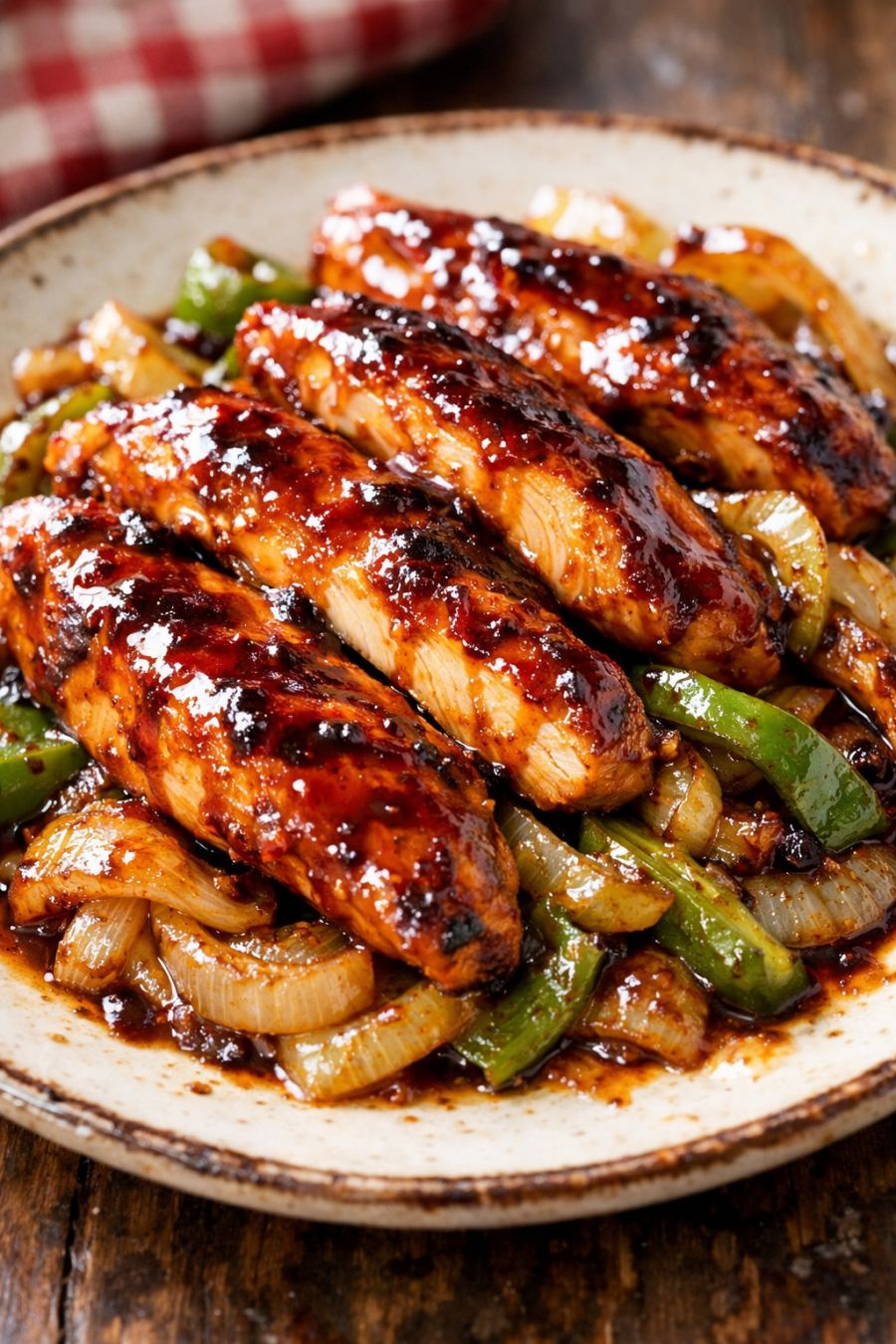
This 3-ingredient slow cooker 1940s barn dance chicken is my nod to those church-basement suppers and farm community dances where the food was hearty, unfussy, and meant to feed a crowd. You literally throw raw chicken breast strips into the crock, pour on a sweet-and-smoky barbecue sauce and a tangy cola—both ingredients that echo mid-20th-century Americana—and let the slow cooker do the work. The result is tender, saucy chicken that tastes like it simmered all afternoon on the back of a farmhouse stove, but with almost no effort.
Serve this barn dance chicken spooned over fluffy mashed potatoes, buttered egg noodles, or simple white rice to soak up the sauce. It’s also excellent piled onto soft sandwich buns with a handful of coleslaw for texture. Add a side of green beans, a crisp salad, or roasted vegetables to round out the plate. If you’re feeding a crowd, set it out buffet-style with buns, pickles, and a simple potato salad so everyone can build their own plates, barn-dance style.
3-Ingredient Slow Cooker Barn Dance Chicken
Servings: 6
Ingredients
2 pounds raw boneless, skinless chicken breast strips
1 1/2 cups thick, smoky barbecue sauce
1 cup cola (regular, not diet)
Directions
Place the raw chicken breast strips in an even layer on the bottom of a 4- to 6-quart slow cooker. The strips should be mostly in a single layer so they cook evenly and stay tender.
In a medium bowl, whisk together the barbecue sauce and cola until smooth and well combined. This thins the sauce slightly so it can circulate around the chicken and develop that glossy, slow-simmered texture.
Pour the barbecue sauce and cola mixture evenly over the raw chicken breast strips, making sure all of the chicken is coated. Use a spoon to nudge any exposed pieces so they’re covered in sauce.
Cover the slow cooker with the lid and cook on LOW for 3 1/2 to 4 1/2 hours, or on HIGH for 2 to 2 1/2 hours, until the chicken strips are cooked through and reach an internal temperature of at least 165°F (74°C). The chicken should be very tender and easy to pull apart with a fork.
Once cooked, taste the sauce and adjust seasoning if desired by adding a pinch of salt or a splash more barbecue sauce for extra smokiness. You can leave the chicken as strips for a more classic 1940s-style supper presentation, or use two forks to gently shred the chicken directly in the crock for a saucier, pulled-chicken texture.
Turn the slow cooker to WARM and let the chicken rest in the sauce for 10 to 15 minutes before serving. This helps the meat reabsorb some of the juices and makes the sauce cling nicely to every piece. Serve hot with your favorite sides or on buns.
Variations & Tips
For a slightly more old-fashioned, farmhouse flavor, choose a molasses-forward or brown sugar barbecue sauce; it echoes the sweet, pantry-based sauces home cooks relied on in the 1940s. If you prefer more tang, add 1 to 2 tablespoons of apple cider vinegar along with the cola. For a smokier profile, use a hickory-smoked barbecue sauce and, if you have it on hand, stir in a small pinch of smoked paprika (this technically adds a fourth ingredient, so consider it optional). You can also swap the cola for root beer or a cherry cola for a subtly different sweetness while keeping the same easy method. To make this recipe slightly lighter, use a reduced-sugar barbecue sauce and a cola made with less sugar; the texture will be similar, but the sauce may be a bit less sticky and thick. For serving, this chicken works beautifully in tacos or quesadillas if you shred it and pair it with a little shredded cheese and crunchy cabbage. Food safety tips: Always start with fully thawed chicken breast strips; cooking from frozen in a slow cooker can keep the meat in the temperature “danger zone” (40°F to 140°F) for too long. Keep the lid on the slow cooker during cooking to maintain a safe, steady temperature. Use a food thermometer to confirm the chicken has reached at least 165°F (74°C) in the thickest pieces before serving. Refrigerate leftovers within 2 hours in shallow containers, and reheat gently to 165°F before eating.
