
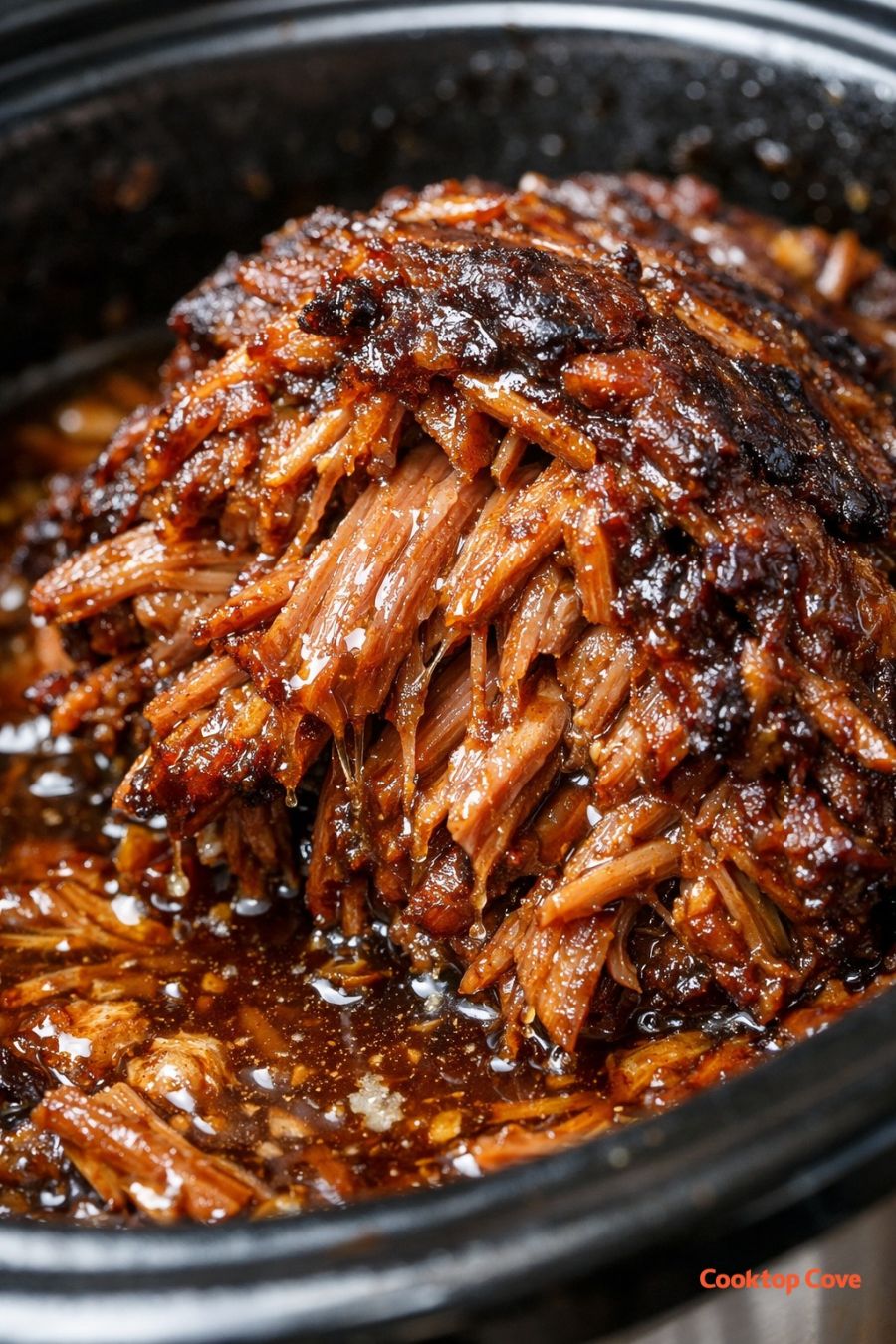
This 4-ingredient slow cooker shredded beef is my go-to “emancipation gathering” main dish: once it’s in the pot, I’m freed up to tidy the house, set the table, or actually talk to my guests. The result is a glossy, deeply savory mound of pull-apart beef bathed in its own umami-rich drippings—exactly the kind of low-effort, high-reward cooking that’s kept slow cookers on Midwestern countertops for decades. The flavor profile leans on pantry staples with roots in Japanese and European umami traditions (soy and Worcestershire), but the method is classic American pot roast: low, slow, and hands-off until the meat collapses into tender fibers.
Pile the shredded beef into shallow bowls over mashed potatoes, buttered egg noodles, or creamy polenta to soak up the glossy juices. For a more casual gathering, serve it on soft sandwich rolls with a simple slaw and pickles. It also plays nicely with roasted vegetables, steamed green beans, or a bright, vinegary salad to balance the richness. A light red wine, a malty beer, or even iced tea with lemon all complement the deep, savory flavors.
4-Ingredient Slow Cooker Emancipation Beef
Servings: 8
Ingredients
3 to 4 pounds beef chuck roast, trimmed of excess surface fat
1 cup low-sodium beef broth
1/3 cup soy sauce (regular or low-sodium)
2 tablespoons Worcestershire sauce
Directions
Pat the beef chuck roast dry with paper towels and trim away any thick, hard pieces of external fat, leaving a moderate layer so the meat stays moist and flavorful.
Place the roast in the slow cooker, positioning it so it sits as flat as possible in the bottom of the crock; this helps it cook evenly and stay partially submerged in the liquid.
In a small bowl or measuring cup, whisk together the beef broth, soy sauce, and Worcestershire sauce until well combined, then pour the mixture evenly over and around the roast.
Cover the slow cooker with the lid and cook on LOW for 8 to 10 hours, or on HIGH for 4 to 5 hours, until the beef is fork-tender and easily pulls apart into moist fibers when pressed with a fork.
Once the beef is very tender, use two large forks or tongs to carefully transfer it to a large bowl, leaving the cooking juices in the slow cooker; skim off any excess fat from the surface of the liquid if desired.
Shred the beef with two forks into bite-sized, fibrous strands, then return the shredded meat and any juices that collected in the bowl back into the slow cooker.
Gently toss the shredded beef in the hot cooking juices until every strand is glossy and well coated; taste and adjust seasoning with a small splash of soy sauce or a pinch of salt only if needed, remembering that the liquid is already quite savory.
Switch the slow cooker to WARM, cover, and let the beef sit for 15 to 30 minutes to absorb more of the juices before serving as a glossy, umami-rich mound straight from the slow cooker.
Variations & Tips
For a slightly sweeter, more barbecue-like profile, stir 1/4 cup brown sugar and 1/4 cup ketchup into the broth mixture, understanding that this technically adds ingredients beyond the core four; I like to keep those as optional add-ons for more casual cookouts. For a deeper umami note with a bit of spice, add a spoonful of gochujang or a few dashes of hot sauce to the liquid. If you prefer a lighter sodium load, use low-sodium broth and low-sodium soy sauce, and avoid adding extra salt at the end; the flavors will still concentrate as the beef cooks. You can substitute pork shoulder for the chuck roast, keeping the same liquid ratios and cooking times, for a milder, slightly sweeter shredded meat. Leftovers reheat beautifully; cool them quickly, then refrigerate in shallow containers and use within 3 to 4 days, or freeze for up to 3 months. For food safety, always thaw frozen portions in the refrigerator, not on the counter, and reheat until the beef is steaming hot throughout (165°F/74°C). If you cook the roast overnight or while away from home, make sure your slow cooker is in good working order, placed on a heat-safe surface, and not filled above the manufacturer’s recommended maximum line so the heat circulates properly and the food stays in the safe temperature zone.
