
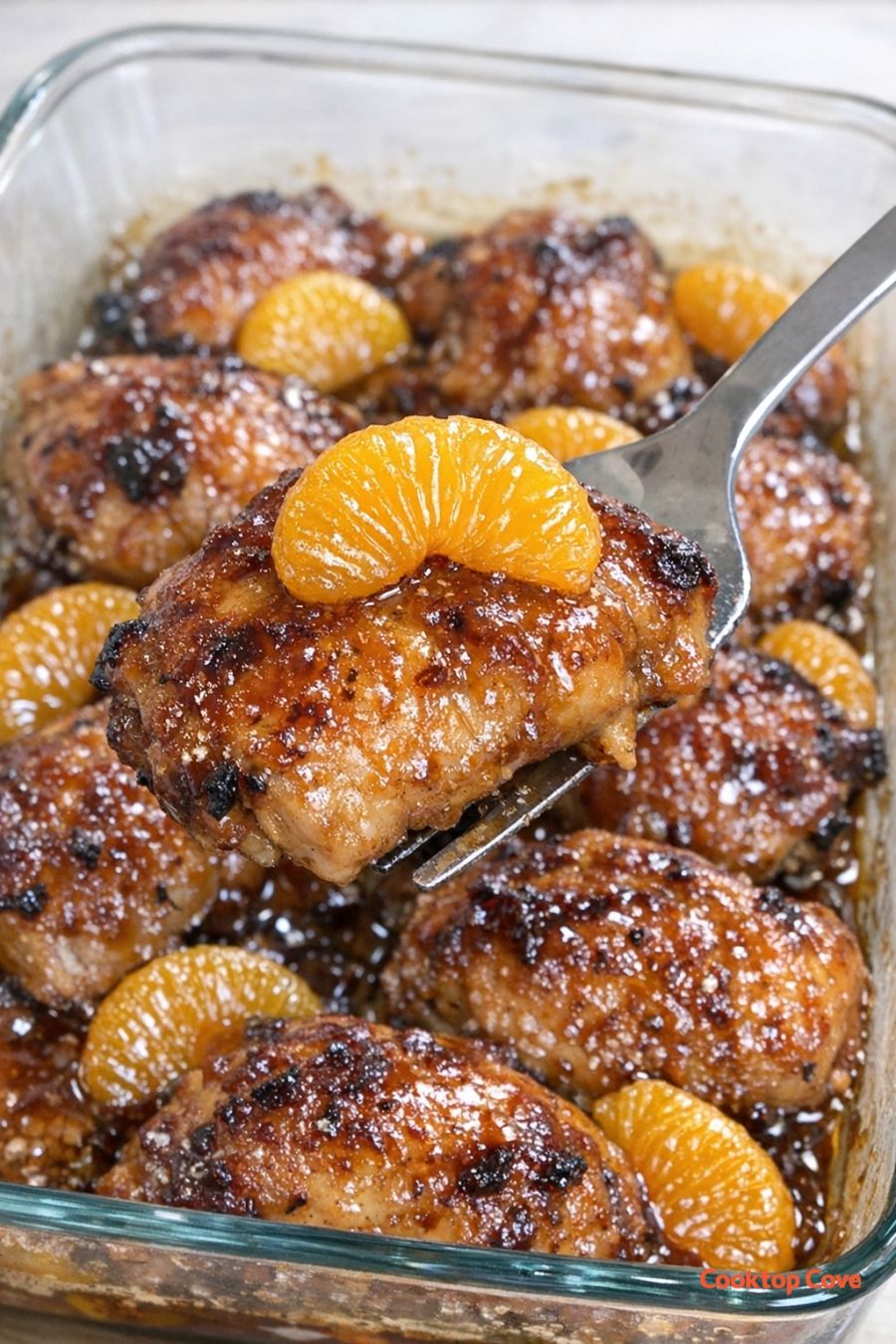
This oven baked 4-ingredient chicken mandarin is one of those simple, almost old-fashioned recipes that just works every single time. My mother-in-law clipped it from a magazine back in 1971, and she made it every June when the weather warmed up and company started coming through town. Now it’s my go-to for summer gatherings too—sweet, tangy, and just a little sticky, with tender chicken and bright mandarin orange segments on top. It bakes up in a glass dish with a glossy, caramelized glaze that looks pretty enough for guests but is easy enough for a busy weeknight.
I like to serve this chicken over plain white rice or buttered egg noodles so they can soak up all that sweet citrusy sauce. A simple green side—like steamed green beans, roasted asparagus, or a tossed salad—keeps things light and summery. If you’re feeding a crowd, add a basket of warm dinner rolls or crusty bread for sopping up the glaze, and maybe a fresh fruit salad to echo the mandarin flavor. For kids, I usually keep the sides simple: rice, corn, and maybe some carrot sticks, and let the chicken be the star.
Oven Baked 4-Ingredient Chicken Mandarin
Servings: 4
Ingredients
2 pounds boneless skinless chicken thighs (or breasts), trimmed
1 (11-ounce) can mandarin orange segments in light syrup, undrained
1 cup orange marmalade
1 (1-ounce) packet dry onion soup mix
Directions
Preheat your oven to 375°F (190°C). Lightly grease a 9x13-inch glass baking dish so the chicken doesn’t stick.
Arrange the chicken pieces in a single layer in the prepared glass dish. If some pieces are very thick, you can lightly pound them to an even thickness so they cook evenly.
In a medium bowl, stir together the orange marmalade and dry onion soup mix until well combined. Pour in the entire can of mandarin oranges with their light syrup and gently fold them into the mixture, trying not to break up the segments too much.
Pour the mandarin mixture evenly over the chicken, spreading it so each piece is coated and there are orange segments scattered across the top. The sauce will be fairly thick at this point.
Cover the dish loosely with foil and bake for 20 minutes. This helps the chicken start cooking through without the top burning.
Remove the foil, spoon some of the sauce from the bottom of the dish back over the chicken, and return the uncovered dish to the oven. Bake for another 20–25 minutes, or until the chicken is cooked through (165°F/74°C in the thickest part) and the edges of the sauce are bubbly and starting to caramelize.
For extra caramelized, glossy edges, switch the oven to broil for 2–3 minutes at the end of baking, watching closely so the sugars in the sauce don’t burn. The chicken should look golden with slightly darkened, sticky spots around the edges.
Let the dish rest for 5–10 minutes before serving so the juices settle and the sauce thickens a bit more. Use a serving fork or spatula to lift portions of chicken along with plenty of the glossy mandarin glaze and orange segments, and spoon extra sauce over rice or noodles if desired.
Variations & Tips
If your family prefers chicken breasts over thighs, you can swap them in; just try to use evenly sized pieces and check for doneness early, since white meat can dry out faster. For a slightly less sweet version, use mandarin oranges in juice instead of light syrup and reduce the orange marmalade to 3/4 cup. If you like a little kick, add a pinch of red pepper flakes or a teaspoon of Dijon mustard to the sauce mixture before baking. For picky eaters who don’t like onion bits, you can blend the sauce ingredients together in a blender or food processor before pouring over the chicken, or use half a packet of onion soup mix for milder flavor. To make this gluten-conscious, choose an onion soup mix that’s labeled gluten-free, as some brands contain wheat. Leftovers reheat well; store cooked chicken and sauce in a covered container in the refrigerator for up to 3 days and reheat until steaming hot. Food safety tips: Always wash your hands, cutting board, and utensils after handling raw chicken. Make sure the chicken reaches an internal temperature of 165°F (74°C) in the thickest part before serving. Don’t leave the cooked dish out at room temperature for more than 2 hours; refrigerate promptly. If broiling at the end, keep the oven door slightly open and stay close by, as the sugary glaze can go from perfectly caramelized to burned very quickly.
