
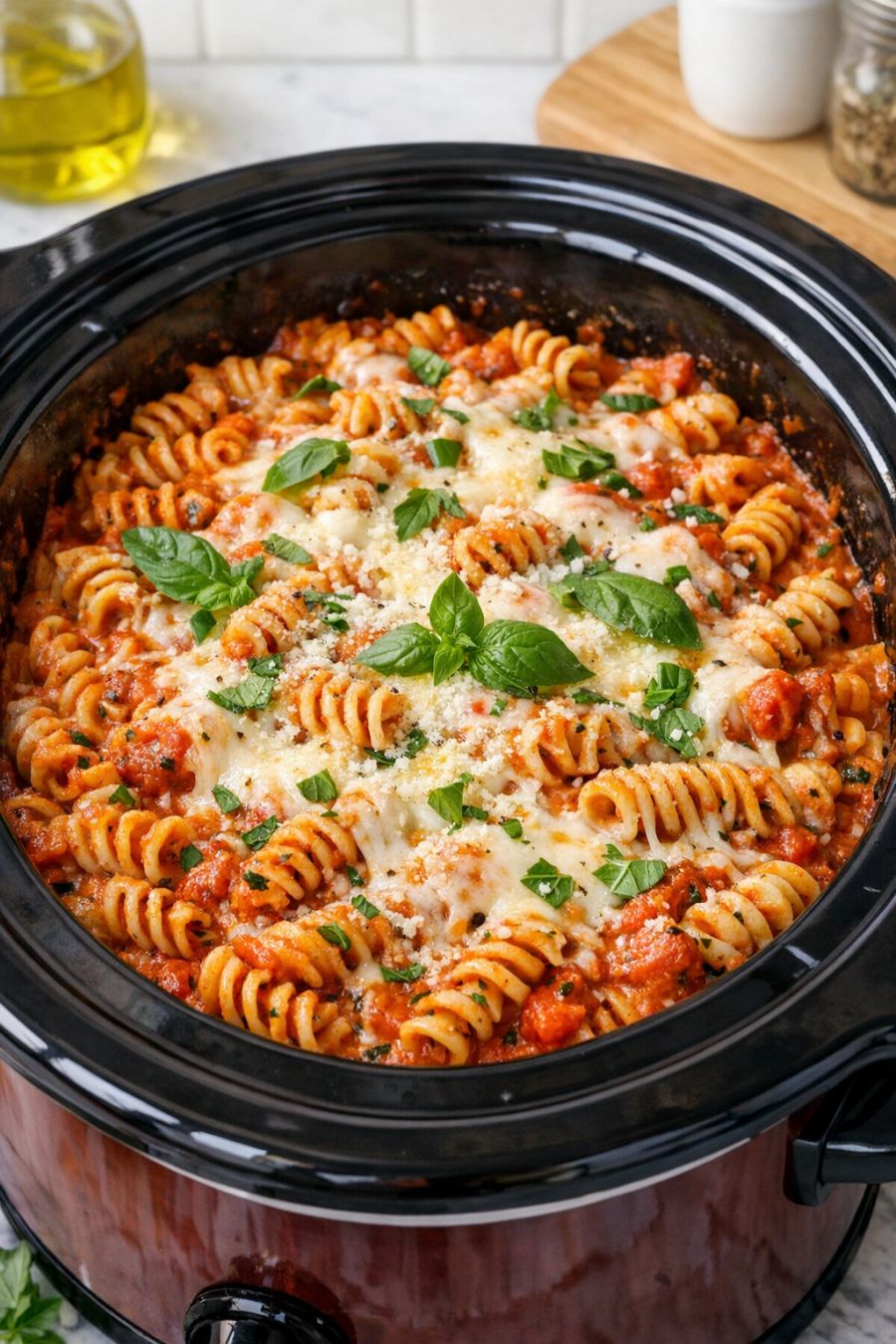
This 6-ingredient slow cooker summer solstice rotini is my kind of weeknight magic: you literally dump dry rotini straight into the crock, add five pantry-friendly basics, and let gentle heat do the work. The pasta absorbs flavor as it cooks, giving you a creamy, tomato-kissed one-pot dinner that feels far more intentional than the effort involved. While there’s no grand historical origin for this dish, it borrows from the ease of Midwestern hotdishes and the comforting flavors of Italian-American pasta bakes, adapted for a slow cooker and a busy summer evening.
Serve this slow cooker rotini straight from the crock on warm plates or shallow bowls, topped with extra grated Parmesan and a sprinkle of fresh basil or parsley if you have it. A crisp green salad with a light vinaigrette balances the richness nicely, and warm crusty bread or garlic toast is perfect for soaking up the sauce. For drinks, a chilled Pinot Grigio, a light red like Lambrusco, or sparkling water with lemon complements the tomato and cheese without overwhelming the dish.
Slow Cooker Summer Solstice Rotini
Servings: 4-6
Ingredients
12 oz dry rotini pasta
3 cups low-sodium chicken broth (or vegetable broth)
2 cups jarred marinara sauce
1 cup shredded mozzarella cheese
1/2 cup grated Parmesan cheese
1 cup heavy cream (or half-and-half)
Directions
Lightly coat the inside of a 4- to 6-quart slow cooker with nonstick spray or a thin film of neutral oil to help prevent sticking.
Pour the dry rotini pasta into the bottom of the slow cooker, spreading it into an even layer. It should look like a close-up of raw spirals covering the base of the crock.
In a large bowl or measuring pitcher, whisk together the chicken broth, marinara sauce, and heavy cream until the mixture is mostly smooth and uniform in color. This helps the liquid distribute evenly so the pasta cooks consistently.
Pour the sauce mixture evenly over the dry rotini, pressing down gently with a spoon or spatula to ensure all the pasta is submerged. Try to tuck in any stray pieces so they’re not sitting completely dry on top.
Sprinkle the shredded mozzarella and grated Parmesan evenly over the surface. Do not stir; the cheeses will melt down into the pasta as it cooks, creating a creamy, slightly stretchy top layer.
Cover the slow cooker with the lid and cook on LOW for 2 to 3 hours. Begin checking at the 2-hour mark: the pasta should be tender but not mushy, and the sauce should be thickened and creamy around the edges.
Once the rotini is al dente and most of the liquid has been absorbed into the pasta and sauce, gently stir from the edges toward the center to combine the melted cheeses with the pasta. Taste and adjust seasoning with salt and freshly ground black pepper if desired.
Turn the slow cooker to WARM and let the pasta sit, covered, for 5 to 10 minutes to settle and thicken slightly before serving. Scoop into bowls and garnish with extra Parmesan or fresh herbs if you’d like.
Variations & Tips
For a vegetarian version, use vegetable broth instead of chicken broth. To add protein, fold in 1 to 2 cups of cooked Italian sausage, rotisserie chicken, or drained canned white beans when you stir the pasta at the end of cooking; return to WARM for 5 to 10 minutes to heat through. If you’d like more vegetables, stir in 1 to 2 cups of thawed frozen spinach, peas, or mixed vegetables in the last 20 to 30 minutes of cooking so they stay bright and don’t overcook. For a lighter dish, substitute half-and-half for the heavy cream and reduce the mozzarella by half; the sauce will be a bit looser but still comforting. You can also swap in another short, sturdy pasta like penne or fusilli, but shapes thinner than rotini may cook faster, so begin checking 15 to 20 minutes earlier. Food safety tips: Keep the lid on during cooking except for quick checks to maintain a safe, steady temperature. Use pre-cooked meats only if adding them at the end; raw meat needs its own full slow-cooking cycle and should not be added partway through this pasta recipe. Refrigerate leftovers within 2 hours of cooking in shallow containers, and reheat to at least 165°F before serving. Because dairy-based sauces can separate if held too long, avoid leaving this dish on the WARM setting for more than 2 hours after it’s done.
