
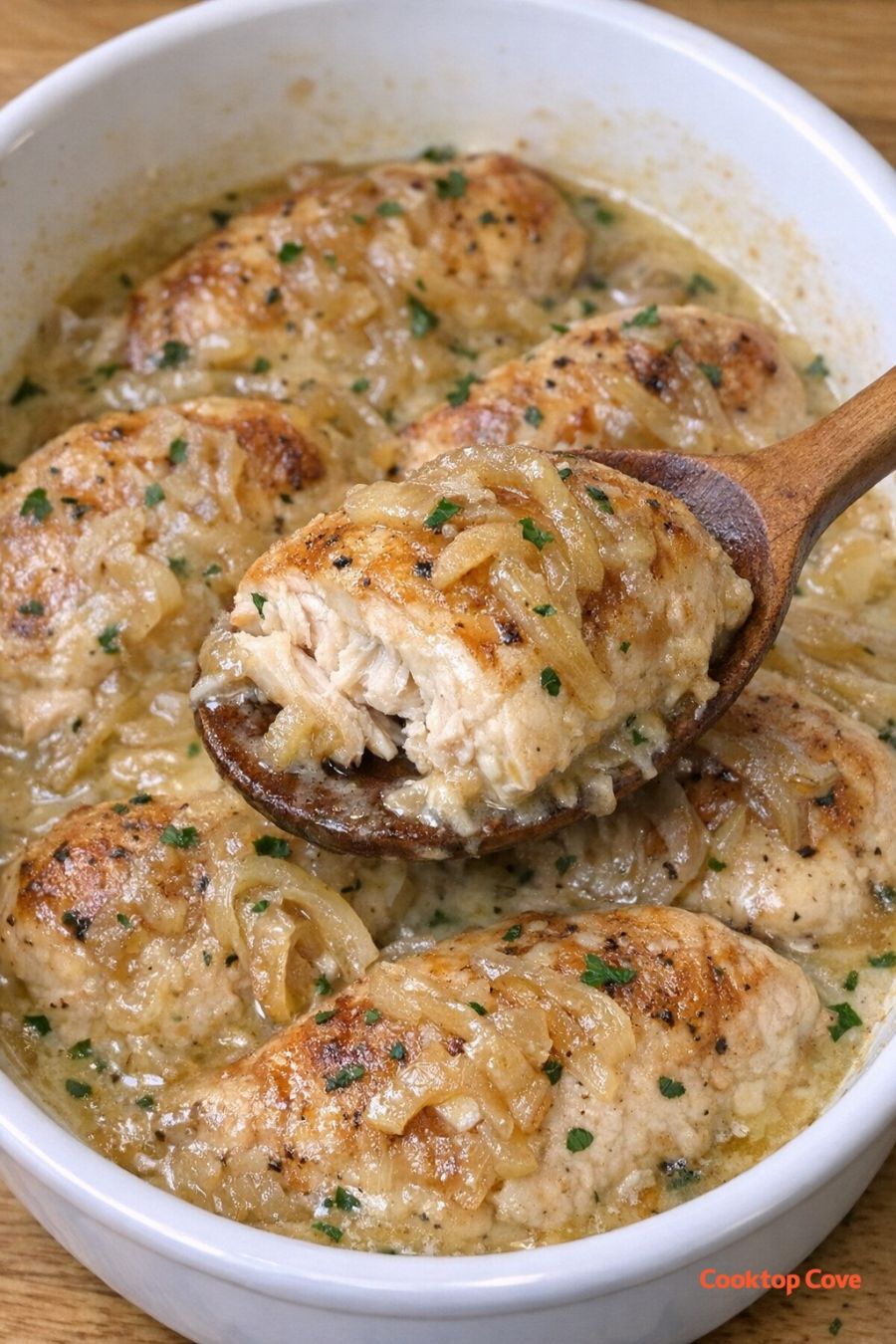
This oven baked 3-ingredient chicken Parisian is straight out of the kind of glossy summer magazine my aunt would have picked up at the grocery store checkout in the late 60s. It’s the kind of recipe you make on repeat because it feels a little fancy—creamy white wine sauce, soft caramelized onions, golden chicken—but it’s also weeknight-easy and uses only three real ingredients. Everything bakes together in one casserole dish, and the sauce basically makes itself while you’re off doing other things, which is exactly the kind of low-effort, high-reward cooking I lean on after work.
Serve the chicken straight from the casserole dish with plenty of that creamy white wine and onion sauce spooned over the top. It’s perfect over buttered egg noodles, mashed potatoes, or a simple rice pilaf to catch every bit of the sauce. Add something green on the side—steamed green beans, a crisp salad, or roasted asparagus—to balance the richness. A glass of the same dry white wine you used in the recipe ties everything together, but sparkling water with lemon is just as nice on a busy weeknight.
Oven Baked 3-Ingredient Chicken Parisian
Servings: 4
Ingredients
2 pounds bone-in, skin-on chicken pieces (thighs, drumsticks, or a mix)
2 large yellow onions, thinly sliced
1 1/2 cups dry white wine (such as Sauvignon Blanc or Pinot Grigio)
Directions
Preheat your oven to 375°F (190°C). Lightly grease an oval or 9x13-inch ceramic or glass baking dish so the chicken doesn’t stick.
Peel and thinly slice the onions into half-moons. Spread the sliced onions evenly over the bottom of the baking dish to make a bed for the chicken. This is what will soften, caramelize, and blend into the sauce as it bakes.
Pat the chicken pieces dry with paper towels. This helps the skin brown and keeps the sauce from getting too watery. Arrange the chicken, skin side up, in a single layer on top of the onions. The pieces can be snug, but try not to overlap them too much so they brown evenly.
Pour the white wine around the chicken and over the onions, avoiding pouring directly on top of the chicken skin as much as possible so the skin can still crisp. The wine should come about 1/3 to 1/2 of the way up the sides of the chicken pieces, depending on the depth of your dish.
Slide the dish into the preheated oven, uncovered. Bake for 30 minutes without disturbing it so the chicken starts to brown and the onions begin to soften and release their juices into the wine.
After 30 minutes, carefully spoon some of the pan juices over the onions to keep them moist and encourage even cooking. If any onions on the edges are browning too fast, tuck them back under the chicken. Return the dish to the oven and continue baking for another 25 to 35 minutes, or until the chicken is deep golden brown, the onions are soft and caramelized around the edges, and the sauce has reduced slightly.
Check for doneness by inserting an instant-read thermometer into the thickest part of a piece of chicken without touching the bone; it should read at least 165°F (74°C). If the chicken is not quite there, continue baking in 5- to 10-minute increments, checking again as needed.
Once done, remove the dish from the oven and let the chicken rest for about 5 to 10 minutes. As it rests, the juices settle and the wine-onion mixture thickens slightly into a silky, spoonable sauce.
To serve, use a wooden spoon or spatula to scoop up a piece of chicken along with a generous amount of the creamy wine and onion sauce from the bottom of the dish. Spoon the sauce over the top of the chicken on each plate and serve warm.
Variations & Tips
If you want to keep the spirit of the original 3-ingredient recipe but tweak it a bit, you can swap the yellow onions for sweet onions for a milder, almost jammy flavor, or use a different dry white wine you already have open. For a slightly richer sauce, stir in a splash of heavy cream or a knob of butter at the very end, right after the chicken comes out of the oven (this technically adds an extra ingredient, but you can easily skip it and stay true to the classic clipped-from-a-magazine version). You can also use all thighs or all drumsticks if that’s what your family likes best; just keep an eye on the cooking time, as smaller pieces may cook a little faster. For food safety, always thaw chicken completely in the refrigerator (never on the counter), avoid rinsing raw chicken to prevent splashing bacteria, and wash your hands, cutting boards, and knives thoroughly after handling it. Use an instant-read thermometer to confirm the internal temperature reaches at least 165°F (74°C) before serving, and refrigerate leftovers within 2 hours in a shallow container. Leftovers reheat well in a covered dish in a low oven with a splash of water or wine to loosen the sauce.
