
This oven-baked 4-ingredient olive tapenade rotini is the kind of no-fuss casserole I lean on when life gets busy but I still want something deeply savory on the table. It borrows the spirit of simple Amish pantry casseroles—where dry pasta, a creamy or brothy base, and a few flavorful additions bake together in one dish—then layers in the briny punch of jarred olive tapenade. Everything is spooned right over uncooked rotini in a casserole dish, then baked until the pasta is tender and the top is lightly browned. It’s practical, comforting, and just interesting enough to keep everyone coming back for seconds.
Serve this olive tapenade rotini straight from the casserole dish with a simple green salad—think mixed greens, red onion, and a bright vinaigrette—to balance the richness and saltiness of the olives. Warm garlic bread or a crusty baguette is a natural partner to soak up the savory sauce that collects at the bottom of the dish. A light-bodied red wine, such as a Chianti or Beaujolais, or a crisp white like Pinot Grigio, pairs nicely with the briny olive flavors. For a bigger spread, add roasted vegetables like broccoli or green beans to round out the meal.
Oven-Baked 4-Ingredient Olive Tapenade Rotini
Servings: 4
Ingredients
12 ounces uncooked rotini pasta
1 1/2 cups jarred olive tapenade (about one 12-ounce jar, stirred)
3 cups low-sodium chicken broth (or vegetable broth)
1 cup shredded mozzarella cheese, lightly packed
Directions
Preheat your oven to 375°F (190°C). Lightly grease a 2- to 3-quart casserole dish with a little oil or cooking spray to help prevent sticking.
Pour the uncooked rotini pasta into the casserole dish and spread it into an even layer. This forms the base of the dish and will cook right in the oven.
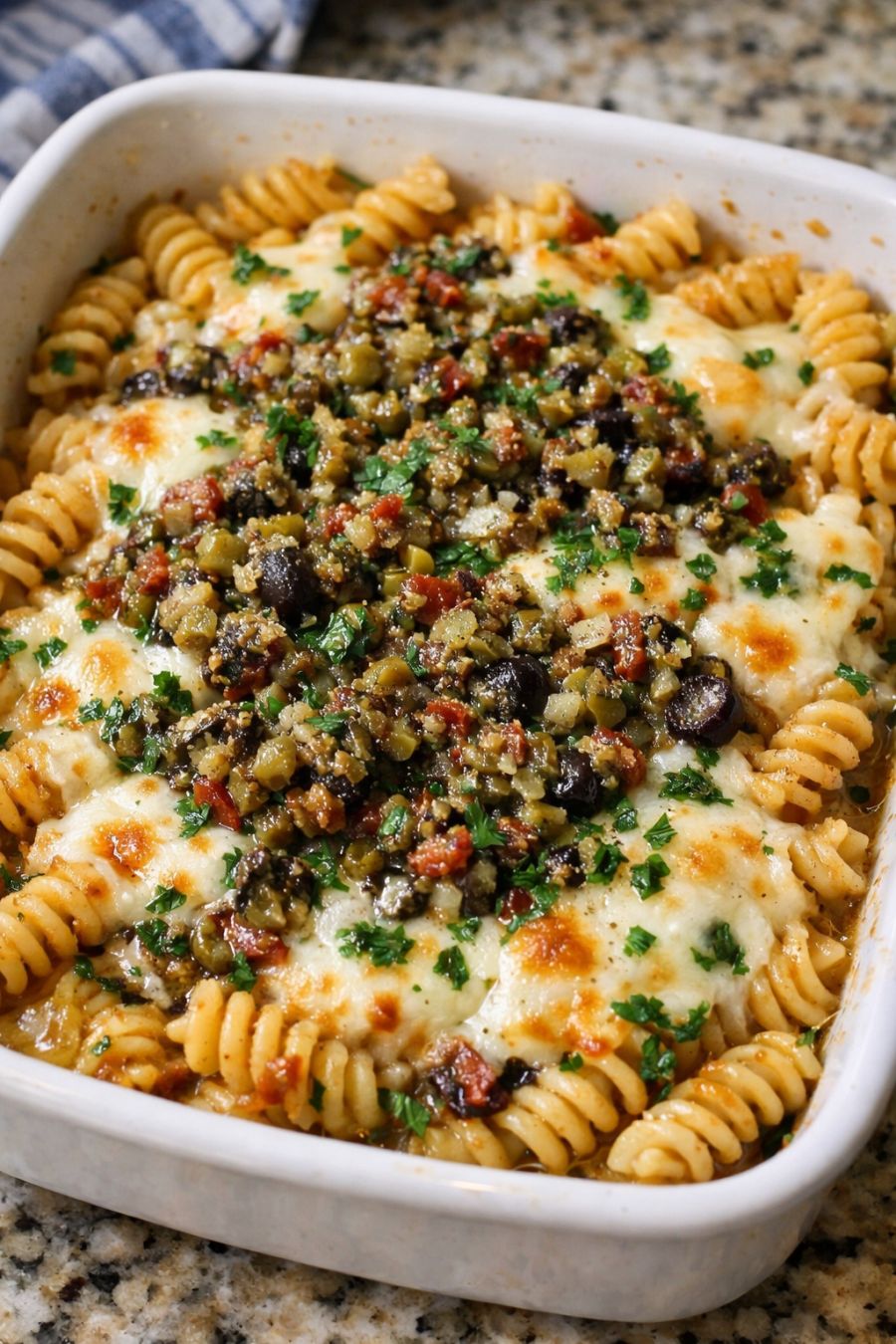
Give the jarred olive tapenade a good stir so the oil and chopped olives are evenly mixed. Spoon the tapenade evenly over the dry rotini, as shown in the image: generous spoonfuls scattered across the top so every area of pasta gets some of that briny flavor.
Carefully pour the chicken broth (or vegetable broth) over the pasta and tapenade, making sure the liquid seeps down through the noodles. Gently press down any pasta that is sticking far above the liquid; most of the rotini should be just submerged, with a few pieces peeking out.
Cover the casserole dish tightly with foil. Bake in the preheated oven for 30 minutes, allowing the rotini to absorb the broth and the flavors of the olive tapenade.
After 30 minutes, remove the foil and check the pasta by tasting one piece; it should be just shy of tender. If it is still quite firm and there is very little liquid, add 1/4 to 1/2 cup more broth, gently stirring around the edges.
Sprinkle the shredded mozzarella cheese evenly over the top of the pasta and tapenade mixture. Return the uncovered casserole to the oven and bake for another 10 to 15 minutes, or until the cheese is melted, lightly golden in spots, and the pasta is fully tender.
Remove the casserole from the oven and let it rest for 5 to 10 minutes. This short rest allows the sauce to thicken slightly and makes the pasta easier to serve in neat scoops.
Taste and adjust seasoning if needed (the tapenade is naturally salty, so you may not need additional salt). Scoop into warm bowls and serve while the casserole is still hot and the cheese is stretchy.
Variations & Tips
Because this recipe leans heavily on the salt and flavor of the olive tapenade, it’s easy to customize while keeping the process the same—spooning tapenade and just a few other ingredients over uncooked rotini and baking until tender. For a vegetarian version, use vegetable broth instead of chicken broth and be sure your tapenade is made without anchovies if that’s a concern. To make it creamier, replace 1 cup of the broth with heavy cream or half-and-half, keeping the total liquid close to 3 cups so the pasta cooks through. If you’d like a bit of protein, stir 1 to 1 1/2 cups of drained, rinsed chickpeas or diced cooked chicken into the dry pasta before adding the tapenade and broth. A sharper cheese, such as shredded provolone or an Italian blend, can be swapped for the mozzarella for a more pronounced flavor, or add 1/4 cup grated Parmesan on top for extra savoriness. For a mild heat, sprinkle in a pinch of red pepper flakes with the tapenade. Food safety tips: Always check that jarred tapenade is within its expiration date and that the seal is intact before using; discard if the lid is bulging or the contents smell off. Once opened, store the remaining tapenade in the refrigerator according to the jar’s instructions. When handling cheese, keep it refrigerated until you’re ready to assemble the casserole, and avoid leaving the finished dish at room temperature for more than 2 hours to reduce the risk of bacterial growth. If you reheat leftovers, heat them to at least 165°F (74°C) and consume within 3 to 4 days.
