
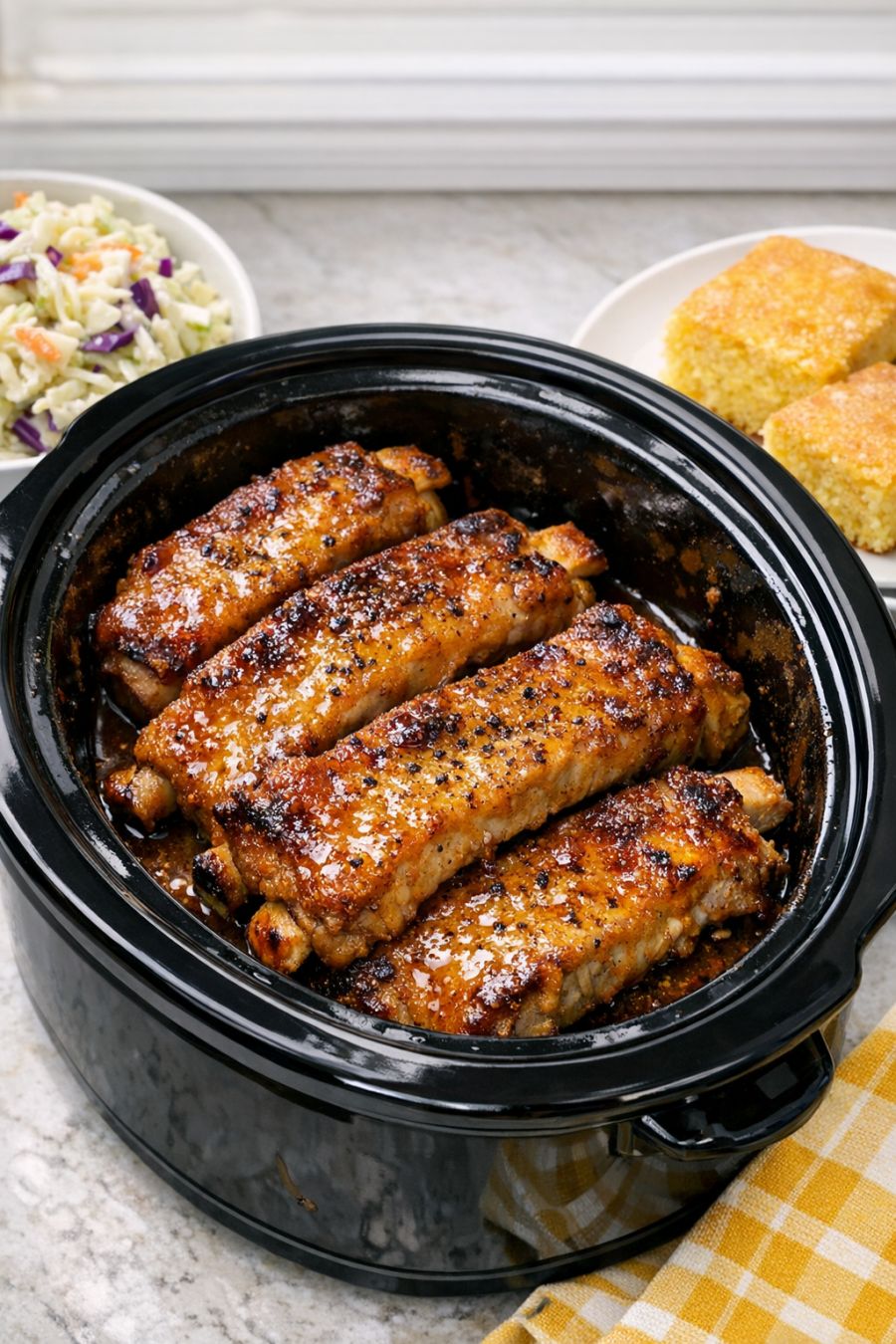
This is the sort of recipe I lean on when the day gets away from me and supper still needs to appear on the table. It reminds me of the kind of church-basement potlucks I grew up with in the rural Midwest—hearty, thrifty, and not fussy at all. These slow cooker Carolina-style mustard ribs start with a rack of frozen raw spare ribs and an entire bottle of plain yellow mustard, squeezed on just as it is, no shaking or mixing first. A couple of simple pantry helpers round it out into a tangy, gently sweet sauce that tastes like it simmered on a smokehouse pit all afternoon, while you barely lifted a finger.
I like to serve these mustardy ribs with classic Midwestern sides: a big bowl of creamy coleslaw, buttered corn, and maybe some baked beans if I have them. Thick slices of white bread or soft dinner rolls are perfect for soaking up the extra sauce from the slow cooker. A simple green salad or sliced cucumbers in vinegar helps cut the richness. For a real old-fashioned spread, add potato salad and a jar of dill pickles on the table, and let everyone dig in family-style.
Slow Cooker Carolina Mustard Ribs
Servings: 4–6
Ingredients
1 rack (about 3–4 lb) frozen raw pork spare ribs
1 bottle (14–16 oz) yellow mustard, completely unmixed and unshaken
1/2 cup packed light brown sugar
1/4 cup apple cider vinegar
Directions
Place the frozen raw spare ribs into the bottom of a large slow cooker. If the rack is too long, cut it into 2–3 sections so it fits, stacking the pieces slightly if needed.
Without shaking or stirring the bottle, squeeze the entire unmixed bottle of yellow mustard directly over the top of the frozen ribs. Let it fall in thick ribbons and puddles, just as it comes out.
Sprinkle the brown sugar evenly over the mustard-covered ribs, letting it sit on top of the mustard rather than mixing it in.
Pour the apple cider vinegar around the edges of the ribs into the bottom of the slow cooker, trying not to wash the mustard and sugar off the meat. It’s fine if some runs down; just don’t stir.
Cover the slow cooker with the lid and cook on LOW for 8–10 hours, or on HIGH for 4–5 hours, until the ribs are very tender and the meat pulls away from the bones easily. During cooking, the mustard, brown sugar, and vinegar will naturally blend into a sauce.
Once the ribs are tender, carefully lift them out with tongs or a wide spatula, as they will be very soft. If you’d like a thicker sauce, skim off excess fat from the liquid in the slow cooker and simmer the sauce in a small saucepan on the stove for 5–10 minutes to reduce slightly.
Serve the ribs hot with spoonfuls of the tangy mustard sauce ladled over the top. If desired, you can finish the ribs under the broiler for 3–5 minutes to brown the edges, brushing them with a little of the sauce before broiling.
Variations & Tips
For a little heat, stir 1–2 teaspoons of crushed red pepper flakes or a few dashes of hot sauce into the apple cider vinegar before pouring it into the slow cooker. If you prefer a smokier flavor, add 1–2 teaspoons of smoked paprika or a few drops of liquid smoke to the vinegar. You can also swap the brown sugar for honey for a floral sweetness, or use dark brown sugar for a deeper molasses note. If your family likes more tang, add an extra tablespoon or two of vinegar at the end of cooking and taste as you go. For a slightly leaner version, use St. Louis–style ribs instead of full spare ribs, or trim excess surface fat before freezing. FOOD SAFETY TIPS: Always start with ribs that have been kept properly frozen and are still solid when they go into the slow cooker. Make sure they are fully submerged in a hot cooking environment for the entire time; do not cook on the WARM setting. Because you’re starting from frozen, avoid using the LOW setting for less than 8 hours; the meat needs enough time above 140°F to be safe. If you’re concerned, thaw the ribs overnight in the refrigerator before cooking. The ribs are done when they are tender and reach an internal temperature of at least 190–195°F for best texture (minimum safe temperature is 145°F, but ribs are tough below the higher range). Refrigerate leftovers within 2 hours of cooking and reheat thoroughly before serving.
