
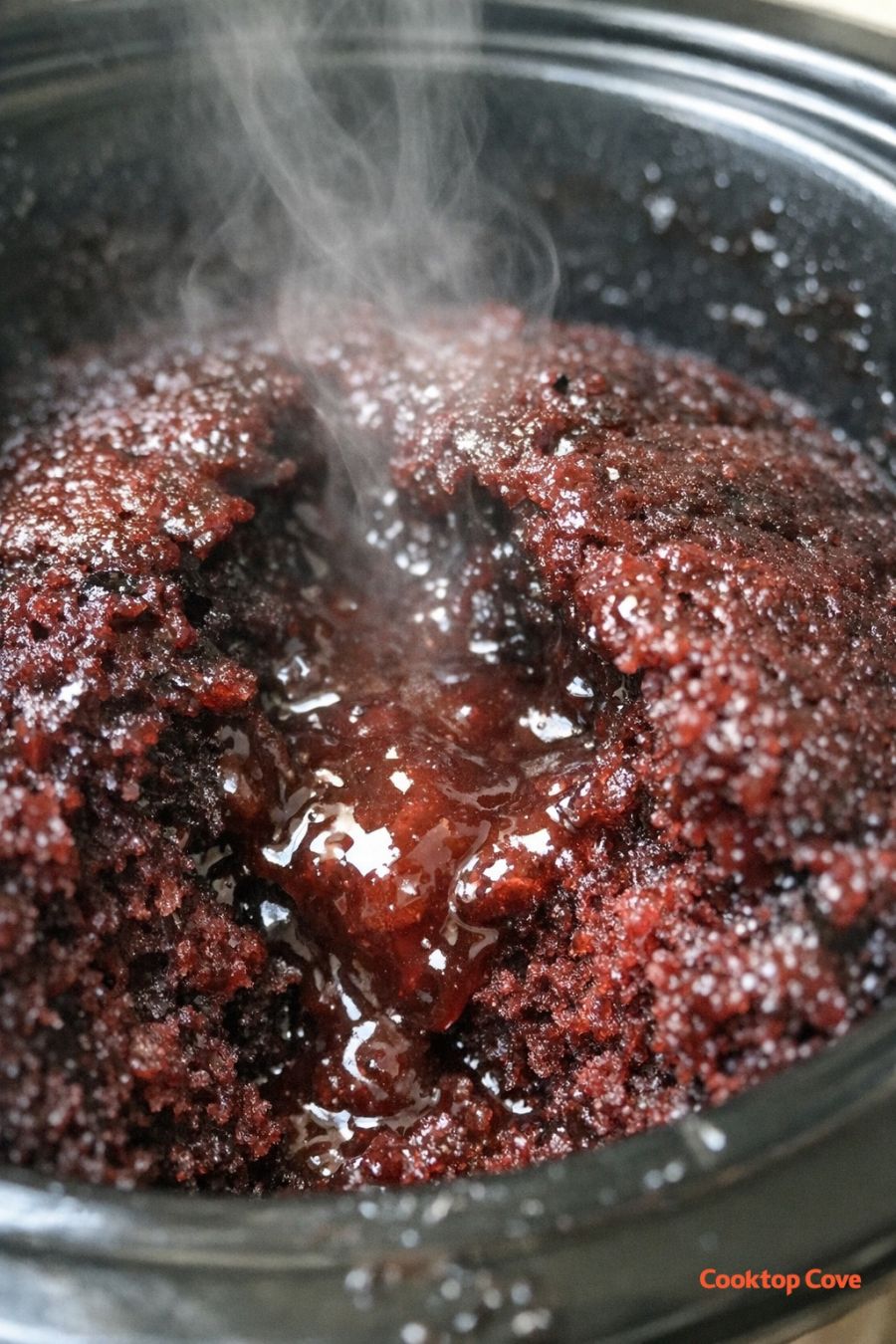
This little slow cooker red velvet spoon cake is what I reach for when I want dessert handled hours ahead, especially around the Fourth of July when the house is already busy with burgers, corn on the cob, and cousins underfoot. It leans on a good old boxed red velvet cake mix, the same kind my church ladies started using back in the 70s when those bright red cakes first swept through every potluck table in the Midwest. With just three ingredients and a slow, gentle cook, you end up with a dark crimson, glossy sponge that stays gooey in the center—almost like a cross between a pudding cake and a brownie. It’s the kind of practical comfort dessert farm families appreciate: mix it, walk away, and come back to a steamy, vintage-style treat ready to spoon straight from the crock.
Serve this warm straight from the slow cooker, spooned into small bowls. A scoop of vanilla ice cream or a dollop of whipped topping melts right into the gooey center and makes the red color really pop, especially if you’re setting out blueberries on the side for a red, white, and blue Fourth of July spread. A glass of cold milk or a cup of coffee pairs nicely with the rich cocoa notes. If you’re feeding a crowd, park the slow cooker on the buffet with a ladle, stack of bowls, and a little dish of sprinkles so folks can help themselves throughout the evening as fireworks wind down.
3-Ingredient Slow Cooker Red Velvet Spoon Cake
Servings: 8-10
Ingredients
1 box (15.25 ounces) dry red velvet cake mix
1 3/4 cups whole milk
1/2 cup (1 stick) unsalted butter, melted and slightly cooled
Directions
Lightly grease the inside of a 4- to 6-quart slow cooker with butter or nonstick spray to keep the cake from sticking and to help the edges stay tender.
In a large mixing bowl, whisk together the dry red velvet cake mix and the milk until you have a thick, smooth batter with no dry pockets. The batter will be looser than a standard cake batter but thicker than pancake batter.
Slowly drizzle in the melted, slightly cooled butter while stirring, mixing just until the butter is fully incorporated and the batter looks glossy and uniform.
Pour the batter into the prepared slow cooker and gently tap the crock a few times on the counter to release any large air bubbles and level the surface.
Cover the slow cooker with its lid. For extra moisture retention, you can lay a clean kitchen towel or a double layer of paper towels over the top of the crock before placing the lid on, making sure the towel edges do not touch the heating element.
Cook on LOW for 2 1/2 to 3 1/2 hours, or until the edges are set and springy but the center is still glossy and jiggles slightly when you nudge the crock. Avoid lifting the lid during the first 2 hours so the cake can rise and steam properly.
Once the cake reaches that spoonable, gooey-center stage, turn off the slow cooker, remove the lid, and let it stand for about 10 to 15 minutes. Steam will rise, and the top will look dark crimson and shiny while the center stays soft and pudding-like.
Spoon the warm red velvet cake directly from the slow cooker into bowls, making sure each serving includes some of the gooey center. Serve immediately while hot and steamy for the best vintage pudding-cake texture.
Variations & Tips
For a richer flavor, you can substitute half-and-half for part of the milk, but keep the total liquid amount the same so the cake still sets properly. If you like a more pronounced cocoa note, stir in 1 to 2 tablespoons of unsweetened cocoa powder with the dry mix, understanding that this technically adds another ingredient beyond the simple base recipe. Around the Fourth of July, I like to spoon this cake into bowls and top with whipped cream and fresh blueberries for a red, white, and blue dessert. You can also drizzle warm chocolate or caramel sauce over each serving, or scatter mini chocolate chips on top of the batter before cooking for little pockets of melted chocolate. If your slow cooker runs hot, start checking at the 2-hour mark so the edges don’t overcook—every crock is a little different, especially older models. For food safety, keep the cake on the WARM setting for no more than 2 hours after it finishes cooking; after that, cool leftovers quickly, transfer them to a shallow container, and refrigerate within 2 hours. Reheat single servings in the microwave until just warm and steamy. Always ensure the milk and butter are fresh and kept refrigerated until you’re ready to mix, and never leave the batter sitting out for long before you start the slow cooker.
