
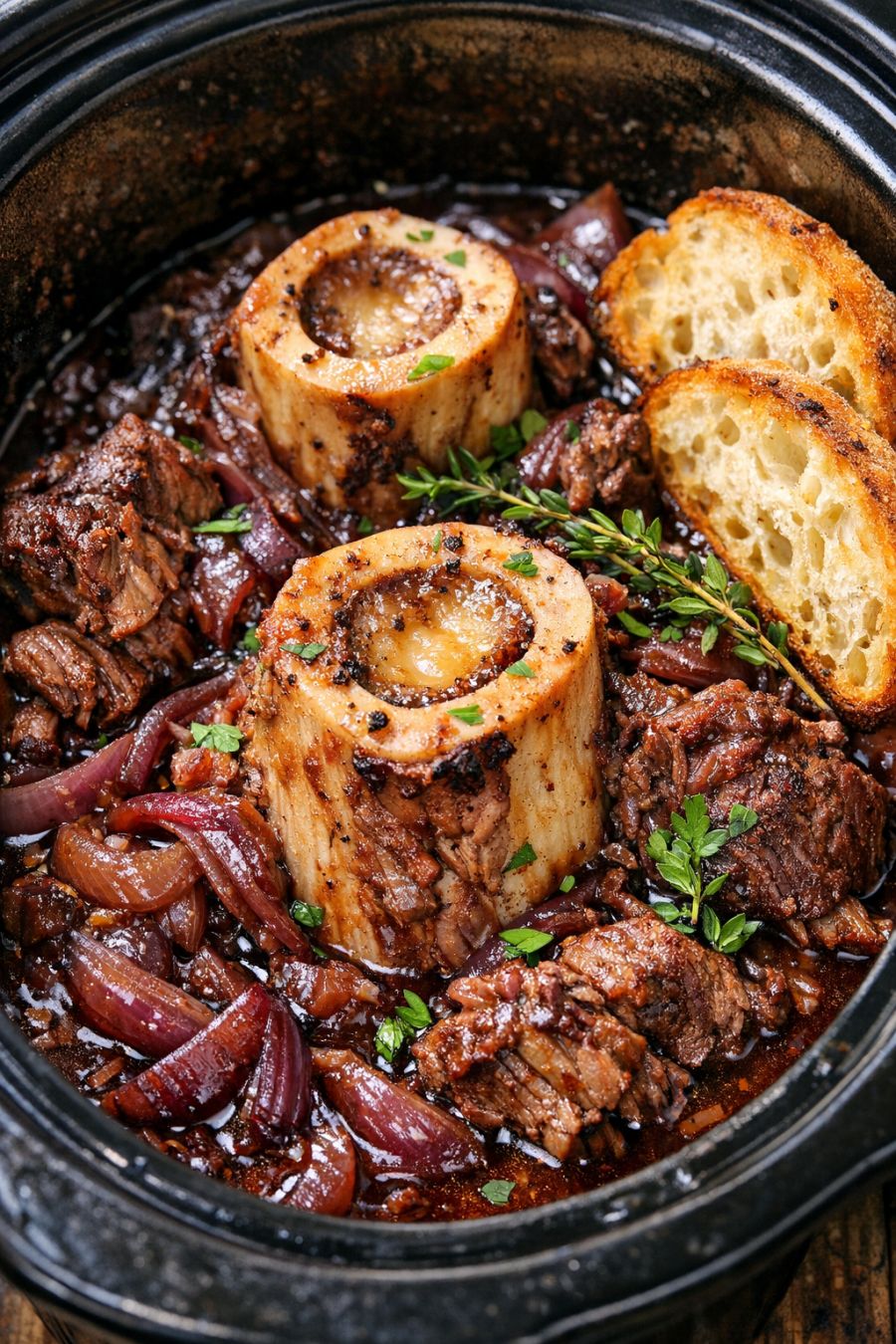
This slow cooker beef marrow supper is the kind of simple, hearty dish that feels like the unofficial start of summer around here. When the fields green up and the evenings stretch long, I like to let the crock pot do the work while I sit on the porch. Using raw beef marrow bones with plenty of meat still clinging to them is an old Midwestern trick for getting deep, beefy flavor without spending much. With just three more pantry ingredients, you end up with a rich, spoonable broth, tender meat, and silky marrow that make folks go quiet at the table for a minute before they ask for seconds.
Ladle the meat, marrow, and broth into wide bowls over hot buttered egg noodles, mashed potatoes, or simply with thick slices of crusty bread for dipping. A crisp green salad or sliced garden tomatoes with a little salt and vinegar help balance the richness. In true summer fashion, this also pairs nicely with grilled sweet corn or a simple cucumber and onion salad. Offer extra salt and pepper at the table, and if you like, pass a small bowl of grated Parmesan or sharp cheddar for sprinkling over the top.
4-Ingredient Slow Cooker Marrow Bone Supper
Servings: 4
Ingredients
3 to 4 pounds raw beef marrow bones with meat attached (cross-cut or canoe-cut)
2 large red onions, sliced into thick rings or wedges
1 cup dry red wine or beef broth
2 teaspoons kosher salt (plus more to taste)
Directions
Lay the sliced red onions in an even layer on the bottom of a large slow cooker. The purple and green tones of the onion skins and flesh will create a colorful aromatic bed for the bones.
Rinse the raw beef marrow bones under cold water and pat them dry with paper towels. Arrange them in a single snug layer over the onions, meaty side facing down if possible so the meat can braise in the juices.
Sprinkle the kosher salt evenly over the bones and onions, making sure some salt hits each piece of meat. This simple seasoning will draw out the beef flavor as everything slowly cooks.
Pour the red wine or beef broth around the edges of the slow cooker, trying not to wash the salt off the meat. You want just enough liquid to come about 1/3 of the way up the bones; they will release more juices as they cook.
Cover the slow cooker with the lid and cook on LOW for 8 to 10 hours, or on HIGH for 4 to 5 hours, until the meat is fall-off-the-bone tender and the marrow is soft and jiggly in the center of the bones.
Once cooked, carefully lift the bones out with tongs. Use a small spoon or butter knife to scoop the marrow from the centers of the bones back into the crock pot, or into a serving bowl if you want to offer it separately.
Shred or pull any meat from the bones and return the meat to the slow cooker, discarding the bare bones. Stir gently so the meat, onions, and melted marrow combine into a rich, glossy mixture.
Taste the broth and adjust seasoning with additional salt if needed. Ladle the meat, onions, and broth into warm bowls and serve hot, making sure each guest gets some of the marrow-rich liquid.
Variations & Tips
If you’d like a bit more color and freshness, tuck a handful of fresh parsley stems or green onion tops around the bones before cooking; they’ll add a green pop to the bed of aromatics and a light herbal note to the broth. You can also swap one of the red onions for a small head of quartered red cabbage for deeper purple tones and a slightly sweeter flavor. For a heartier meal, add 1 pound of small red or yellow potatoes on top of the bones during the last 3 hours of cooking. If you prefer not to use wine, simply use beef broth or even water with an extra 1/2 teaspoon of salt. To make this more like a light soup, stir in 1 to 2 cups of hot water or broth at the end and adjust seasoning. Food safety tips: Always start with raw bones and meat that are cold and fresh; do not use previously cooked bones for this recipe. Keep the slow cooker covered while cooking and use the LOW or HIGH settings only—do not use the “warm” setting for cooking. Make sure the meat reaches a safe temperature (at least 190°F for fall-apart tenderness in this kind of braise). Cool leftovers promptly, within 2 hours, and refrigerate in shallow containers. Reheat until steaming hot before serving again. If you are sensitive to rich foods, skim some of the fat from the top of the chilled broth before reheating.
