
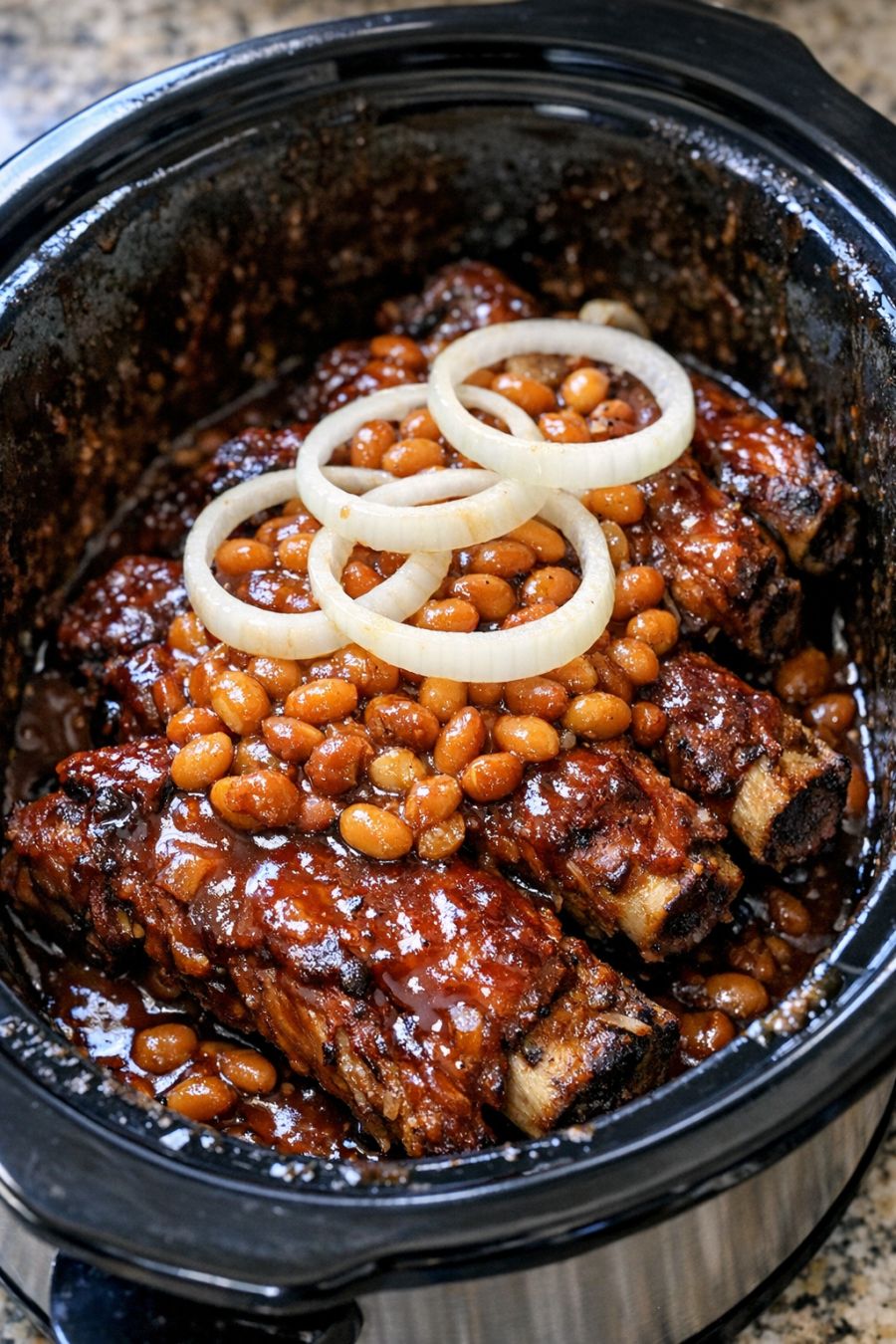
This is my default weekend feast when I’m staring into the fridge with no plan: frozen pork ribs, a can of baked beans, and just two pantry extras go straight into the slow cooker. The result is what I think of as “cowboy ribs” – sweet, smoky, saucy, and incredibly forgiving. It leans on the American tradition of baking beans with pork, but removes all the fuss. You don’t have to thaw the ribs, you don’t brown anything, and you still end up with tender meat and a hearty bean side in one pot.
Serve these cowboy pork ribs right in shallow bowls with plenty of the beans and sauce spooned over the top. I like them with cornbread or crusty bread to soak up the juices, plus a crisp green salad or simple coleslaw to cut through the richness. Buttered corn on the cob or roasted potatoes are also natural partners. For a more casual, game-day style spread, pile the rib meat and beans onto toasted buns and top with pickles and onions.
Slow Cooker 4-Ingredient Cowboy Pork Ribs
Servings: 4
Ingredients
3 to 4 pounds frozen raw pork spare ribs (racks or sections, not pre-cooked)
1 (28-ounce) can baked beans, undrained
1/2 cup barbecue sauce (your favorite, any style)
1 medium yellow onion, sliced (about 1 cup)
Directions
Place the frozen raw pork spare ribs into the bottom of a large slow cooker, arranging them in a single layer as much as possible. It’s fine if they are stuck together; just nestle them in so the lid can still close securely.
Scatter the sliced onion evenly over and around the frozen ribs in the slow cooker. The onions will soften and melt into the sauce as everything cooks.
In a medium bowl or large measuring cup, stir together the canned baked beans (with all their sauce) and the barbecue sauce until combined. This simple mix becomes your cooking liquid and final sauce.
Dump the entire bean and barbecue sauce mixture over the frozen ribs and onions in the slow cooker, making sure the ribs are mostly coated and the beans are spread around rather than sitting in one big mound.
Cover the slow cooker with the lid. Cook on LOW for 8 to 10 hours, or on HIGH for 4 to 5 hours, until the ribs are very tender, the meat pulls away from the bones easily, and the beans are thick and bubbling. Cooking times can vary slightly depending on how thick your ribs are and how solidly frozen they were to start.
Once cooked, taste the sauce and beans and adjust the seasoning if needed with a pinch of salt or a splash of extra barbecue sauce. Skim off any excess fat that has risen to the surface with a spoon.
Serve the ribs hot, spooning plenty of the baked beans and sauce over each portion. Discard any loose bones or connective tissue that has separated during cooking.
Variations & Tips
You can nudge this basic recipe in several directions without adding much effort. For extra smokiness, choose a smoked or hickory-style barbecue sauce, or add 1/2 teaspoon of smoked paprika to the bean and sauce mixture. If you like some heat, stir in 1 to 2 teaspoons of hot sauce or a pinch of red pepper flakes. For a slightly less sweet result, use a low-sugar barbecue sauce or add 1 tablespoon of apple cider vinegar to brighten the flavors. You can also swap the yellow onion for red onion or even a handful of sliced green onions added at the end for freshness. If you prefer boneless meat, boneless country-style pork ribs will work; keep them frozen and follow the same timing, checking for tenderness toward the end of the cooking window.
Food safety tips: Always start with ribs that have been kept fully frozen or properly refrigerated before going into the slow cooker. Because you’re cooking from frozen, stick to the LOW 8 to 10 hour or HIGH 4 to 5 hour ranges to ensure the meat passes safely and promptly through the temperature danger zone (40°F to 140°F). Avoid lifting the lid frequently, as that extends the cooking time and can keep the food at unsafe temperatures longer. The ribs are done when they reach at least 190°F internally for good tenderness (minimum safe temperature for pork is 145°F, but ribs are best well above that). Refrigerate leftovers within 2 hours of cooking in shallow containers, and reheat to at least 165°F before serving again.
