
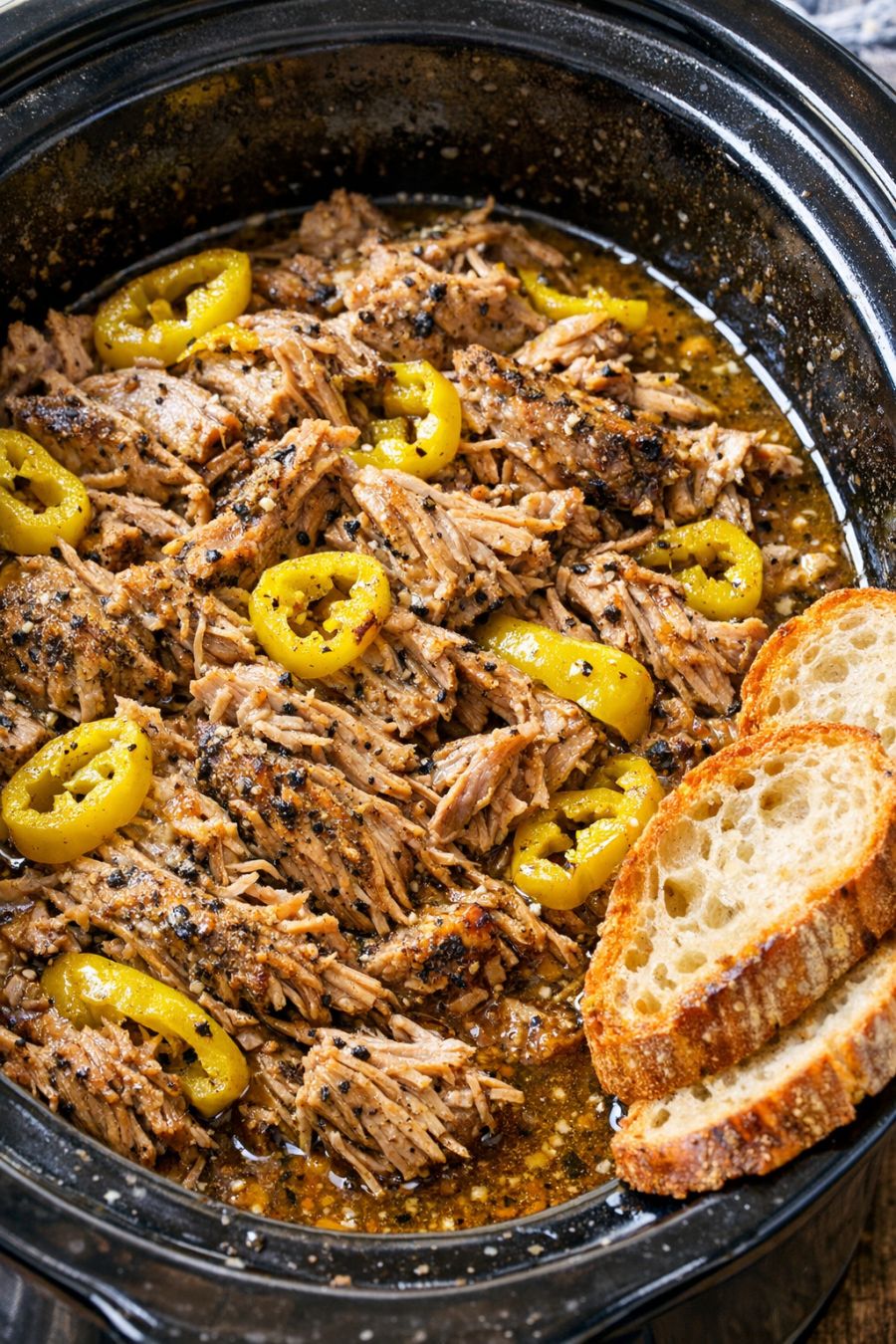
This slow cooker peppered pork roast is the kind of set-it-and-forget-it meal that earns repeat requests at potlucks and family dinners. The entire idea hinges on one smart shortcut: dumping a whole jar of vinegary banana peppers—brine and all—over a big, well-seasoned pork roast, then adding just three more pantry ingredients. The peppers do double duty, tenderizing the meat while infusing it with bright, tangy heat. Recipes like this trace back to classic Midwestern slow-cooker traditions, where a big cut of meat, a jarred ingredient, and time are all you need for a crowd-pleasing spread.
Serve the shredded peppered pork piled onto toasted sandwich rolls with the tender banana peppers spooned on top, plus a slice of provolone or Swiss if you like. It’s also excellent over creamy mashed potatoes, cheesy polenta, or simple buttered egg noodles to soak up the juices. Round out the plate with a crisp green salad, vinegar-based coleslaw, or roasted green beans to balance the richness. Leftovers make great grain bowls with rice or farro, a few pickles, and a drizzle of the cooking liquid.
Slow Cooker 5-Ingredient Peppered Pork Roast
Servings: 8-10
Ingredients
1 (4–5 pound) boneless pork shoulder (Boston butt), excess fat trimmed
1 (16-ounce) jar sliced banana peppers in vinegar brine, undrained
1 tablespoon kosher salt
2 teaspoons freshly ground black pepper
1 tablespoon olive oil (or neutral cooking oil)
Directions
Pat the pork shoulder dry with paper towels and place it on a cutting board. Trim away any very thick, hard cap of fat, but leave a thin layer for flavor.
Season the pork all over with the kosher salt and freshly ground black pepper, pressing the seasoning into the surface so it adheres well.
Heat the olive oil in a large skillet over medium-high heat until shimmering. Add the pork roast and sear on all sides, turning with tongs, until deeply browned, 3–4 minutes per side. (If you prefer, you can skip searing and place the seasoned roast directly in the slow cooker, but searing adds extra flavor.)
Transfer the browned pork roast to the slow cooker, placing it in the center so it sits evenly in the crock.
Open the jar of sliced banana peppers. Without draining, pour the entire jar—peppers and all the vinegary brine—directly over the top of the raw pork roast in the slow cooker, letting the liquid run down the sides.
Cover the slow cooker with the lid and cook on LOW for 8–10 hours, or on HIGH for 4–5 hours, until the pork is very tender and easily shreds with a fork. The internal temperature should reach at least 190°F for best shredding texture.
Once the pork is done, use two forks to shred the meat directly in the slow cooker, mixing it with the peppers and cooking juices. Taste and adjust seasoning with a pinch more salt or pepper if needed.
Switch the slow cooker to the WARM setting and let the shredded pork sit in the juices for 10–15 minutes so the flavors meld. Serve the peppered pork and peppers with some of the cooking liquid spooned over the top.
Variations & Tips
For a milder version, use mild banana peppers and, if the brine tastes very sharp, replace 1/4 cup of the brine with water before pouring it over the pork. For more heat, stir in a few sliced pickled jalapeños or a pinch of red pepper flakes when you add the banana peppers. If you prefer a leaner cut, you can substitute a 3–4 pound pork loin; reduce the cooking time slightly (about 6–7 hours on LOW or 3–4 hours on HIGH) and watch closely to avoid drying it out. To make this more Italian-inspired, add 1 teaspoon dried oregano and 1 teaspoon dried basil to the salt and pepper rub. For a saucier, sandwich-friendly texture, skim excess fat from the surface of the cooking liquid after shredding and stir in 1–2 tablespoons of tomato paste. Food safety tips: Always thaw pork completely in the refrigerator before cooking in a slow cooker; never cook from frozen, as it can linger too long in the temperature danger zone. Use a meat thermometer to ensure the pork reaches at least 190°F for shredding and a safe minimum of 145°F internally. Keep the slow cooker covered during cooking to maintain a safe temperature, and refrigerate leftovers within 2 hours in shallow containers. Reheat leftovers to 165°F before serving.
