
This oven-baked 4-ingredient chicken Bordeaux is my streamlined version of a dish I found in my grandmother’s recipe box, labeled simply as “company chicken” with a note that it never failed her once in 45 years of hosting. It’s the kind of recipe you pull out when you want something that feels special but don’t have the bandwidth for a long ingredient list or complicated techniques. Bone-in chicken pieces slowly braise in red Bordeaux, creating a glossy, wine-colored pan sauce that tastes like you fussed all afternoon, even though the oven does almost all the work.
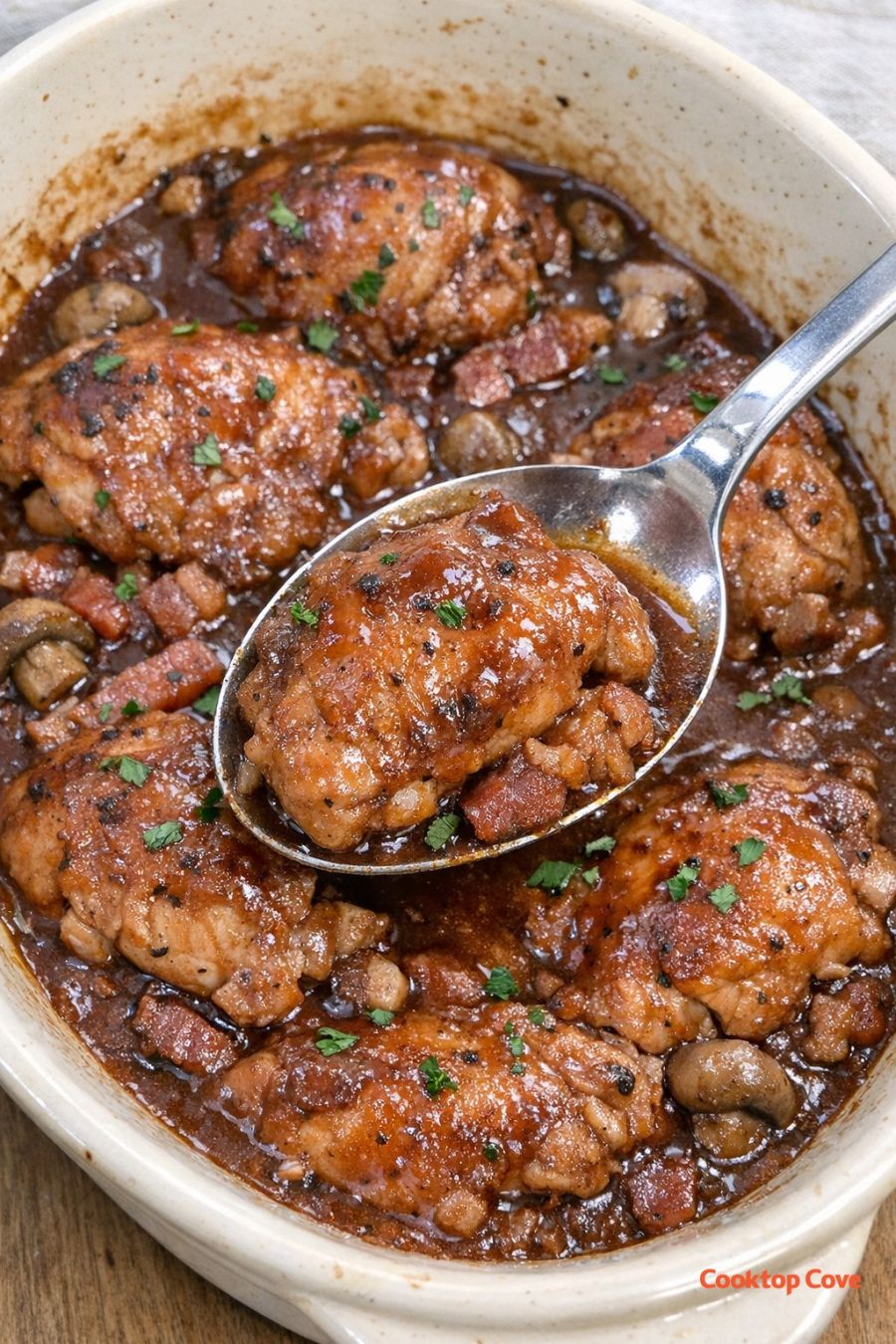
Serve this chicken straight from the cream-colored baking dish with a big spoon for the glossy sauce. It’s wonderful over buttered egg noodles, mashed potatoes, or a simple rice pilaf that can soak up every bit of the Bordeaux jus. I like to add a green vegetable with some crunch—blanched green beans, roasted asparagus, or a simple arugula salad with a mustardy vinaigrette. A crusty baguette on the table never goes to waste, and if you enjoy wine, pour the same Bordeaux you used in the recipe to echo the flavors in the dish.
Oven-Baked Chicken Bordeaux
Servings: 4
Ingredients
3 to 3.5 pounds bone-in, skin-on chicken pieces (thighs and drumsticks, about 8 pieces)
1 tablespoon kosher salt (or 2 teaspoons fine sea salt), plus more to taste
1 teaspoon freshly ground black pepper
1.5 cups dry red Bordeaux wine
Directions
Preheat your oven to 375°F (190°C). Choose an oval, cream-colored ceramic or other oven-safe baking dish that will hold the chicken pieces in a snug single layer; this helps the wine reduce into a rich, spoonable sauce rather than drying out.
Pat the chicken pieces very dry on all sides with paper towels; this helps the skin render and keeps the sauce from becoming watery. Arrange the chicken in the baking dish skin side up, leaving just a little space between pieces so the wine can circulate.
Season the chicken evenly with the kosher salt and black pepper, making sure to sprinkle a bit between pieces so the seasoning reaches the pan juices as well. Don’t skimp on the salt here—the wine and chicken will mellow as they cook, and proper seasoning is what makes the sauce taste like it came from a restaurant kitchen.
Pour the Bordeaux wine around the chicken pieces, avoiding the very tops of the skins so they can brown. The wine should come about one-third to halfway up the sides of the chicken; if your dish is especially large and the level is low, you can add a splash more wine to reach that depth.
Slide the baking dish into the preheated oven, uncovered. Bake for 30 minutes, then carefully pull the dish out and baste the chicken by spooning some of the wine and pan juices over the exposed meat (try not to completely soak the tops of the skins so they keep some texture). Return to the oven.
Continue baking for another 25 to 35 minutes, basting once more toward the end, until the chicken is very tender, the skin is lightly browned, and the sauce is a deep wine color and glossy. The internal temperature of the thickest part of the meat should reach at least 165°F (74°C), though thighs and drumsticks are often best closer to 175–185°F (79–85°C) for maximum tenderness.
If the sauce looks too thin when the chicken is done, transfer the pieces to a warm plate, set the baking dish over medium-low heat on the stovetop (if your dish is stovetop-safe), and simmer a few minutes, stirring, until slightly thickened and shiny. If the dish is not stovetop-safe, you can carefully pour the sauce into a small saucepan to reduce instead. Taste and adjust salt and pepper if needed.
Return the chicken to the dish (if you removed it), spoon some of the wine sauce over the pieces, and let it rest for 5 to 10 minutes so the juices settle. Serve directly from the oval baking dish with a silver serving spoon, making sure each portion gets a generous coating of the rich, wine-colored sauce.
Variations & Tips
Because this recipe relies on just four ingredients, each one matters. Choose a dry, drinkable Bordeaux—not a cooking wine—so the sauce tastes rounded rather than harsh. You can substitute other dry reds (like a Côtes du Rhône or a Cabernet Sauvignon) if Bordeaux isn’t available, but avoid very sweet or heavily oaked wines, which can turn the sauce cloying or bitter. For a slightly richer, more old-fashioned flavor, you can tuck 2 tablespoons of unsalted butter under the chicken skin before baking (this adds a fifth ingredient but keeps the method the same). If you miss herbs, scatter a few sprigs of fresh thyme or a bay leaf into the wine before baking; just remove them before serving. For skinless chicken pieces, reduce the baking time by about 10 minutes and baste gently, as they can dry out faster without the protective skin. Boneless, skinless thighs will cook in 25–35 minutes total; check early and often.
Food safety tips: Always start with fresh or properly thawed chicken that has been kept refrigerated at or below 40°F (4°C). Pat the chicken dry with paper towels and discard the towels immediately; wash your hands well with soap and hot water after handling raw poultry. Use a dedicated cutting board and knife for raw chicken, and wash them thoroughly with hot, soapy water before using them for anything else. Ensure the thickest part of each piece reaches at least 165°F (74°C) as measured with an instant-read thermometer—do not rely solely on color of juices. Leftovers should be cooled and refrigerated within 2 hours of cooking, stored in a covered container, and eaten within 3–4 days. Reheat gently in a covered dish at 325°F (165°C) until steaming hot, or on the stovetop over low heat, adding a splash of water or stock if the sauce has thickened too much in the fridge.
