
This 4-ingredient slow cooker salmon is the kind of easy, comforting summer meal that lets you enjoy the 4th of July without babysitting the stove. You literally dump un-drained cans of pink salmon with the bones right into the slow cooker, add three simple pantry items, and let it simmer into something rich, savory, and surprisingly special. Using canned salmon with bones not only keeps it budget-friendly, it also adds extra calcium and flavor as the bones soften and melt into the dish. It’s a no-fuss, family-style recipe that feels a little festive but is simple enough for any busy weeknight.
Serve this slow cooker salmon spooned over hot rice, buttered noodles, or toasted hamburger buns for easy salmon sandwiches. It’s also wonderful with a simple green salad, corn on the cob, or a tray of raw veggies and ranch for crunch. Add lemon wedges on the side for anyone who likes a bright squeeze of citrus, and set out hot sauce for those who enjoy a little kick. A pitcher of iced tea or lemonade rounds out the meal and keeps it feeling light and summery.
4-Ingredient Slow Cooker 4th of July Salmon
Servings: 4
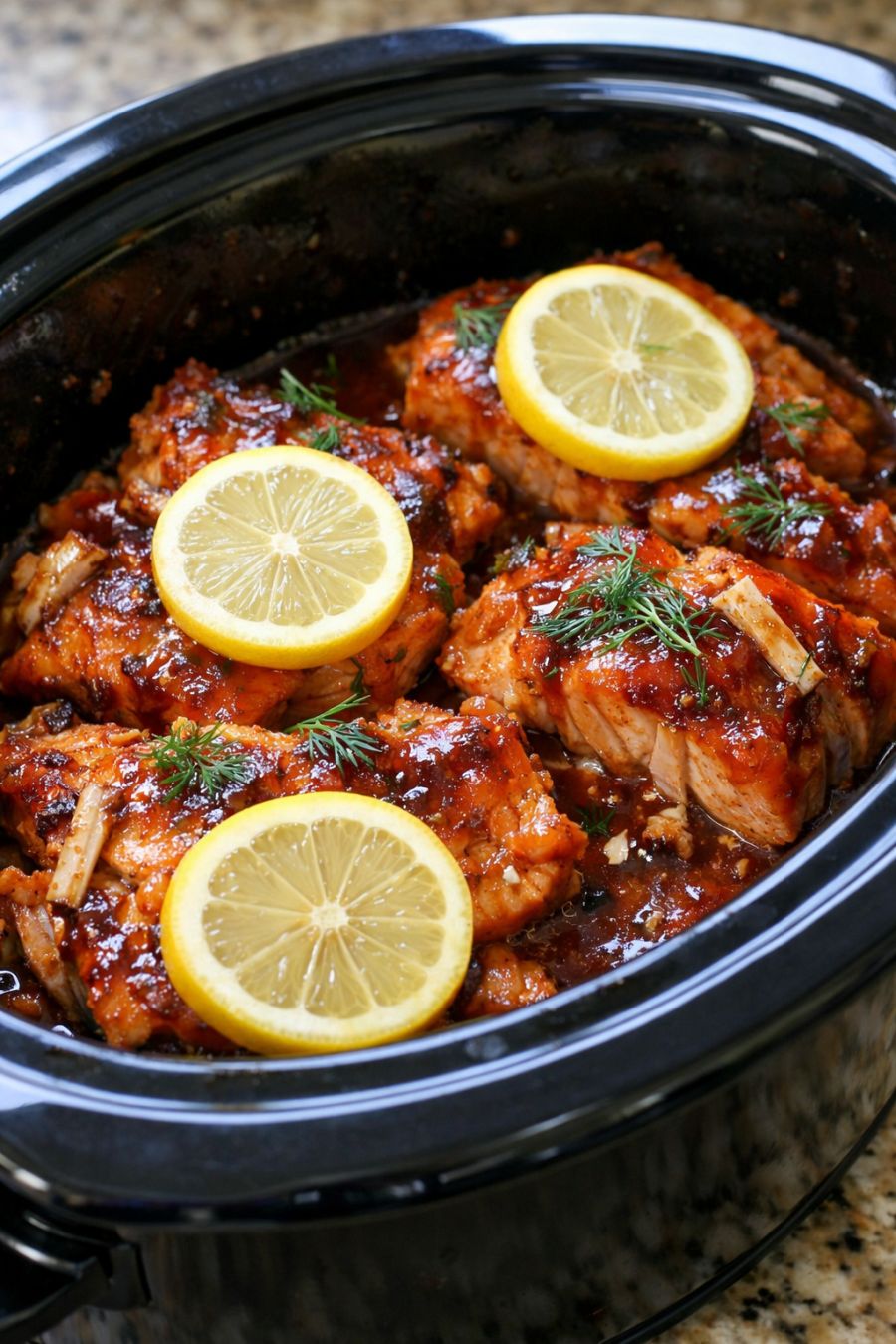
Ingredients
3 (14.75-ounce) cans pink salmon with bones and skin, not drained
1/2 cup ketchup
1/4 cup brown sugar, packed
1 tablespoon yellow mustard
Optional: salt and black pepper to taste, after cooking
Directions
Open all three cans of pink salmon and carefully pour the salmon and all the can juices directly into the bottom of a slow cooker. This should look like a loose, chunky layer of salmon with visible bones and skin in the juices.
Use a fork to gently break up the large pieces of salmon just a bit, leaving some chunks for texture. Don’t worry about the bones; they will soften as they cook and become tender.
In a small bowl, stir together the ketchup, brown sugar, and yellow mustard until smooth and well combined. This makes a quick, tangy-sweet sauce from simple pantry staples.
Pour the ketchup mixture evenly over the salmon in the slow cooker. Lightly stir and fold just enough to coat the salmon with the sauce while still leaving plenty of visible pieces. You don’t want to mash it into a paste.
Cover the slow cooker with the lid. Cook on LOW for 3 to 4 hours, or on HIGH for 1 1/2 to 2 hours, until the salmon is hot, the bones are very soft, and the sauce is bubbly and slightly thickened around the edges.
Once cooked, gently stir the salmon to fully blend the sauce and break up any remaining large bones. Taste and add a pinch of salt and black pepper if desired. The canned salmon and ketchup already have salt, so season carefully.
Turn the slow cooker to WARM and serve the salmon straight from the crock. Spoon over rice, noodles, or into buns, making sure each serving gets plenty of the flavorful sauce.
Variations & Tips
For picky eaters, you can mash the salmon more thoroughly with a fork after cooking so the bones and skin are completely unnoticeable; the bones will be very soft and will blend right in. If your family likes things a little spicier, add 1 to 2 teaspoons of hot sauce or a pinch of red pepper flakes to the ketchup mixture before pouring it over the salmon. For a smoky twist, swap half of the ketchup for barbecue sauce. You can also stir in 1 teaspoon of dried minced onion or garlic powder with the sauce for extra savory flavor while still keeping it pantry-friendly. If you need to stretch the meal, fold in 1 to 2 cups of cooked rice or cooked egg noodles right into the slow cooker at the end to make it more like a salmon casserole. For a slightly lighter version, you can reduce the brown sugar to 2 tablespoons and add a splash of apple cider vinegar for tang. Food safety tips: Always use canned salmon that is within its expiration date and discard any cans that are bulging, rusted through, or badly dented. Keep the salmon mixture refrigerated if you prep it ahead, and do not leave the finished dish at room temperature for more than 2 hours (or 1 hour if it’s very hot outside for a 4th of July gathering). Make sure the slow cooker heats the salmon to a safe serving temperature (at least 165°F in the center) before serving, and refrigerate leftovers within 2 hours in a shallow container. Reheat leftovers thoroughly before eating.
