
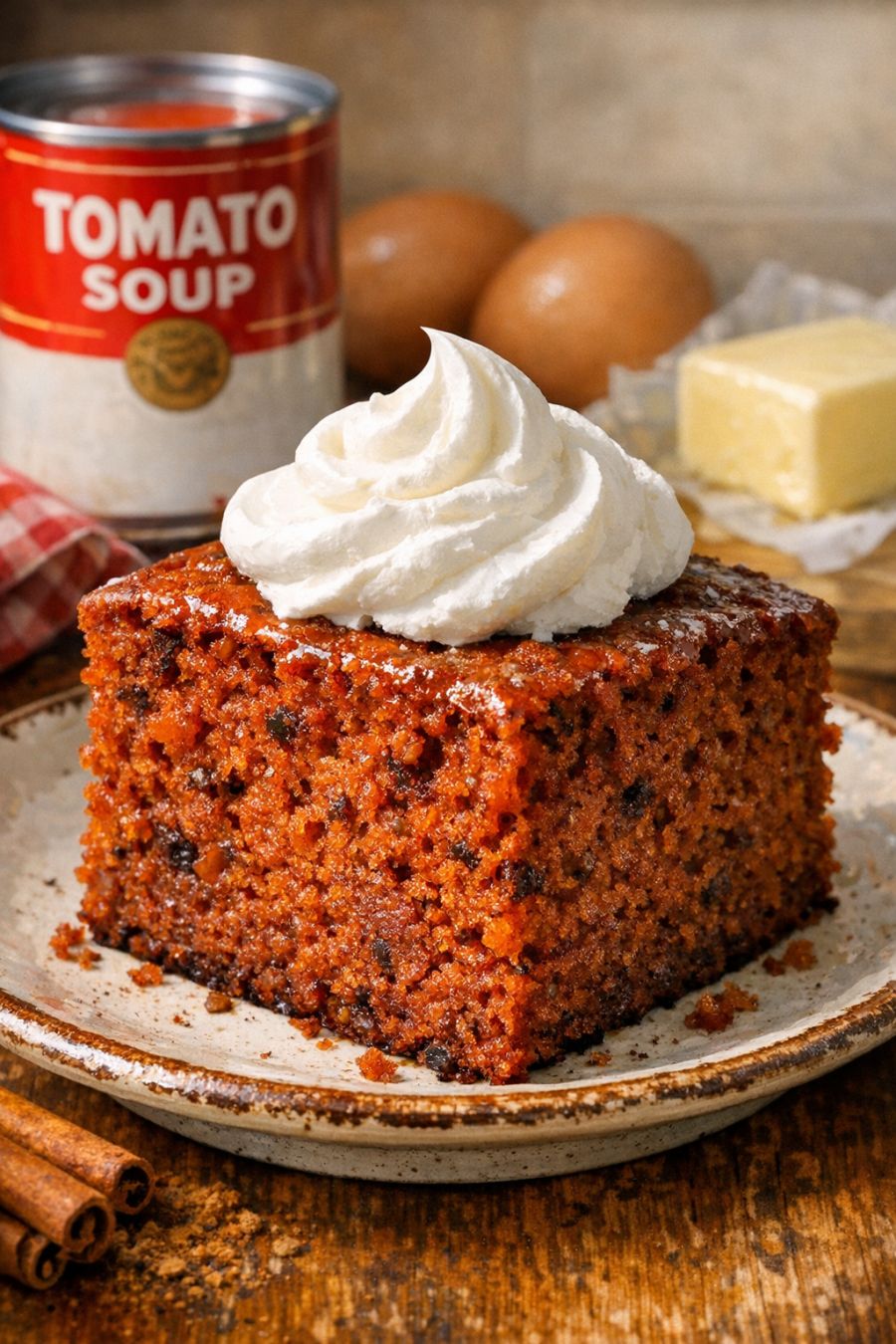
This 4-ingredient slow cooker vintage tomato soup cake is a nod to the quirky church-supper desserts that popped up across the Midwest in the 1950s and 60s, when canned condensed soups were a thrifty homemaker’s best friend. The idea sounds funny at first—pouring bright red tomato soup into a slow cooker for dessert—but the soup bakes down into a tender, gently spiced cake that tastes a bit like an old-fashioned spice loaf. It’s the kind of simple, pantry-friendly recipe you can stir together in minutes, walk away from, and come back to a warm, comforting treat that has everyone asking for seconds.
Serve this tomato soup cake warm right out of the slow cooker, scooped into bowls like a soft pudding cake. A dollop of whipped cream, a drizzle of heavy cream, or a scoop of vanilla ice cream melts into all the cozy spices. It’s lovely with a cup of coffee after Sunday dinner or alongside hot tea on a chilly evening. For a little extra nostalgia, dust the top with powdered sugar just before serving and pass a small bowl of chopped nuts or raisins at the table so everyone can dress up their own bowl, just like those old church basement dessert bars.
4-Ingredient Slow Cooker Vintage Tomato Soup Cake
Servings: 8
Ingredients
2 (10.5-ounce) cans condensed tomato soup
1 (15.25-ounce) box spice cake mix
2 large eggs
1/4 cup vegetable oil or other neutral cooking oil
Directions
Lightly grease the inside of a 4- to 6-quart slow cooker crock with a thin coating of butter or nonstick spray so the cake will release easily.
Pour both cans of condensed tomato soup directly into the bottom of the slow cooker. The soup should look thick and bright red, covering the bottom in an even layer.
Add the dry spice cake mix on top of the tomato soup, followed by the eggs and the vegetable oil.
Using a sturdy spoon or rubber spatula, stir everything together right in the slow cooker until the batter is smooth and evenly colored, scraping down the sides and bottom so there are no dry pockets of cake mix or streaks of plain soup.
Spread the batter into an even layer in the slow cooker so it cooks uniformly.
Cover the slow cooker with its lid. Cook on LOW for 2 1/2 to 3 1/2 hours, or until the cake is set in the center and a toothpick or thin knife inserted in the middle comes out mostly clean with just a few moist crumbs.
Once done, turn off the slow cooker and remove the lid, tilting it slightly so any condensation drips away from the cake. Let the cake stand in the uncovered slow cooker for about 15 minutes to firm up a bit before serving.
Scoop the warm tomato soup cake directly from the slow cooker into bowls. Serve plain, or top with whipped cream, ice cream, or a dusting of powdered sugar if you like.
Variations & Tips
For a more traditional vintage flavor, you can gently stir in 1/2 cup raisins or chopped dates and 1/2 cup chopped walnuts or pecans after the batter is fully mixed; keep in mind this will technically add ingredients beyond the basic 4, but it mirrors many old church cookbook versions. If you only have yellow cake mix, you can use it and add 1 to 2 teaspoons of pumpkin pie spice or ground cinnamon for that classic spice-cake taste. To make a lighter, almost pudding-like cake, replace the oil with 1/4 cup unsweetened applesauce; the texture will be softer and a bit more moist. For easy cleanup and to help prevent over-browning on the edges, you can line the slow cooker with a parchment paper sling before greasing. Food safety tips: Always use canned condensed tomato soup that is within its expiration date and whose can is not bulging, rusted, or badly dented. Crack eggs into a separate small bowl first to check for shells or off odors before adding them to the slow cooker. Cook the cake on LOW as directed until it is fully set in the center; undercooking can leave raw egg in the middle. Once the slow cooker is turned off, do not leave the cake at room temperature for more than 2 hours; refrigerate leftovers in a covered container and enjoy within 3 to 4 days, reheating individual portions gently in the microwave or enjoying them at room temperature.
