
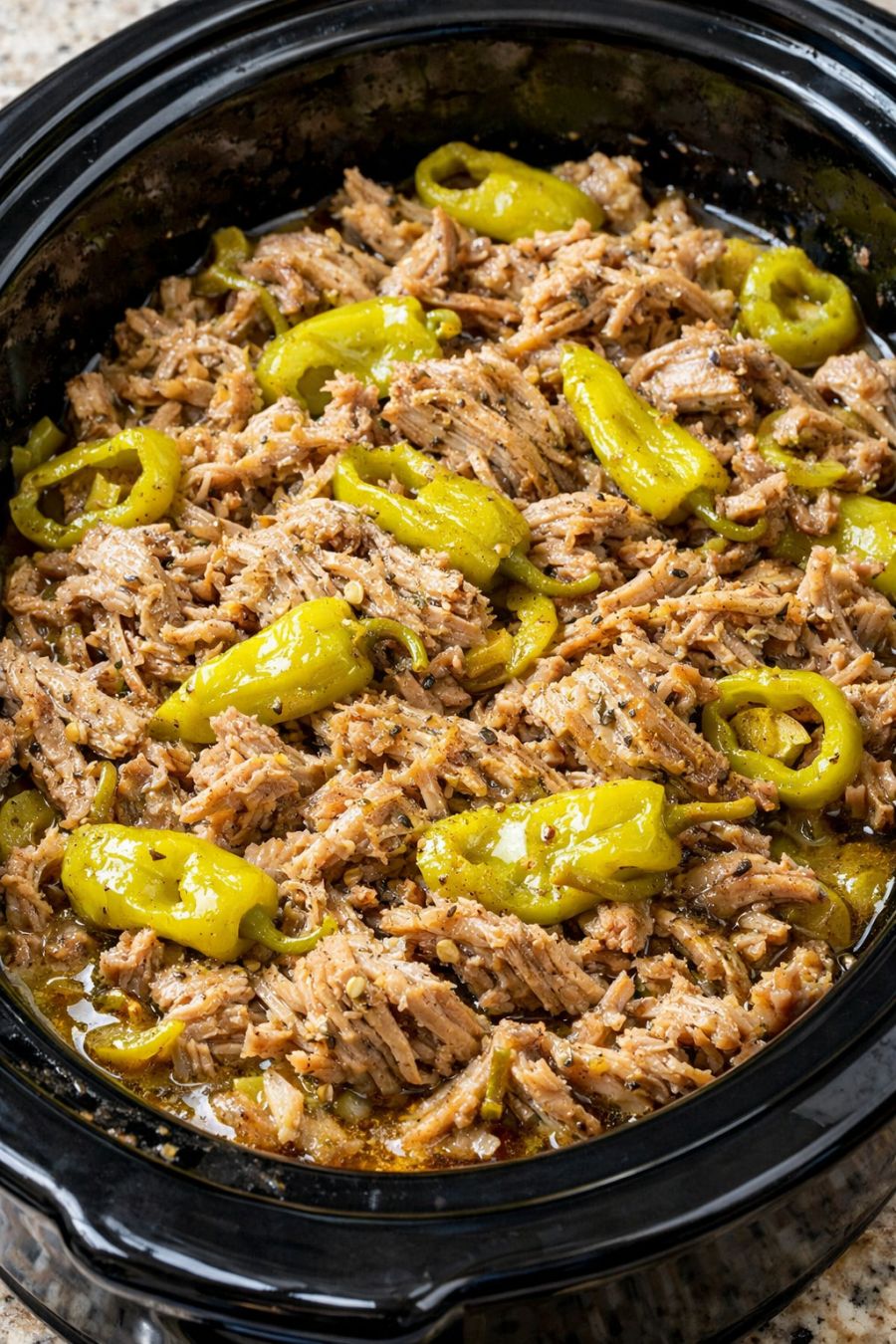
This slow cooker 5-ingredient zesty pepperoncini pork is the kind of weeknight dinner that feels almost too easy to be this good. You literally drop an entirely frozen pork loin into the slow cooker, dump a whole jar of undrained pepperoncini over the top, add just three more pantry-friendly ingredients, and walk away. The result is tender, pull-apart pork with a bright, briny kick that reminds me a bit of Italian beef sandwiches popular throughout the Midwest, but with even less effort. It’s a practical, set-it-and-forget-it recipe that works beautifully for busy days, game nights, or feeding a crowd without hovering over the stove.
Serve the shredded pepperoncini pork piled onto toasted sandwich rolls with provolone or mozzarella and a spoonful of the cooking juices. It’s also excellent over creamy mashed potatoes, polenta, or simple buttered egg noodles, where the tangy broth can soak in. For something lighter, spoon the pork into lettuce wraps or over a bed of rice with a side of roasted vegetables or a crisp green salad. A crunchy slaw, pickled red onions, or a platter of raw vegetables with ranch all play nicely with the zesty, slightly spicy flavors.
Slow Cooker Zesty Pepperoncini Pork (5 Ingredients, From Frozen)
Servings: 6
Ingredients
1 (2 1/2–3 pound) pork loin, completely frozen, unseasoned
1 (16-ounce) jar whole pepperoncini peppers, undrained
1 (1-ounce) packet dry ranch seasoning mix
2 tablespoons unsalted butter, cut into pieces
1/2 cup low-sodium chicken broth or water
Directions
Place the completely frozen pork loin in the bottom of a large slow cooker, positioning it so it lies as flat as possible.
Open the jar of pepperoncini and pour the entire contents—peppers and liquid—directly over the frozen pork loin, spreading the peppers around so they’re fairly evenly distributed.
Sprinkle the dry ranch seasoning mix evenly over the top of the pork and peppers.
Scatter the butter pieces over the surface, then pour the chicken broth (or water) around the pork in the bottom of the slow cooker.
Cover the slow cooker with the lid and cook on LOW for 8–10 hours, or on HIGH for 5–6 hours, until the pork is very tender and easily shreds with a fork. (Cooking from frozen will take the longer end of the range, depending on your slow cooker.)
Once tender, transfer the pork to a cutting board and use two forks to shred it into bite-sized pieces, discarding any large fat pieces if desired.
Return the shredded pork to the slow cooker and stir it into the pepperoncini and cooking juices. Taste and adjust seasoning with a pinch of salt if needed.
Switch the slow cooker to WARM and let the pork sit in the juices for 10–15 minutes to absorb more flavor before serving.
Variations & Tips
For a milder dish, use mild pepperoncini and pick out some of the peppers before serving, or add an extra 1/4–1/2 cup broth to soften the tang. For more heat, add a few sliced jalapeños or a pinch of red pepper flakes along with the ranch seasoning. You can swap pork loin for a slightly fattier pork shoulder or butt; it will be even more forgiving and succulent, though a bit richer. If you prefer a less salty result, use half the ranch seasoning packet and taste at the end before adding more. The finished pork is versatile: use it in tacos with shredded cabbage and lime, layer it over baked potatoes with cheddar, or fold it into quesadillas with Monterey Jack. Leftovers keep well in the refrigerator for up to 4 days or freeze for up to 3 months; reheat gently with a splash of broth to keep it moist.
Food safety tips: Cooking a large piece of meat from frozen in a slow cooker can keep it in the temperature “danger zone” (40–140°F) longer than ideal, which some food safety guidelines advise against. If you want to be extra cautious, thaw the pork loin in the refrigerator for 24–48 hours before cooking, or cut the frozen loin into a few large chunks so it comes up to temperature more quickly. Always ensure the pork reaches an internal temperature of at least 145°F (many home cooks take it to 190–200°F for shredding) and that it spends several hours above 165°F to reduce risk. Use a reliable meat thermometer, avoid opening the lid repeatedly during cooking, and refrigerate leftovers within 2 hours of cooking, storing them in shallow containers so they cool quickly.
