
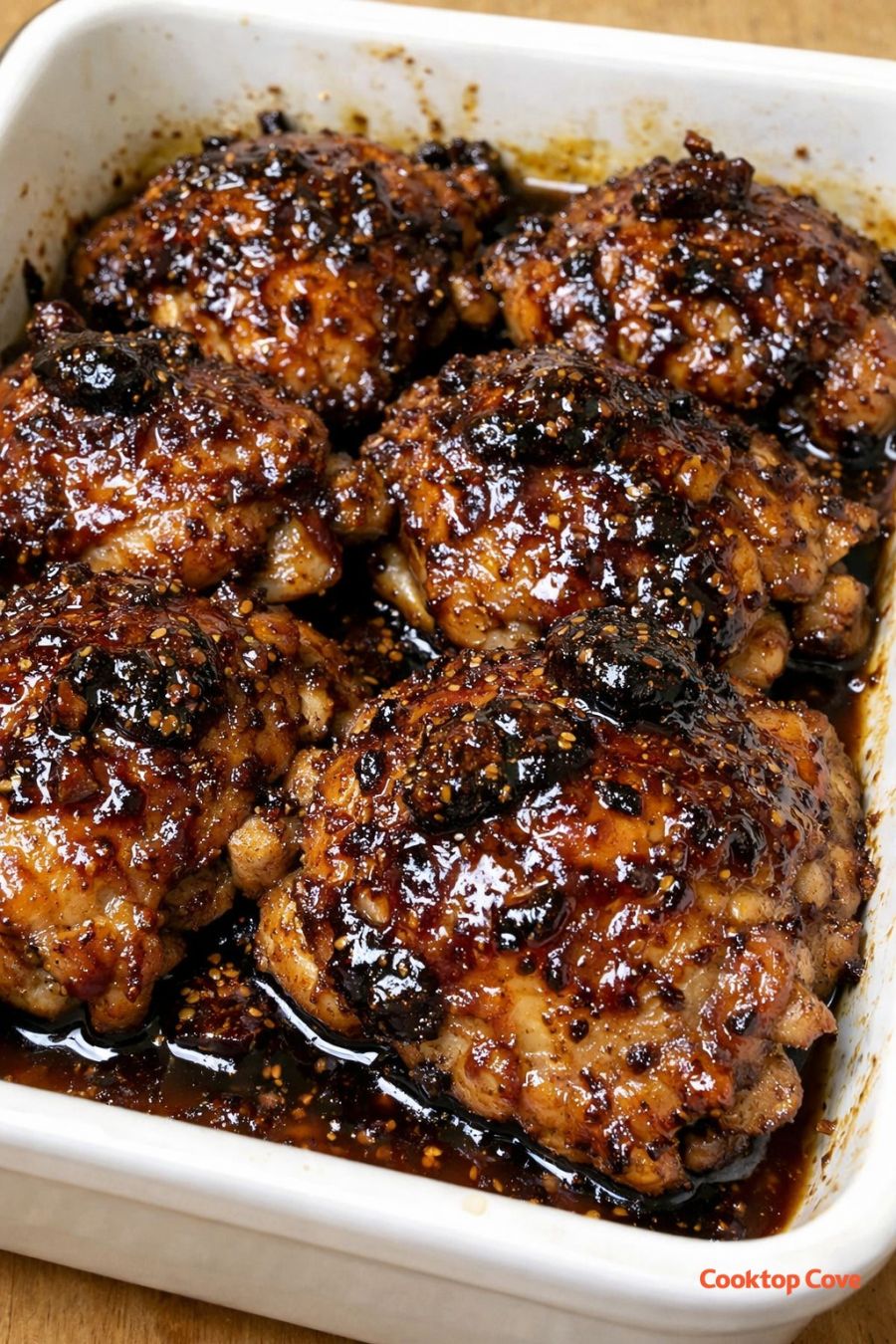
My sister first carried this dish into our family cookout in an old white casserole dish, still hot from her oven. She set it down between the potato salad and the baked beans, and before we even said grace, folks were leaning over to see what smelled so good. It turned out to be the simplest thing: just chicken thighs, fig jam, and balsamic vinegar. The sauce baked up into a sticky, glossy glaze that clung to the golden-brown chicken, and there wasn’t a piece left by the time the sun went down. This is one of those three-ingredient, no-fuss recipes that feels special enough for company but is easy enough for a weeknight, very much in the spirit of the practical Midwestern cooking I grew up with.
This chicken is wonderful with plain buttered egg noodles or mashed potatoes to soak up that sweet-tangy fig balsamic glaze. At a cookout, I like to serve it alongside a crunchy coleslaw, corn on the cob, and a simple green salad. In cooler weather, try it with roasted carrots, green beans, or Brussels sprouts on the same pan for an easy sheet-pan supper. A slice of crusty bread or warm dinner rolls never hurts either—people will want every last bit of sauce.
Oven-Baked 3-Ingredient Fig Balsamic Chicken
Servings: 6
Ingredients
3 pounds bone-in, skin-on chicken thighs (about 6–8 pieces), patted dry
3/4 cup fig jam or fig preserves
1/4 cup balsamic vinegar
1 teaspoon kosher salt (optional but recommended, divided)
1/2 teaspoon freshly ground black pepper (optional, divided)
1 tablespoon olive oil or neutral oil for greasing the dish (optional)
Directions
Heat your oven to 400°F (200°C). Lightly grease a white rectangular casserole dish (about 9x13 inches) with a little oil so the chicken doesn’t stick and the glaze can bubble and caramelize nicely.
Pat the chicken thighs very dry with paper towels. This helps the skin turn golden and keeps the sauce from getting watery. If using, sprinkle the chicken all over with about 3/4 teaspoon of the salt and 1/4 teaspoon of the pepper.
In a medium bowl, whisk together the fig jam and balsamic vinegar until smooth and glossy. Taste the mixture; if you like it a bit more savory, add the remaining pinch of salt and pepper. The mixture should be thick but pourable.
Arrange the chicken thighs in a single layer, skin side up, in the prepared casserole dish. Make sure there is a little space between each piece so the heat can circulate and the skin can brown.
Spoon or pour the fig balsamic mixture evenly over the chicken, lifting the thighs slightly so some sauce slips underneath. Then spoon extra over the tops, making sure each piece is well coated. The sauce will look loose now but will thicken and turn sticky in the oven.
Place the casserole dish on the middle rack of the preheated oven. Bake for 35–40 minutes, basting once or twice with the sauce from the bottom of the dish. To baste, carefully spoon the bubbling sauce over the tops of the chicken thighs and return to the oven.
After 35–40 minutes, check for doneness. The chicken is safely cooked when an instant-read thermometer inserted into the thickest part (not touching bone) reads at least 165°F (74°C), and the juices run clear. If the chicken is done but you’d like deeper color, leave it in for another 5–10 minutes, watching that the sugars in the sauce don’t burn.
For extra caramelization, you can turn the oven to broil on high for 2–3 minutes at the very end. Keep a close eye on it; the jam can go from beautifully sticky to burned very quickly. Pull the dish as soon as the tops are deeply golden and the glaze looks thick and glossy.
Remove the casserole dish from the oven and let the chicken rest for about 5–10 minutes. The sauce will thicken slightly as it cools, clinging to the chicken in a sticky coat. Before serving, spoon some of the caramelized fig balsamic sauce from the bottom of the dish back over the chicken for a nice shiny finish.
Serve the chicken thighs straight from the white casserole dish, family-style. Make sure everyone gets a good spoonful of the sauce over their portion—it’s the part that had everyone at our cookout asking my sister to write down the recipe before they went home.
Variations & Tips
You can play with this simple recipe without losing its spirit. For a slightly less sweet version, replace 2–3 tablespoons of the fig jam with extra balsamic vinegar or a splash of chicken broth to thin and brighten the glaze. If you like a little heat, stir 1/4 teaspoon of crushed red pepper flakes into the fig-balsamic mixture before baking. Boneless, skinless chicken thighs will also work; start checking for doneness around 25–30 minutes, as they cook faster and won’t brown quite as deeply without the skin. If you only have chicken drumsticks or a mix of thighs and legs, use the same method and time, just make sure all pieces reach 165°F in the thickest part. For a sheet-pan twist, scatter halved Brussels sprouts, carrot chunks, or green beans around the chicken and toss them lightly in a spoonful of the fig mixture before baking, keeping an eye on the vegetables so they don’t overbrown in the sweet glaze.
Food safety tips: Always thaw chicken completely in the refrigerator, never on the counter. Pat it dry before seasoning so it bakes, rather than steams. Use a clean cutting board and knife just for the raw chicken, and wash your hands, utensils, and any surfaces that touch the raw meat with hot, soapy water. The most reliable way to check doneness is with an instant-read thermometer; aim for at least 165°F (74°C) in the thickest part of each thigh, away from the bone. If you broil at the end, watch closely to avoid burning the sugary glaze, which can turn bitter. Leftover chicken should be cooled, then refrigerated within 2 hours and eaten within 3–4 days, reheated to at least 165°F before serving.
