
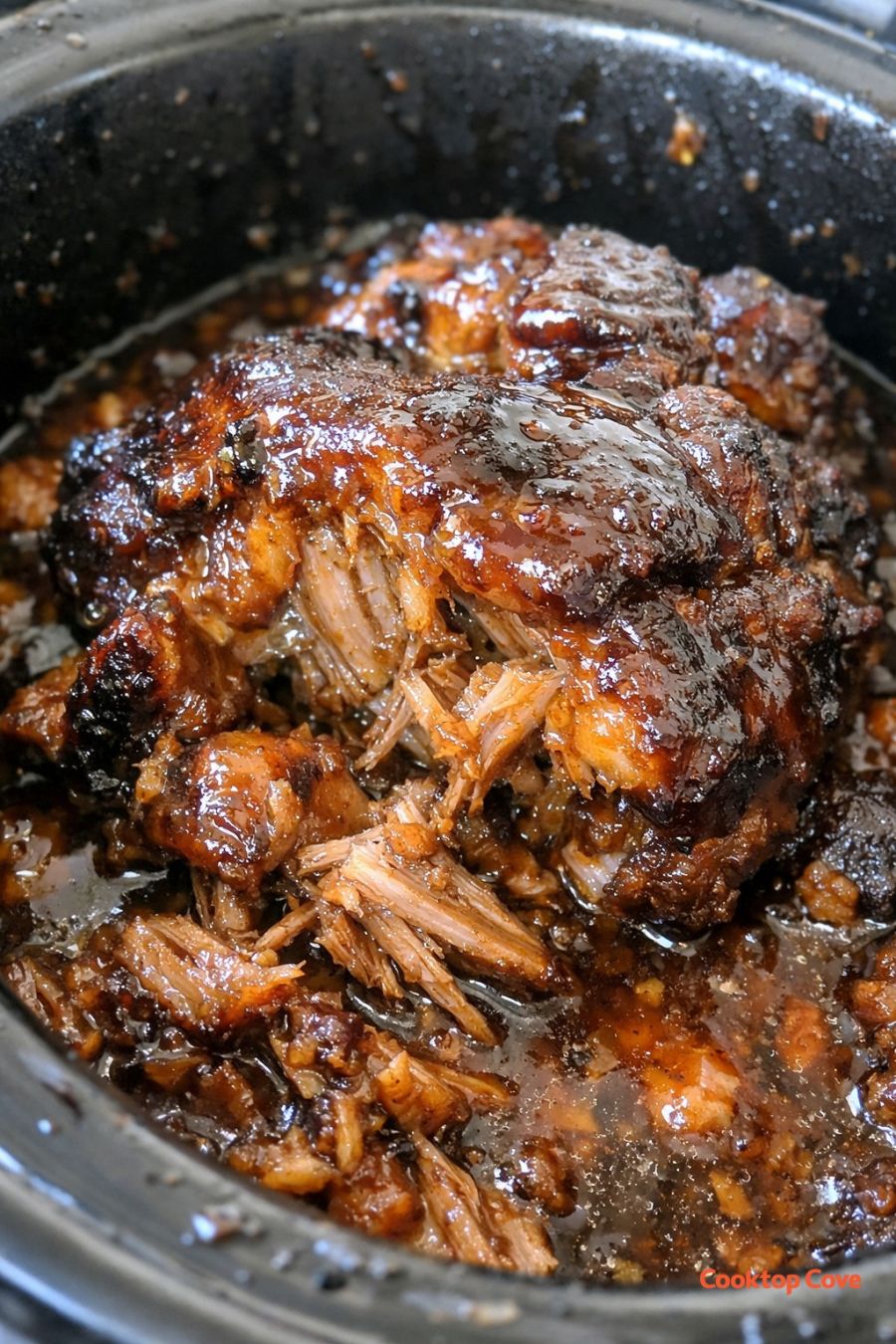
These 5-ingredient slow cooker St. Louis–style ribs are my go-to when I want a festive Fourth of July (or any summer backyard party) dinner handled hours before guests arrive. The ribs simmer low and slow in a dark, sticky glaze until the meat is falling off the bone and glistening in the crock, just like those vintage church potluck recipes our moms and aunts used to make. Everything happens in the slow cooker, so you can set it in the morning, head outside to set up the yard, and come back to a pot of tender, caramelized ribs that taste like you worked way harder than you did.
I like to pile these ribs onto a big platter and spoon some of the thick, amber glaze over the top, then pass extra sauce on the side. They’re perfect with classic cookout sides: corn on the cob, creamy coleslaw, potato salad, baked beans, and watermelon wedges. For something lighter, pair them with a simple green salad and grilled veggies. A soft dinner roll or cornbread is great for soaking up the sauce, and an icy lemonade or light beer fits the whole Independence Day vibe.
5-Ingredient Slow Cooker St. Louis Ribs
Servings: 4–6
Ingredients
3–4 pounds St. Louis–style pork ribs (1 rack, trimmed and cut into 3–4 rib sections)
2 cups thick barbecue sauce (preferably a smoky, molasses-style sauce)
1/2 cup brown sugar, packed
2 tablespoons yellow mustard
1 tablespoon Worcestershire sauce
Directions
Prep the ribs: Pat the St. Louis–style ribs dry with paper towels. If the silvery membrane is still on the back, slide a butter knife under it, grab it with a paper towel, and pull to remove. Cut the rack into 3–4 rib sections so they fit easily into your slow cooker.
Mix the vintage-style glaze: In a medium bowl, whisk together the barbecue sauce, brown sugar, yellow mustard, and Worcestershire sauce until smooth and glossy. It should look thick and dark amber, like an old-school church potluck sauce.
Coat the ribs: Add a thin layer (about 1/4 cup) of the sauce to the bottom of the slow cooker. Place the rib sections in the slow cooker, meaty side up, overlapping as needed. Pour the remaining sauce evenly over the ribs, turning them gently with tongs to coat all sides in the glaze.
Slow cook until fall-apart tender: Cover and cook on LOW for 7–8 hours or on HIGH for 4–5 hours, until the ribs are very tender and the meat is pulling away from the bones. The glaze will darken and thicken, and you’ll see glistening fat and sauce bubbling around the ribs.
Optional finish for extra caramelization: For a more backyard-barbecue look, carefully transfer the cooked ribs to a foil-lined baking sheet, spoon some of the thick glaze from the slow cooker over the top, and broil on HIGH for 3–5 minutes, watching closely, until the edges are lightly charred and sticky.
Serve and keep warm for the party: Return broiled ribs to the slow cooker if you like, spoon more of the dark amber glaze over them, and switch the slow cooker to WARM. Keep covered until ready to serve so guests can help themselves whenever they wander in from the yard.
Variations & Tips
To make these ribs a bit smokier, add 1 teaspoon liquid smoke to the sauce mixture (this keeps you in the 5-ingredient lane by swapping, not adding). For a slightly tangier, more vintage flavor, replace half of the barbecue sauce with ketchup and add an extra teaspoon of yellow mustard, then reduce the brown sugar by a tablespoon. If you prefer boneless country-style ribs or another slow-roasting protein like pork shoulder chunks, use the same sauce and cook times, just check for tenderness and shred or slice before serving. For a little heat, choose a spicy barbecue sauce or sprinkle the ribs lightly with cayenne or black pepper before adding the glaze (this would technically be a sixth ingredient, so I treat it as optional for those who aren’t strict about the 5-ingredient rule). Food safety tips: Always thaw ribs completely in the refrigerator before cooking; never cook from frozen in the slow cooker because it keeps the meat at unsafe temperatures too long. Keep raw meat and its juices away from ready-to-eat foods, and wash hands, cutting boards, and knives with hot, soapy water after handling raw pork. Use a clean spoon when tasting the sauce and a clean plate for cooked ribs—don’t reuse the plate or tongs from the raw meat. The ribs are safe to eat when they reach at least 145°F, but for fall-apart texture you’ll usually be in the 190–200°F range. Refrigerate leftovers within 2 hours of cooking, and reheat until steaming hot before eating.
