
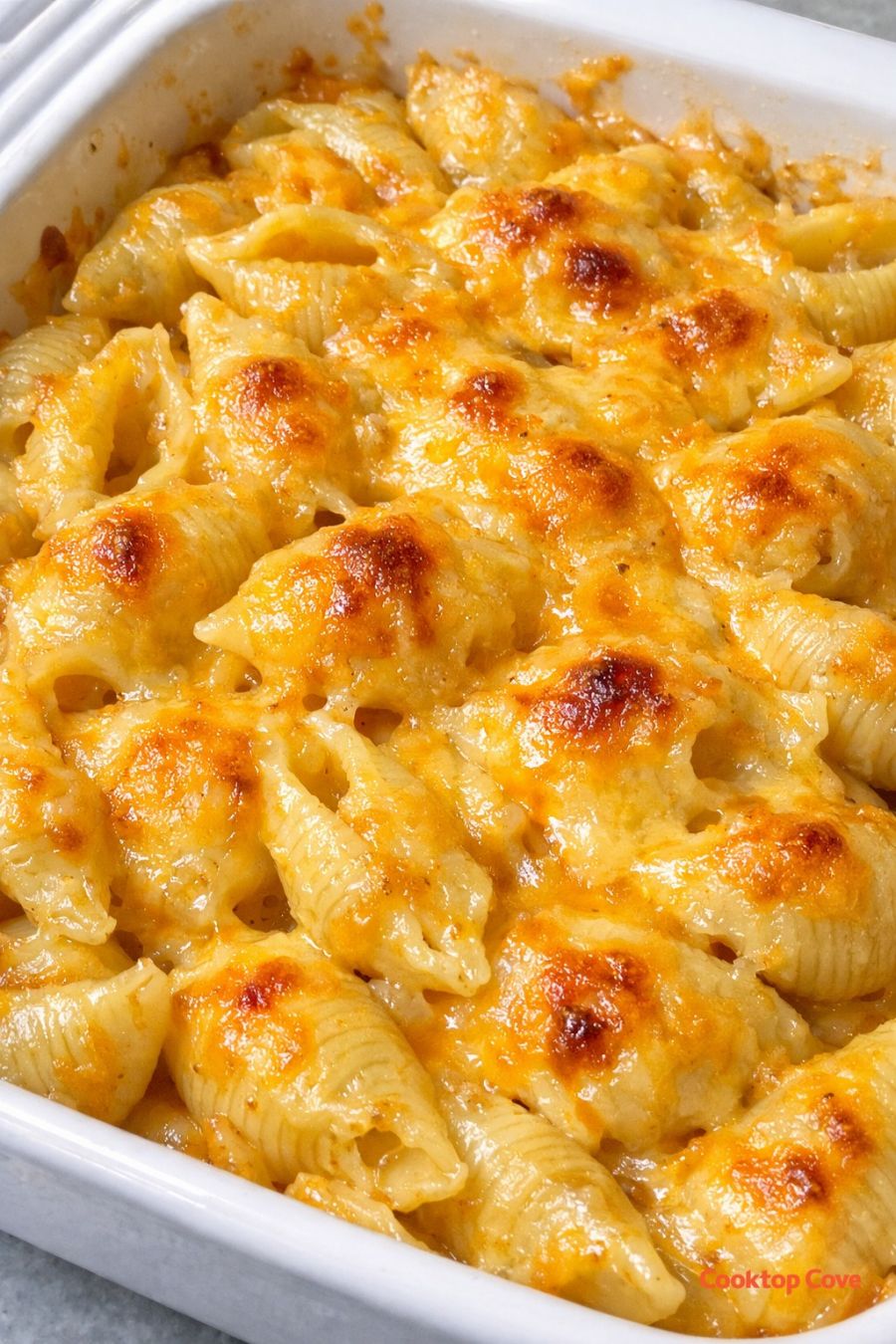
This is the kind of recipe that belongs in every first apartment and somehow follows you through life. My college roommate taught me this ultra-simple baked Colby shells on a finals week when we were exhausted, broke, and desperate for something comforting that didn’t involve a drive-thru. It uses just three ingredients, all from the supermarket center aisles, and bakes into a bubbly, golden pan of cheesy pasta that feels far more indulgent than the effort it requires. I still make it on busy weeknights because it’s hands-off, reliably crowd-pleasing, and tastes like the cozy, low-stress cooking many of us leaned on in our college years.
Serve these lazy Colby shells straight from the oven with a simple green salad dressed in a sharp vinaigrette to cut the richness, and maybe some roasted or steamed broccoli on the side. Garlic bread or warm crusty rolls are great if you want to lean into full comfort-food mode. For a little contrast, pair with something crisp and refreshing to drink—sparkling water with lemon, a light beer, or a chilled white wine like Pinot Grigio all work nicely.
Oven-Baked 3-Ingredient Lazy Colby Shells
Servings: 4
Ingredients
12 oz (about 4 cups) medium pasta shells, uncooked
3 cups shredded Colby cheese (about 12 oz), divided
3 cups whole milk (or 2% milk)
Directions
Preheat your oven to 375°F (190°C). Lightly grease a medium white casserole dish (about 2 to 2.5 quarts) so the pasta and cheese don’t stick.
Pour the uncooked pasta shells into the casserole dish and spread them into an even layer. This recipe is designed for dry pasta—no boiling first—so they cook right in the milk.
Sprinkle about 2 1/2 cups of the shredded Colby cheese evenly over the dry shells, reserving the remaining 1/2 cup of cheese for the final topping.
Pour the milk evenly over the pasta and cheese, making sure most of the shells are submerged. Gently press down any pasta that’s sitting high so it has some contact with the liquid; this helps everything cook evenly.
Cover the casserole dish tightly with foil. Bake on the center rack for 30 minutes, until the milk is hot and the cheese is mostly melted and starting to mingle with the pasta.
Carefully remove the dish from the oven and take off the foil (watch for steam). Stir everything together thoroughly, scraping along the bottom and corners of the dish so the pasta loosens and the cheese and milk combine into a loose, saucy mixture.
Spread the mixture back into an even layer. Sprinkle the remaining 1/2 cup shredded Colby cheese evenly over the top.
Return the casserole to the oven, uncovered, and bake for another 15–20 minutes, or until the top is deeply golden, bubbly, and the pasta shells are tender when you bite into one. If the edges brown faster than you like, you can loosely tent with foil for the last 5 minutes.
Let the baked shells rest for about 5–10 minutes out of the oven. The sauce will thicken slightly as it cools, and the top will stay beautifully golden and bubbly. Serve warm, scooping down through the browned cheesy top to get plenty of saucy shells in each portion.
Variations & Tips
Because this recipe is intentionally minimalist, the variations are more about small tweaks than adding a long list of extras. If you’d like a little more flavor without changing the three-ingredient spirit, you can use a Colby-Jack blend instead of straight Colby, or swap some of the milk for evaporated milk for a slightly richer, thicker sauce. You can also bake it in a slightly wider casserole dish if you like extra surface area for more golden, bubbly cheese on top. For a bit more texture, stir in a spoonful of butter with the first stir (after the initial covered bake), or add a light sprinkle of extra shredded cheese just before serving. To keep the pasta from drying out, avoid baking much longer than the suggested time; if it looks dry before the pasta is tender, add a splash more milk, stir, and continue baking covered for a few minutes. Food safety notes: Use pasteurized milk and keep it refrigerated until you’re ready to assemble. Shred cheese from a block shortly before baking for best melt and to avoid additives that can affect texture. Don’t leave the baked casserole at room temperature for more than 2 hours; refrigerate leftovers in a shallow container and reheat thoroughly until steaming hot before eating.
