
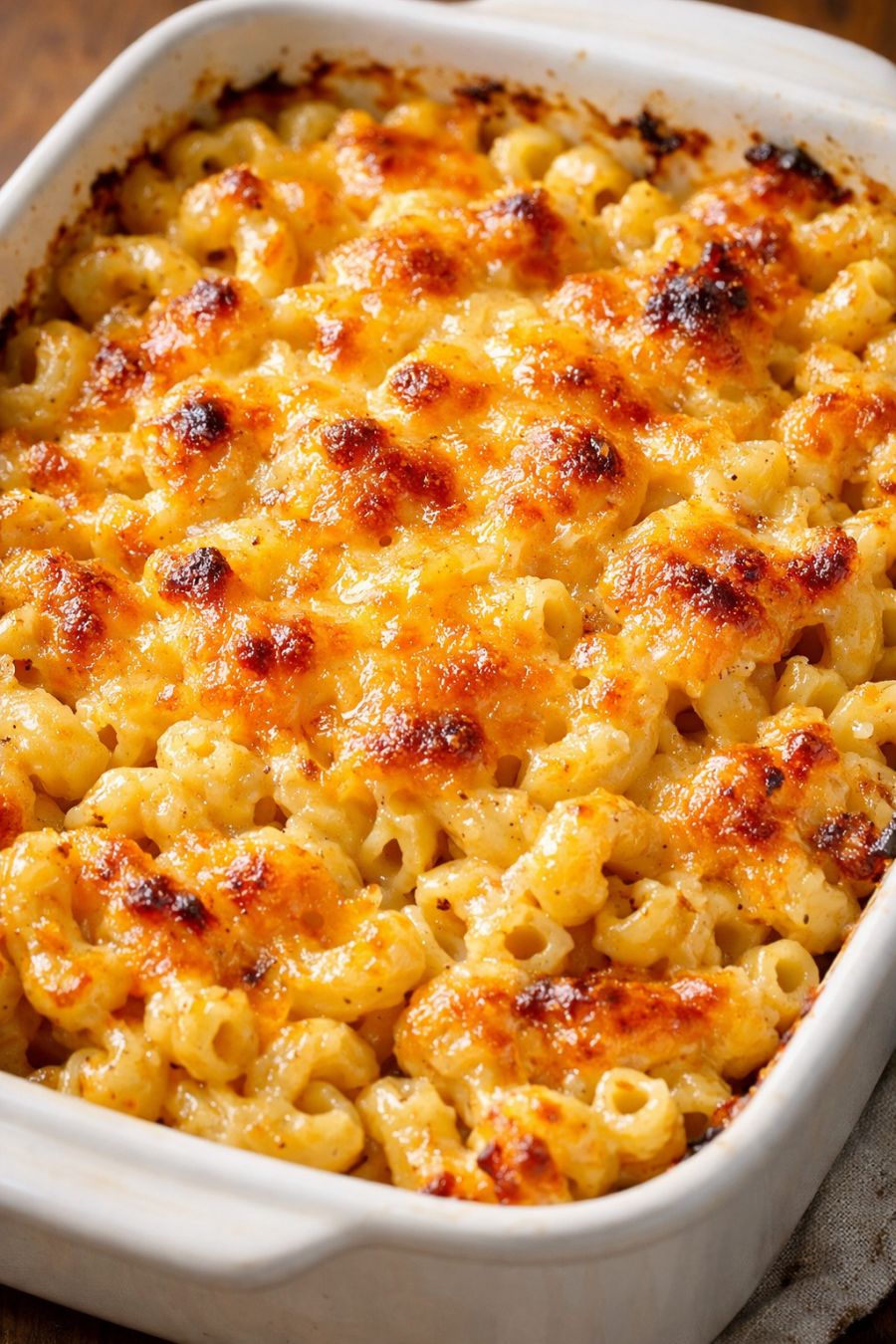
This little oven-baked honey dijon macaroni is the sort of simple, pantry-friendly dish that fits right into a busy weeknight on the farm or in town. It leans on a store-bought bottled honey dijon dressing, the way some of the older Amish and country church ladies I knew weren’t afraid to do when they needed to stretch supper without fuss. Everything gets poured straight over dry elbow macaroni in a casserole dish, then tucked into the oven until the pasta is tender and the sauce is creamy and comforting. With only four ingredients and hardly any prep, it’s the kind of humble, no-nonsense meal your family will start asking for by name.
Serve this honey dijon macaroni hot from the oven with something crisp and fresh alongside—a simple lettuce salad with sliced cucumbers, or some carrot and celery sticks on a plate. It also goes nicely with steamed green beans or buttered peas, the way we used to round out supper on the farm. For a heartier spread, pair it with baked ham, roast chicken, or meatloaf and a basket of warm dinner rolls or buttered bread. Leftovers reheat well, so it can be packed into a thermos or container for an easy next-day lunch.
4-Ingredient Amish Honey Dijon Macaroni Bake
Servings: 4-6
Ingredients
2 cups dry elbow macaroni
1 16-ounce bottle honey dijon salad dressing
1 1/2 cups whole milk
1 cup shredded mild cheddar cheese, divided
Directions
Preheat your oven to 350°F (175°C). Lightly grease a 2-quart casserole dish with butter or cooking spray.
Pour the dry elbow macaroni evenly into the bottom of the casserole dish, spreading it out so it makes a fairly even layer.
In a medium bowl or large measuring cup, whisk together the bottled honey dijon dressing and the whole milk until smooth and well blended.
Pour the honey dijon and milk mixture evenly over the dry macaroni in the casserole dish, making sure all of the pasta is moistened. Gently stir right in the dish to coat the macaroni, then spread it back into an even layer.
Sprinkle about 3/4 cup of the shredded cheddar cheese evenly over the top, reserving the remaining 1/4 cup for later.
Cover the casserole dish tightly with aluminum foil to keep the moisture in so the macaroni can cook through in the sauce.
Bake, covered, for 35–40 minutes, until the macaroni is just tender when you poke a piece with a fork and the sauce is bubbling around the edges.
Carefully remove the foil (watch for steam), sprinkle the remaining 1/4 cup shredded cheddar cheese over the top, and return the dish to the oven, uncovered.
Bake another 8–10 minutes, until the cheese on top is melted and lightly bubbly and the macaroni is fully cooked.
Let the casserole rest on the counter for about 5–10 minutes before serving so the sauce can thicken slightly and the flavors settle. Spoon into bowls or onto plates and serve warm.
Variations & Tips
If you like a little extra richness, you can replace 1/2 cup of the milk with half-and-half or light cream, but keep enough milk in the mix so the pasta has plenty of liquid to absorb. For a slightly tangier flavor, stir in a tablespoon of yellow or Dijon mustard to the dressing and milk mixture before pouring it over the macaroni. A handful of finely chopped onion or a sprinkle of dried minced onion can be mixed into the dry pasta for a bit more savory depth, though that will add a mild onion flavor that’s not traditional in all Amish-style kitchens. You can also swap the mild cheddar for Colby or Monterey Jack if that’s what you have on hand; just keep the total amount about the same so the sauce doesn’t get too thick or greasy. To make it feel more like a full one-dish supper, fold in 1–1 1/2 cups of diced cooked ham or shredded cooked chicken after the first 35–40 minutes of baking, then top with the remaining cheese and finish baking as directed. For food safety, always keep the bottled dressing refrigerated after opening and discard it if it has an off smell, color, or is past its safe date. If you add any cooked meats, make sure they were cooled and stored properly beforehand and that the finished casserole is heated all the way through, reaching at least 165°F in the center. Refrigerate leftovers within 2 hours of baking, store them in a covered container, and reheat only what you plan to eat, bringing it back to a steaming hot temperature before serving.
