
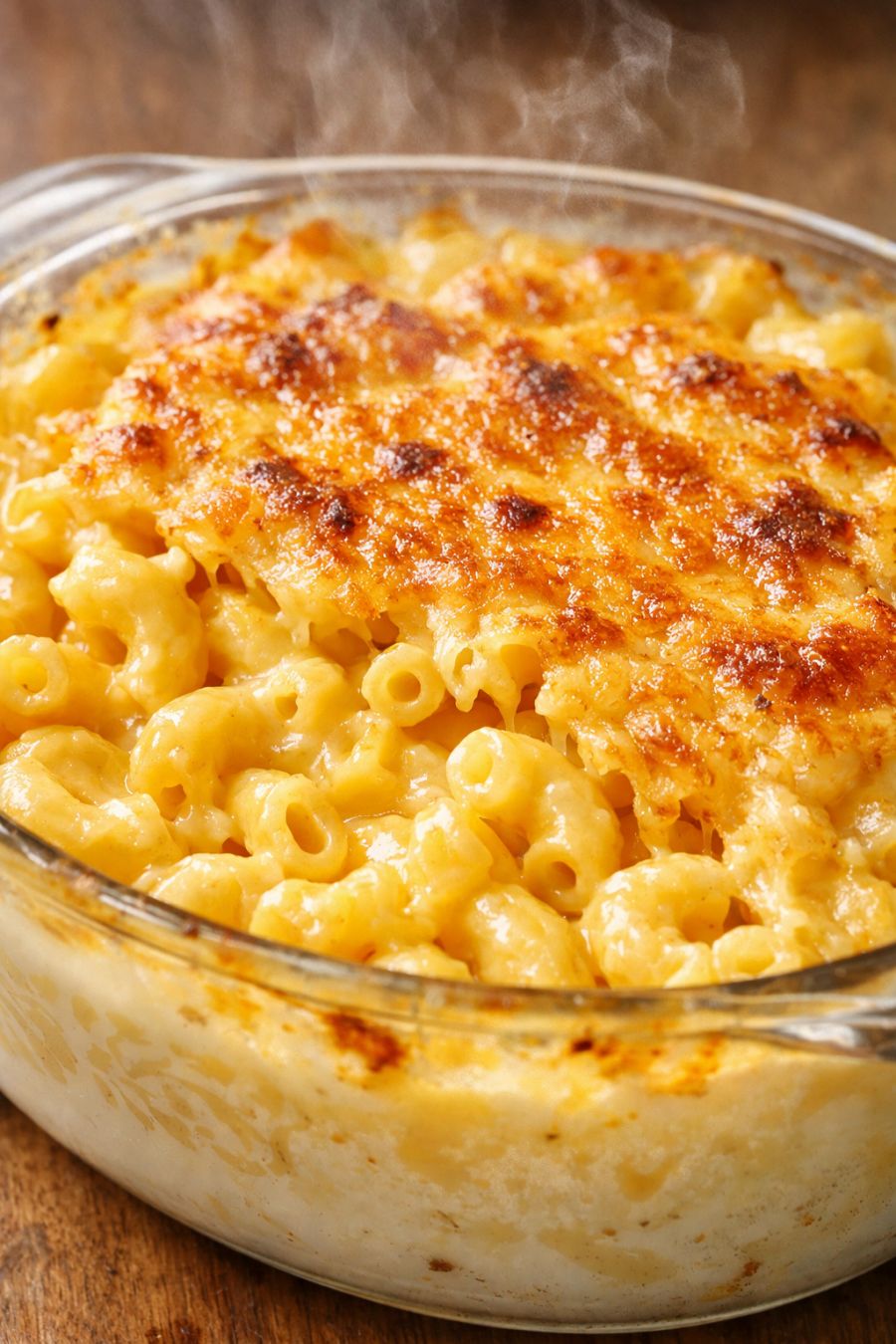
This oven baked 3-ingredient southern mac and cheese is the kind of dish that quietly steals the show at the holiday table. My mother-in-law, born and raised on a little farm just over the state line, taught me this trick the first Christmas I spent with her. She swore that the creamiest, coziest macaroni didn’t need a dozen ingredients or any fancy tricks—just good elbow macaroni, real sharp cheddar, and whole milk, baked slow in a well-loved dish. It’s simple, humble, and deeply comforting, the way Midwestern holiday food ought to be. If you’re looking for a straightforward, no-fuss side that tastes like it’s been in the family for generations, this is the pan of mac and cheese you make.
Serve this mac and cheese piping hot, right out of the vintage-style baking dish, with a big spoon so everyone can dig into that cheesy top. It’s perfect alongside ham, roast turkey, or meatloaf, and it does just as well next to pot roast with gravy. Add a bright side like green beans, a simple salad, or roasted carrots to balance the richness. Leftovers reheat nicely and make a cozy lunch with sliced tomatoes or a bowl of tomato soup on the side.
Oven Baked 3-Ingredient Southern Mac and Cheese
Servings: 6
Ingredients
2 cups dry elbow macaroni (about 8 ounces)
4 cups shredded sharp cheddar cheese, divided
3 cups whole milk
Directions
Preheat your oven to 350°F (175°C). Lightly butter or spray a 2-quart vintage-style baking dish or Pyrex bowl, if you like, just to keep the edges from sticking.
Bring a large pot of salted water to a boil. Add the elbow macaroni and cook until just shy of al dente, about 1–2 minutes less than the package directions. You want the pasta to still have a little bite, since it will finish in the oven.
Drain the macaroni well and let it sit in the colander for a minute so excess water drips off. You don’t want it watery going into the dish or it will thin out the sauce.
Spread half of the warm macaroni in an even layer in the prepared baking dish. Sprinkle with about half of the shredded sharp cheddar cheese, making sure it falls down between the noodles.
Add the remaining macaroni on top, then sprinkle with most of the remaining cheddar, holding back a generous handful for the top crust. The dish should look nicely filled but not packed to the brim.
Slowly pour the whole milk over the macaroni and cheese, moving the dish gently back and forth so the milk seeps down through the layers. You should just see the milk around the edges; it will thicken as it bakes.
Scatter the last handful of cheddar evenly over the surface to create that golden, crispy cheese layer on top.
Place the dish on a baking sheet to catch any small bubbles. Bake, uncovered, for 35–45 minutes, or until the top is deeply golden, the edges are bubbling, and you can see the cheese and milk mixture thickened around the sides.
Carefully remove from the oven and let the mac and cheese rest for 10–15 minutes. It will be very hot and steamy at first, and this short rest helps the sauce settle into a thick, creamy coating on every elbow with a crisp, cheesy top.
Serve straight from the baking dish, scooping down so everyone gets both the creamy macaroni underneath and a bit of that baked, crispy cheese layer on top.
Variations & Tips
For extra richness while still keeping to the spirit of the recipe, you can use a mix of whole milk and evaporated milk (substitute 1 cup of the whole milk with 1 cup evaporated milk) for a slightly thicker, old-fashioned custard-style texture. If you like a stronger cheese flavor, use extra-sharp cheddar or blend in some white cheddar as part of the 4 cups; just keep the total cheese amount the same. To make ahead for a holiday, assemble the dish up to the point of baking, cover tightly, and refrigerate for up to 24 hours; let it sit at room temperature for about 20 minutes, then bake as directed, adding 5–10 minutes if needed. For a firmer, sliceable mac and cheese (the way many church suppers serve it), bake until the center is completely set and let it rest a full 20 minutes before serving. If you prefer a looser, saucier texture, pull it from the oven as soon as it bubbles and lightly browns, and serve after a shorter rest. You can also play with the cheese crust: pile a little more of the cheddar on top (taken from the total amount) for an extra-thick, crispy lid, or stir a portion of the cheese directly into the hot pasta before layering to ensure every elbow is fully coated.
