
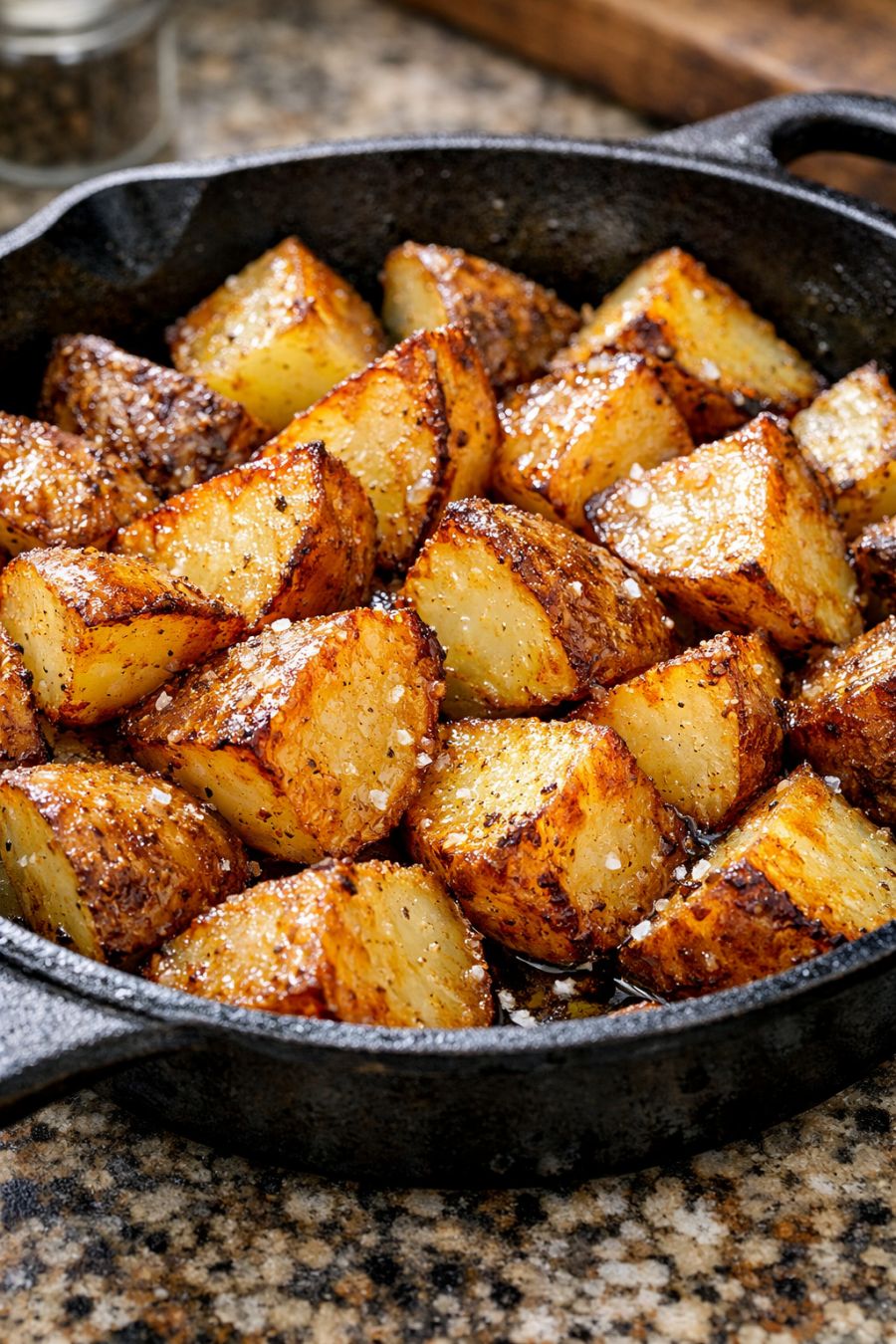
This three-ingredient Amish-style chicken fat potato dish is the kind of homestyle supper side that vanishes before you can get seconds. It’s built on a thrifty, old-fashioned idea: using rendered chicken fat (schmaltz) to turn plain russet potatoes into something deeply savory, with crisped edges and tender, fluffy centers. You simply pour hot rendered chicken fat over raw quartered russet potatoes, add one simple seasoning, and slide the cast iron skillet into the oven. The method is unfussy, budget-friendly, and rooted in farmhouse cooking traditions that prize flavor and resourcefulness over fuss.
Serve these potatoes alongside roast chicken, pork chops, or a simple pan-seared steak—they pick up and echo all the savory notes on the plate. A bright, vinegary green salad or steamed green beans with lemon help balance the richness. They’re also excellent with fried eggs for a hearty breakfast-for-dinner, or as a base for a quick meal bowl topped with sautéed greens and a spoonful of sour cream or plain yogurt.
Oven-Baked Amish Chicken Fat Potatoes
Servings: 4
Ingredients
2 pounds russet potatoes, scrubbed and quartered lengthwise
1/3 cup rendered chicken fat (schmaltz), gently warmed until pourable
1 1/2 teaspoons kosher salt
Directions
Preheat your oven to 425°F (220°C). Place a 10–12 inch cast iron skillet on the middle rack while the oven heats so the pan gets hot.
Scrub the russet potatoes well and pat them dry. Cut each potato lengthwise into quarters (or into 6 wedges if very large), keeping the pieces roughly the same size so they cook evenly.
In a large bowl, sprinkle the kosher salt over the cut potatoes and toss to distribute it as evenly as you can. Set aside while the oven finishes preheating; the salt will start to draw a bit of moisture to the surface, which helps them crisp.
Carefully remove the hot cast iron skillet from the oven and place it on a heatproof surface. Add the raw quartered russet potatoes to the skillet, arranging them in a single layer as much as possible, cut sides facing down for maximum browning.
Slowly pour the warm rendered chicken fat evenly over the potatoes in the skillet, making sure each piece gets coated. You should hear a gentle sizzle as the fat hits the hot pan and potatoes.
Return the skillet to the oven and bake for 25–30 minutes without stirring, until the bottoms of the potatoes are deeply golden and beginning to crisp.
Using tongs or a spatula, carefully turn the potatoes so a new cut side is down. Continue baking for another 15–20 minutes, or until the potatoes are very tender inside and well browned on the edges.
Taste a piece and adjust seasoning with a pinch more salt if needed, tossing gently in the skillet to distribute. Serve the potatoes hot straight from the cast iron skillet, taking care to protect the table and warn guests that the pan is very hot.
Variations & Tips
If you have a bit more pantry flexibility, you can add freshly ground black pepper, garlic powder, or a sprinkle of smoked paprika along with the salt for a subtle twist, but keep the total to just one additional seasoning if you want to stay close to the original three-ingredient spirit. A handful of chopped fresh parsley or chives scattered over the potatoes after baking adds color and a fresh note without changing the cooking method. For a slightly lighter version, you can cut the rendered chicken fat with a tablespoon or two of a neutral oil, but keep enough chicken fat to maintain the signature flavor. If you prefer extra-crisp potatoes, let them roast a few minutes longer, watching closely so they don’t burn, and resist stirring too often—every flip interrupts browning. Food safety tips: Use fully rendered, strained chicken fat from properly cooked chicken; never use fat from undercooked poultry. Store rendered chicken fat in a covered container in the refrigerator and use within about a week, or freeze for longer storage. Always keep raw potatoes and your cutting board separate from ready-to-eat foods, and wash your hands and tools after handling raw poultry if you render the fat yourself. Remember that the cast iron skillet will stay extremely hot for a long time—use thick oven mitts, keep the handle turned away from the edge of the stove or table, and warn anyone nearby to avoid accidental burns.
