
This is the kind of supper I lean on during tax week, when the table still needs to feel full but my wallet surely doesn’t. It’s a true poor man’s weeknight lifesaver: just three humble ingredients, a slow cooker, and time. The idea comes straight out of Midwestern potluck country, where tough, inexpensive cuts of meat were coaxed into tenderness all day while folks were out working.
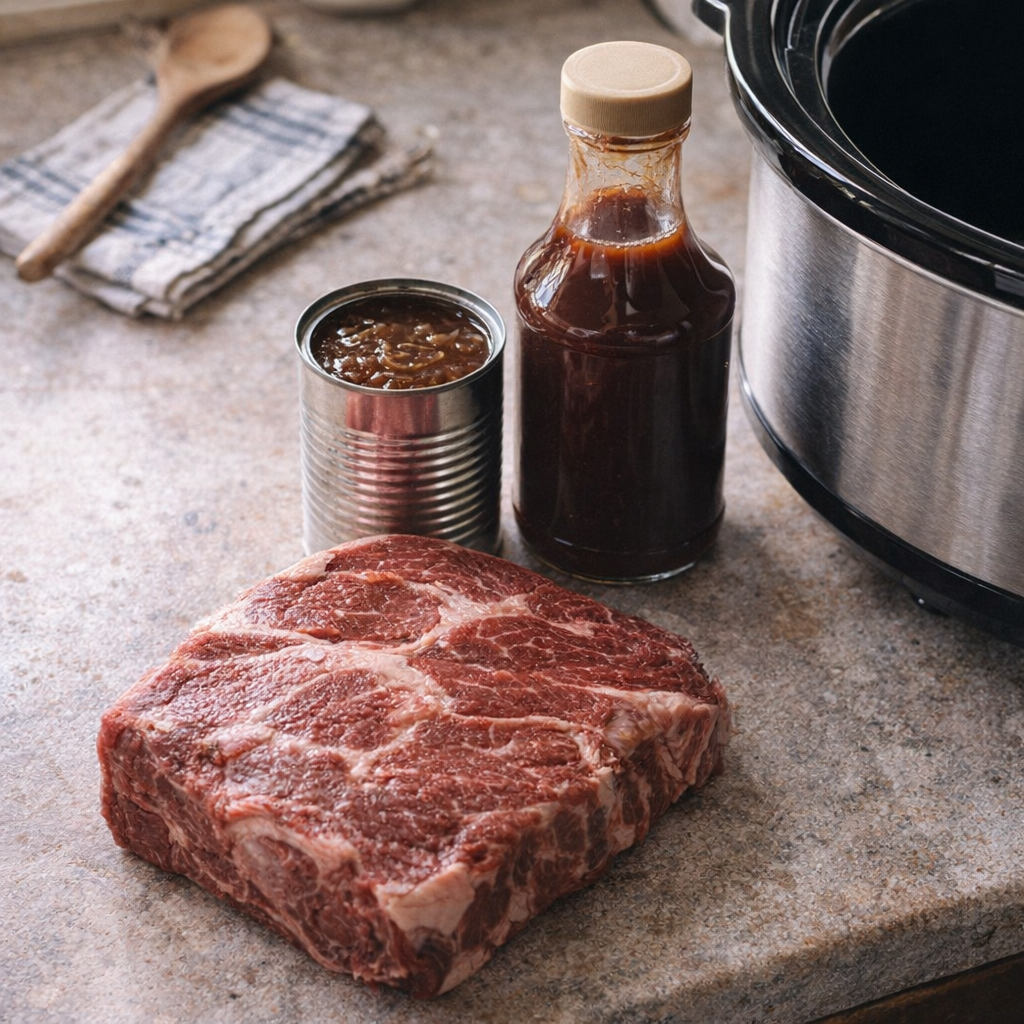
By the time you lift the lid, you’ve got a pot of slow-roasted, shredded, fibrous meat, glistening in a dark, savory-sweet glaze that tastes like you fussed all afternoon—when really, you just tossed a few things in the crock and got on with your day.
I like to heap this shredded meat over mashed potatoes or plain white rice so that the dark, glossy juices have something to soak into. Buttered egg noodles work the same kind of magic. On rushed nights, we pile it onto cheap hamburger buns or toast for hot sandwiches with a spoonful of the glaze drizzled over top.
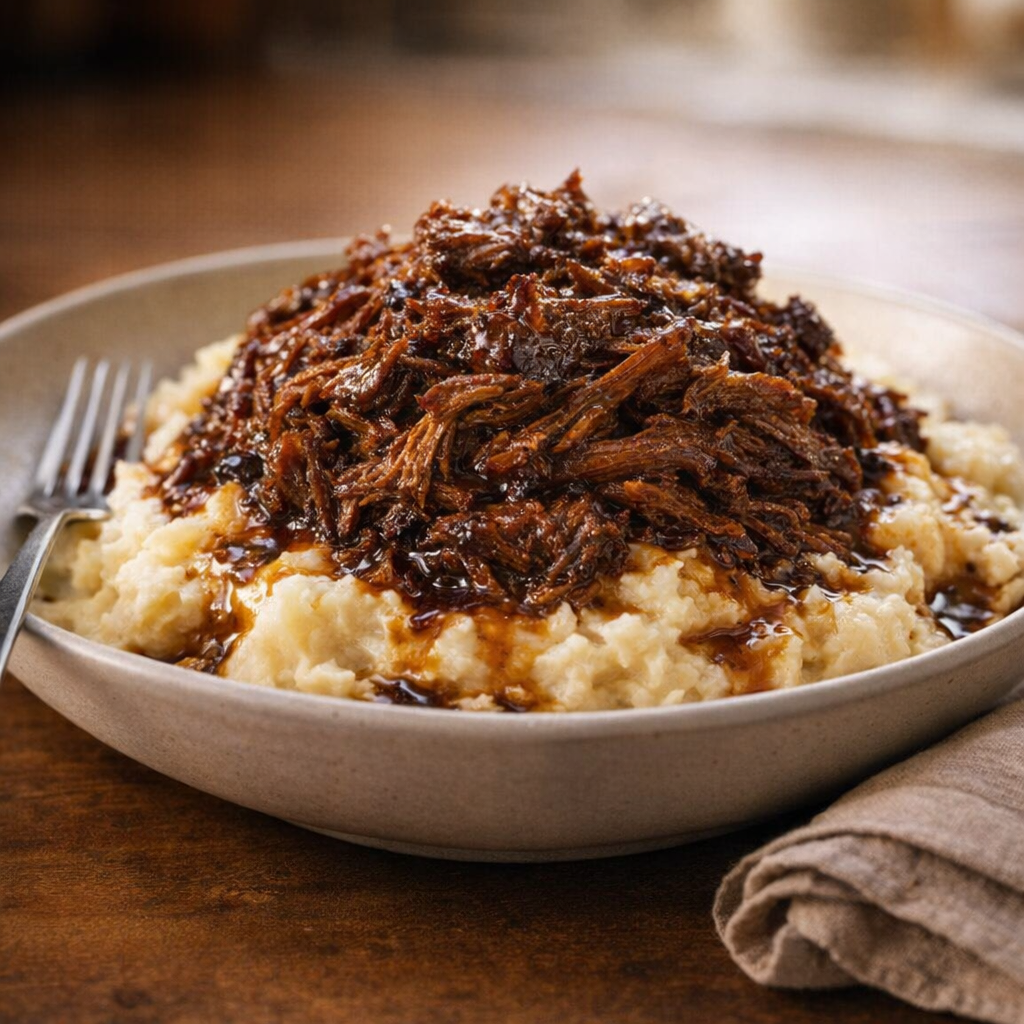
A simple side—steamed frozen peas, green beans, or a bagged salad—rounds things out without adding much cost or effort. If you’ve got a jar of pickles or some coleslaw, that tangy crunch is a nice contrast to the rich, sticky meat.
3-Ingredient Slow Cooker Poor Man’s Weeknight Lifesaver
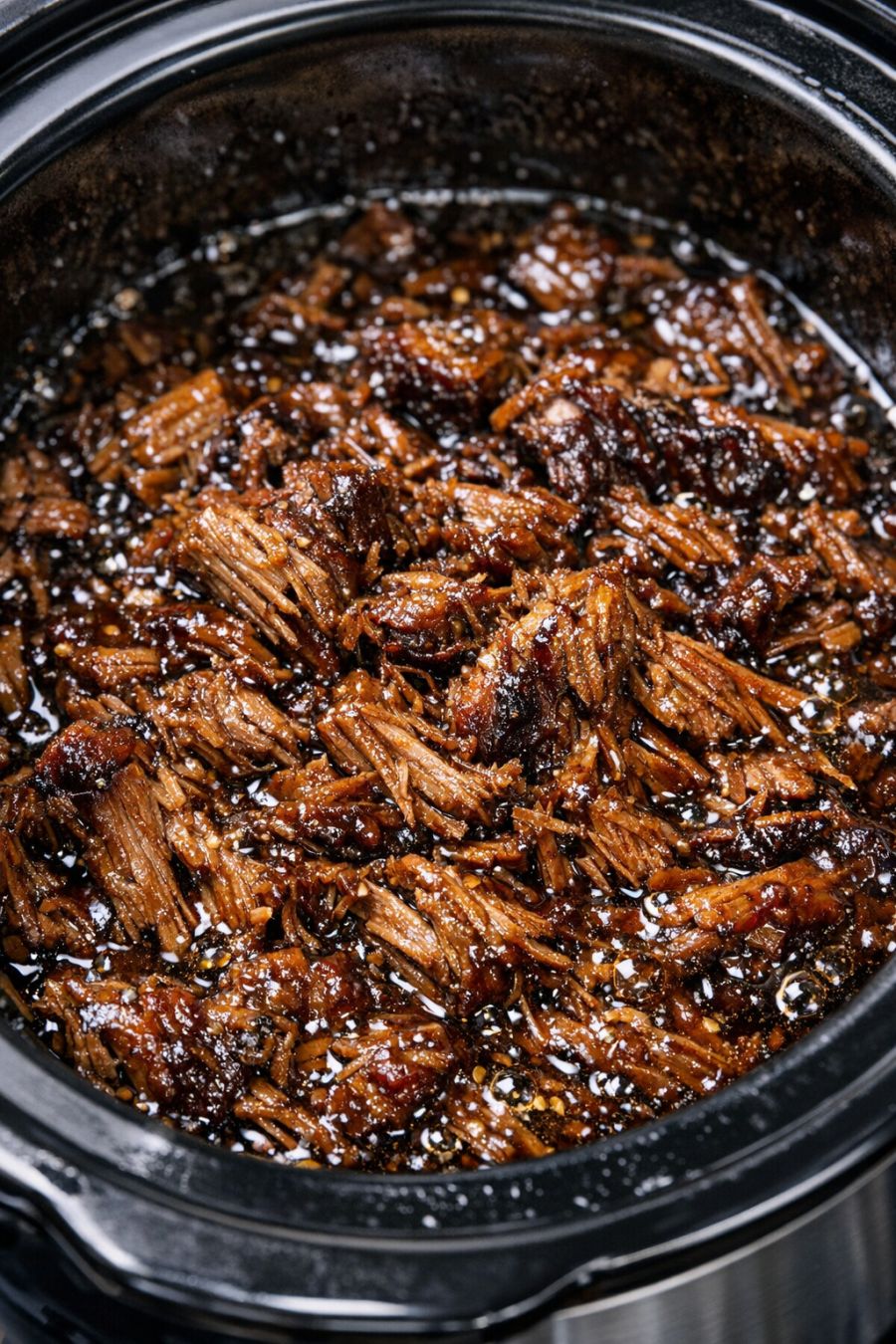
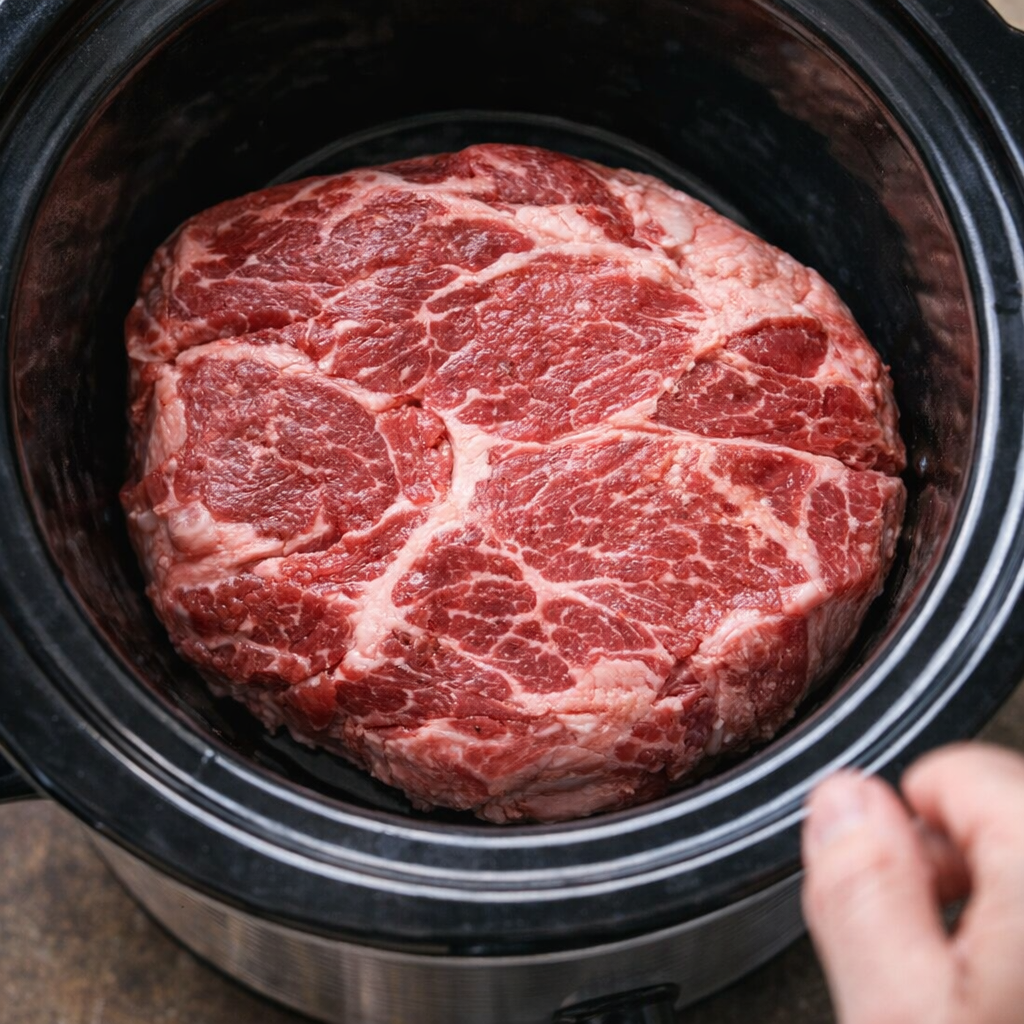
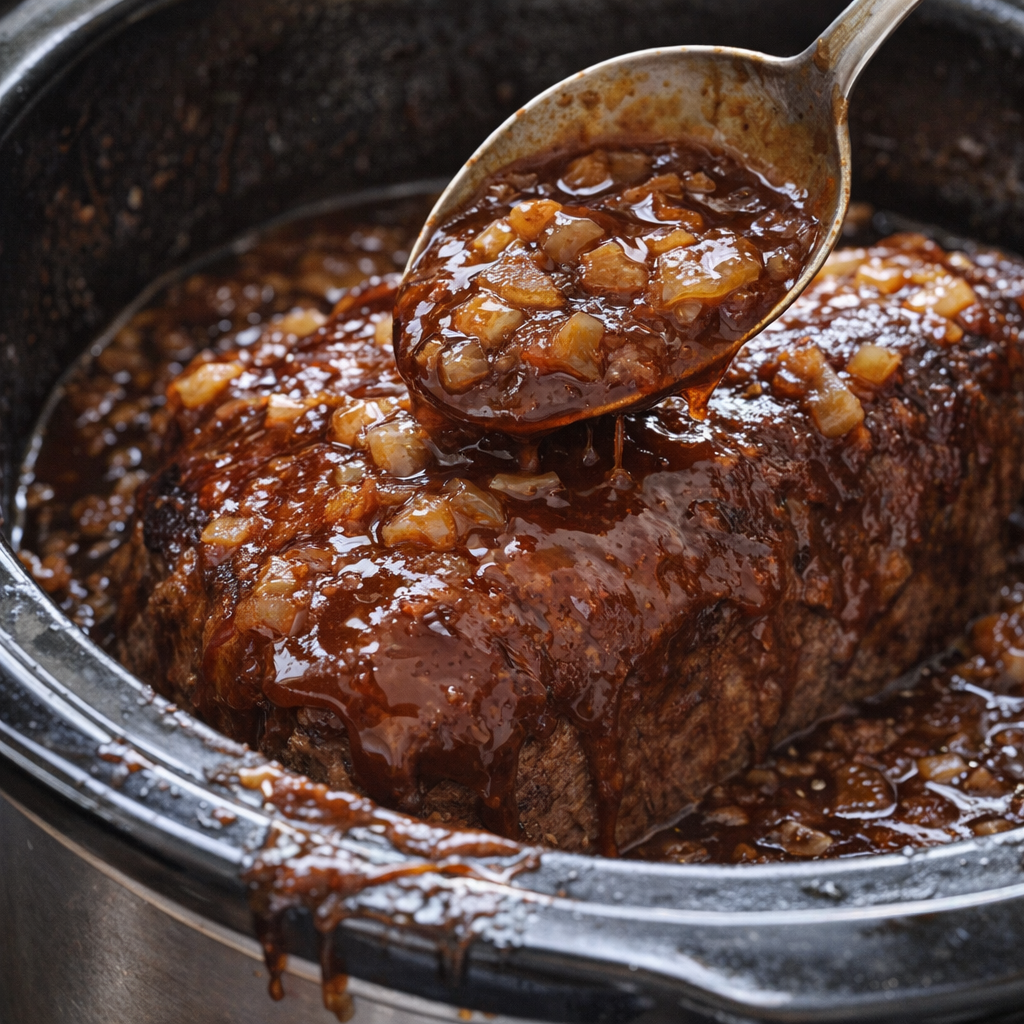
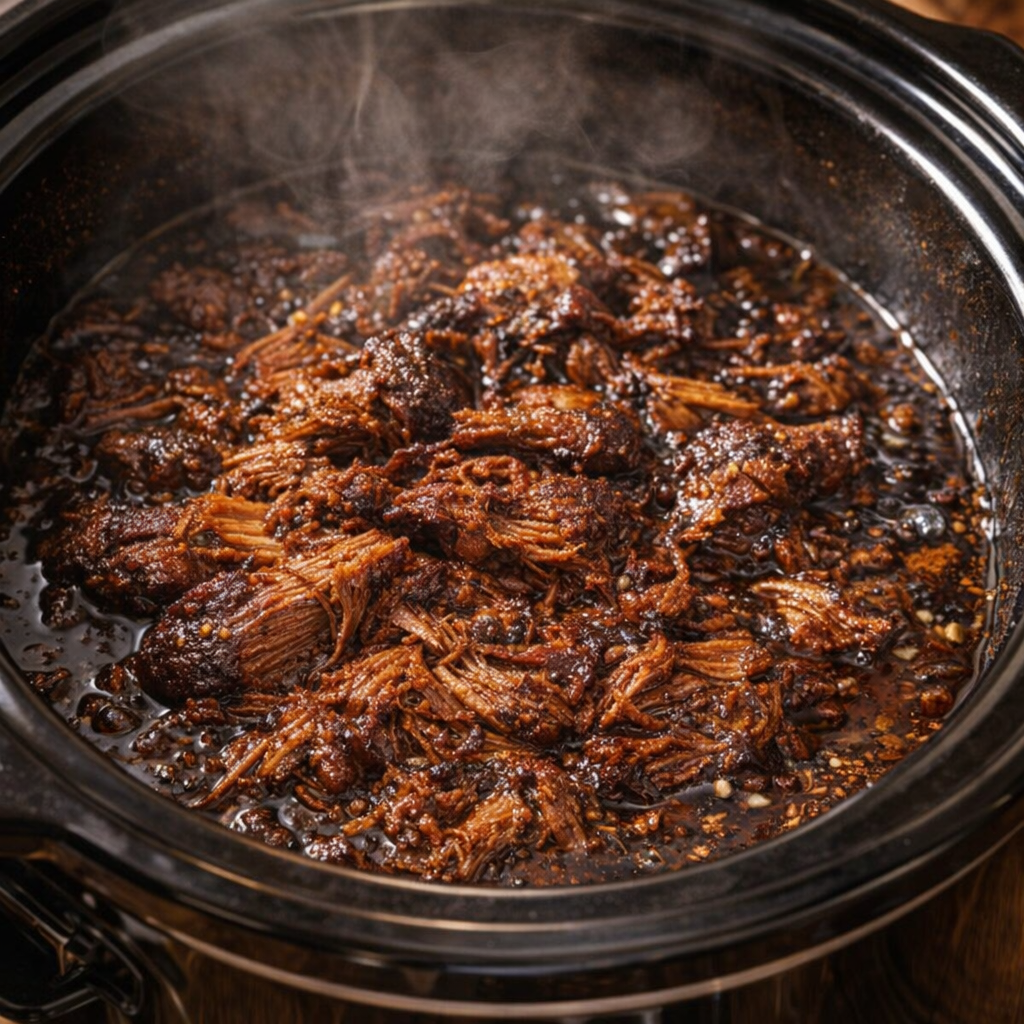
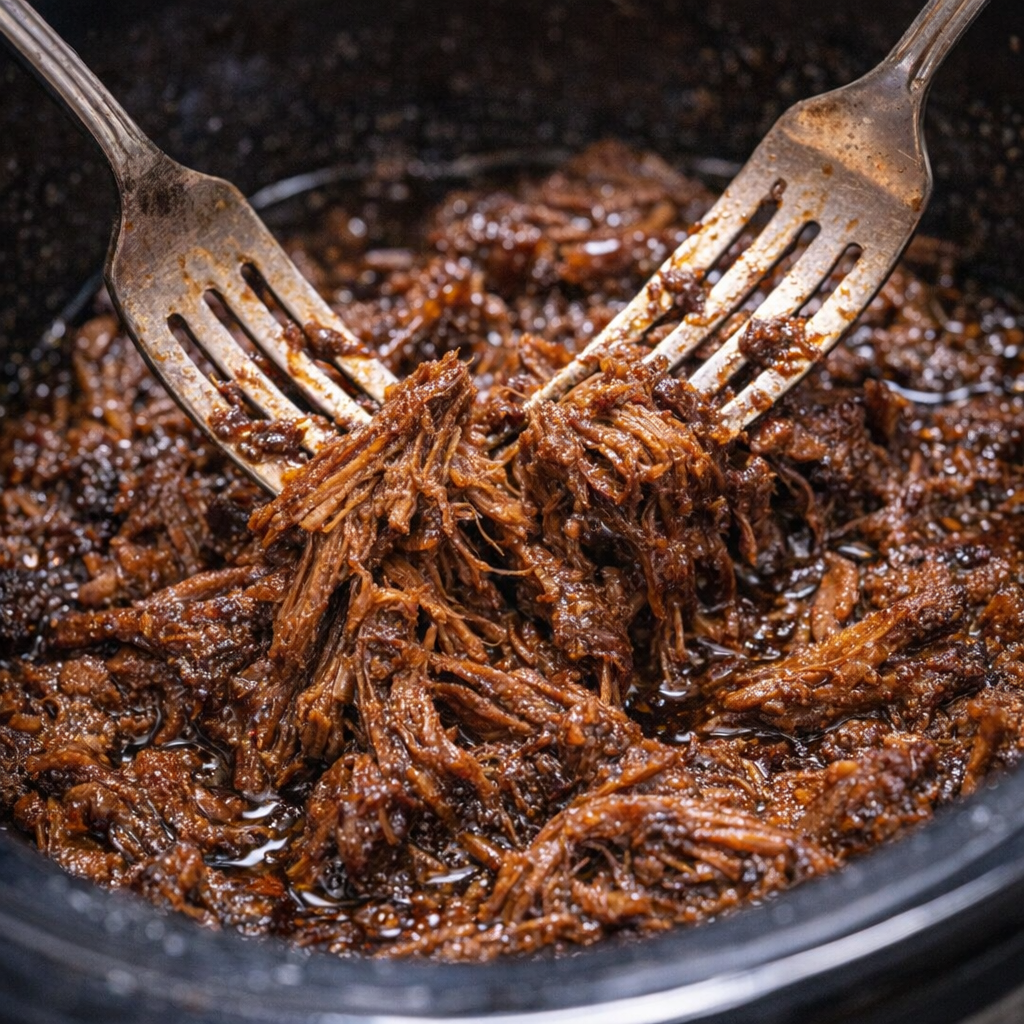
You can make this same idea work with other tough, inexpensive cuts. Beef chuck is my first choice because its connective tissue melts into that luscious, gelatinous texture, but pork shoulder (Boston butt) works beautifully too—just expect a slightly sweeter, milder flavor. If all you can find is a leaner roast, like bottom round, it will still shred but won’t be quite as unctuous; in that case, you can add a tablespoon or two of vegetable oil or a small knob of butter when you add the soup and sauce to help keep things from drying out.
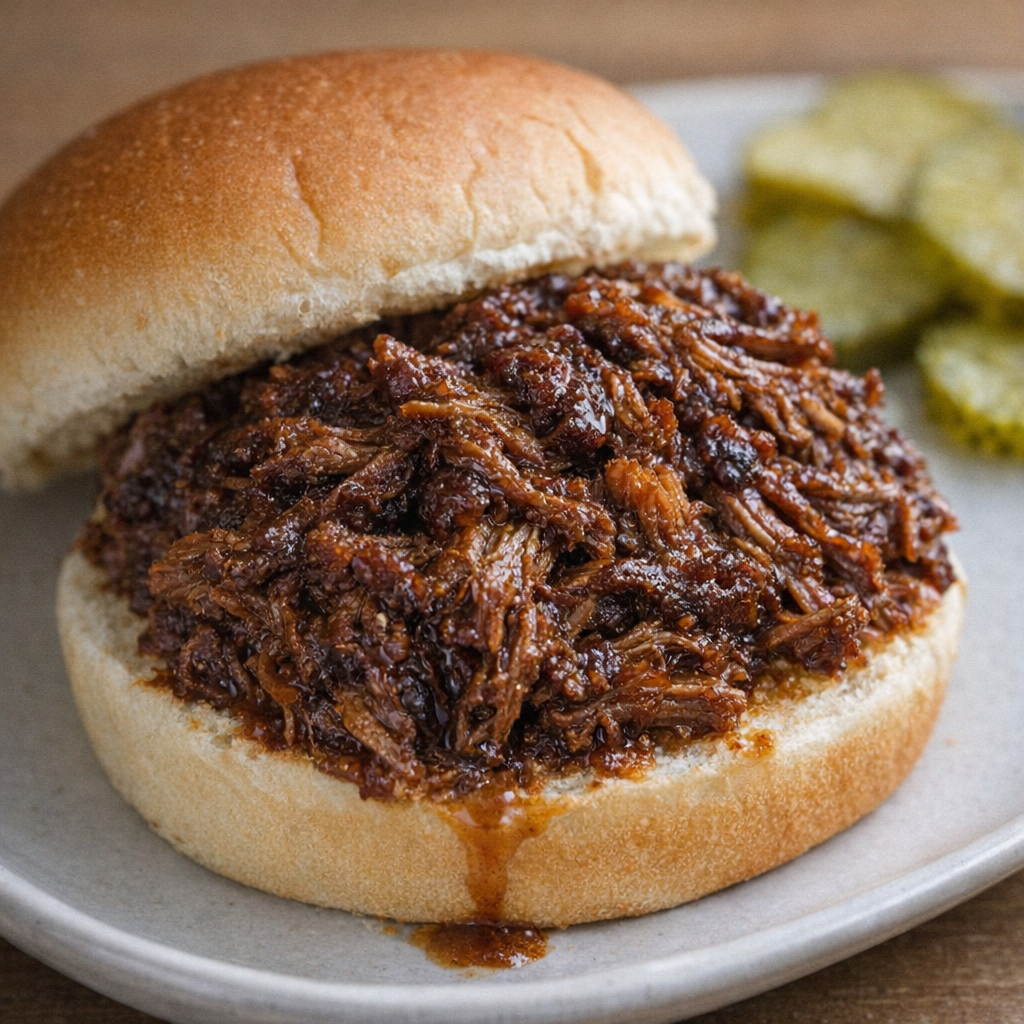
If your budget allows, you can swap the French onion soup for condensed cream of mushroom or even condensed beefy mushroom soup for a different, still-savory profile. For a bit of extra kick, stir in a teaspoon of crushed red pepper or a few dashes of hot sauce at the end, but remember that every extra item beyond the main three adds to the cost, so I think of those as optional treats, not essentials. For a slightly less sweet finish, use a more tangy, vinegar-forward barbecue sauce; for a deeper color and more umami, choose a sauce labeled “smoky” or “hickory.”
Food safety tips: Keep the meat refrigerated until you’re ready to load the slow cooker, and don’t let raw meat sit out on the counter for more than about 30 minutes while you prep. Always start with a clean slow cooker and clean utensils. For safety, cook the roast until it reaches at least 190°F internally; at that point the collagen has broken down and the meat will shred easily. Once cooked, don’t leave the slow cooker on the “keep warm” setting for more than about 4 hours before refrigerating leftovers. Cool leftovers in shallow containers and refrigerate within 2 hours of cooking. Reheat leftovers to steaming hot (165°F) before serving, adding a splash of water if the sauce has thickened too much in the fridge.
