
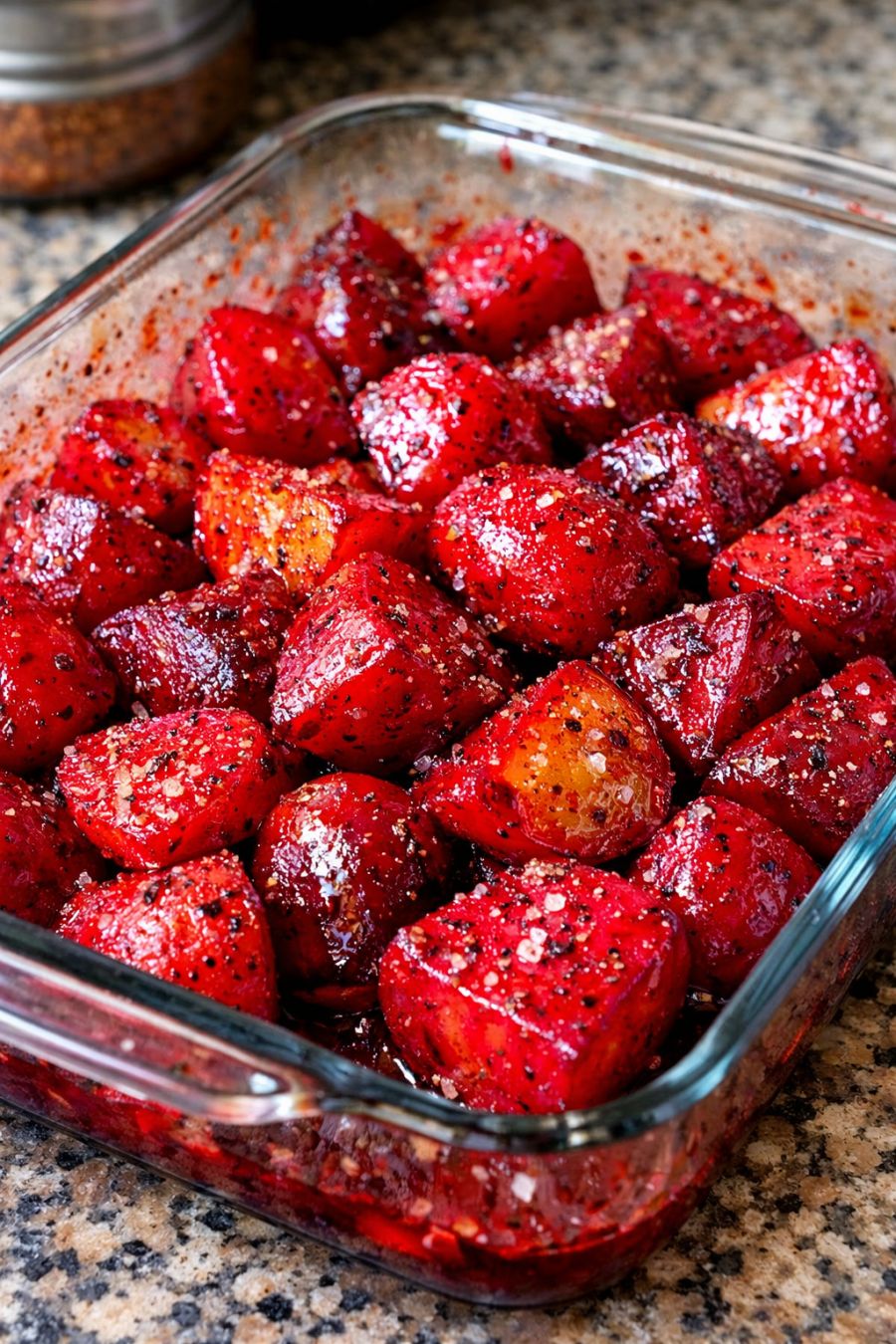
This little dish is what I turn to on the nights when my mind is blank but supper still needs to land on the table. It’s rooted in the plain, thrifty cooking I grew up with in the rural Midwest, where nothing from a good jar of sweet pickled beets ever went to waste—not even the juice. Here, that ruby beet brine soaks into raw quartered baby white potatoes and one simple pantry friend, then bakes in a glass roasting pan until everything is tender, pink, and cozy. It’s humble, a little old-fashioned, and just right for the days when you need something you can pull together without thinking too hard.
Serve these rosy potatoes alongside pan-fried pork chops, baked ham, or a simple skillet sausage for a farmhouse-style plate. A crisp green salad with a tangy vinaigrette or some buttered green beans balances the sweetness nicely. I like to set out a crock of cottage cheese or a slice or two of sharp cheddar on the side, the way my mother did, and if you have a loaf of warm bread or dinner rolls, they’re perfect for soaking up any extra beet-kissed juices in the pan.
Oven-Baked Amish Pickled Beet Potatoes
Servings: 4
Ingredients
2 pounds baby white potatoes, scrubbed and quartered
1 1/2 cups sweet pickled beet juice (from a jar of sweet pickled beets)
2 tablespoons unsalted butter, cut into small pieces
1/2 teaspoon kosher salt (optional, to taste)
1/4 teaspoon black pepper (optional, to taste
Directions
Preheat your oven to 375°F (190°C). Set out a 9x13-inch glass roasting pan so it’s ready.
Scrub the baby white potatoes well and pat them dry. Quarter each potato so the pieces are roughly bite-sized and will cook evenly.
Place the raw quartered potatoes in an even layer in the glass roasting pan.
Sprinkle the potatoes lightly with the salt and pepper if using. Tuck the small pieces of butter evenly over the top of the potatoes so they’ll melt down between them as they bake.
Give the jar of sweet pickled beets a gentle shake, then carefully pour 1 1/2 cups of the sweet pickled beet juice over the raw potatoes in the glass pan. The liquid should come about halfway up the potatoes; add a splash more if needed, but don’t fully submerge them so they can roast as well as braise.
Cover the glass roasting pan tightly with foil to keep in the steam and juices.
Bake the covered pan in the preheated oven for 35–40 minutes, until the potatoes are just turning tender when pierced with a fork.
Remove the foil, gently stir the potatoes to coat them all in the beet juice and melted butter, and return the pan to the oven uncovered.
Bake uncovered for another 15–20 minutes, stirring once more if you like, until the potatoes are very tender, the edges are just starting to caramelize, and much of the beet juice has reduced to a glossy pink coating.
Let the potatoes rest for 5–10 minutes out of the oven so the juices settle slightly. Taste and adjust seasoning if needed, then serve warm straight from the glass pan, spooning some of the bright beet juices over each serving.
Variations & Tips
You can tuck this recipe into your routine in lots of small, practical ways. If you’d like a heartier, more savory flavor, scatter a finely sliced small onion over the potatoes before you add the beet juice; it will soften and sweeten as it bakes. A clove of minced garlic or a pinch of dried thyme or dill can also be added without straying too far from the simple, country feel. For a dairy-free version, swap the butter for 2 tablespoons of a neutral oil, such as canola or light olive oil. If your sweet pickled beet juice is very sweet, you can balance it by adding a teaspoon of apple cider vinegar before pouring it over the potatoes. On the other hand, if your juice is on the tangy side, a teaspoon of sugar or honey stirred into the juice will mellow it. Leftover cooked potatoes keep well, covered, in the refrigerator for up to 3–4 days and reheat nicely in a covered dish in the oven or in a skillet with a splash of water. For food safety, always use beet juice from a properly sealed, commercially canned or correctly home-canned jar of pickled beets—never from a jar that shows signs of spoilage, such as bulging lids, off smells, or mold. Keep the jar refrigerated after opening and use the juice within a week or so. Make sure the potatoes are cooked until fully tender and steaming hot throughout, and promptly refrigerate any leftovers; don’t leave the finished dish at room temperature for more than 2 hours.
