
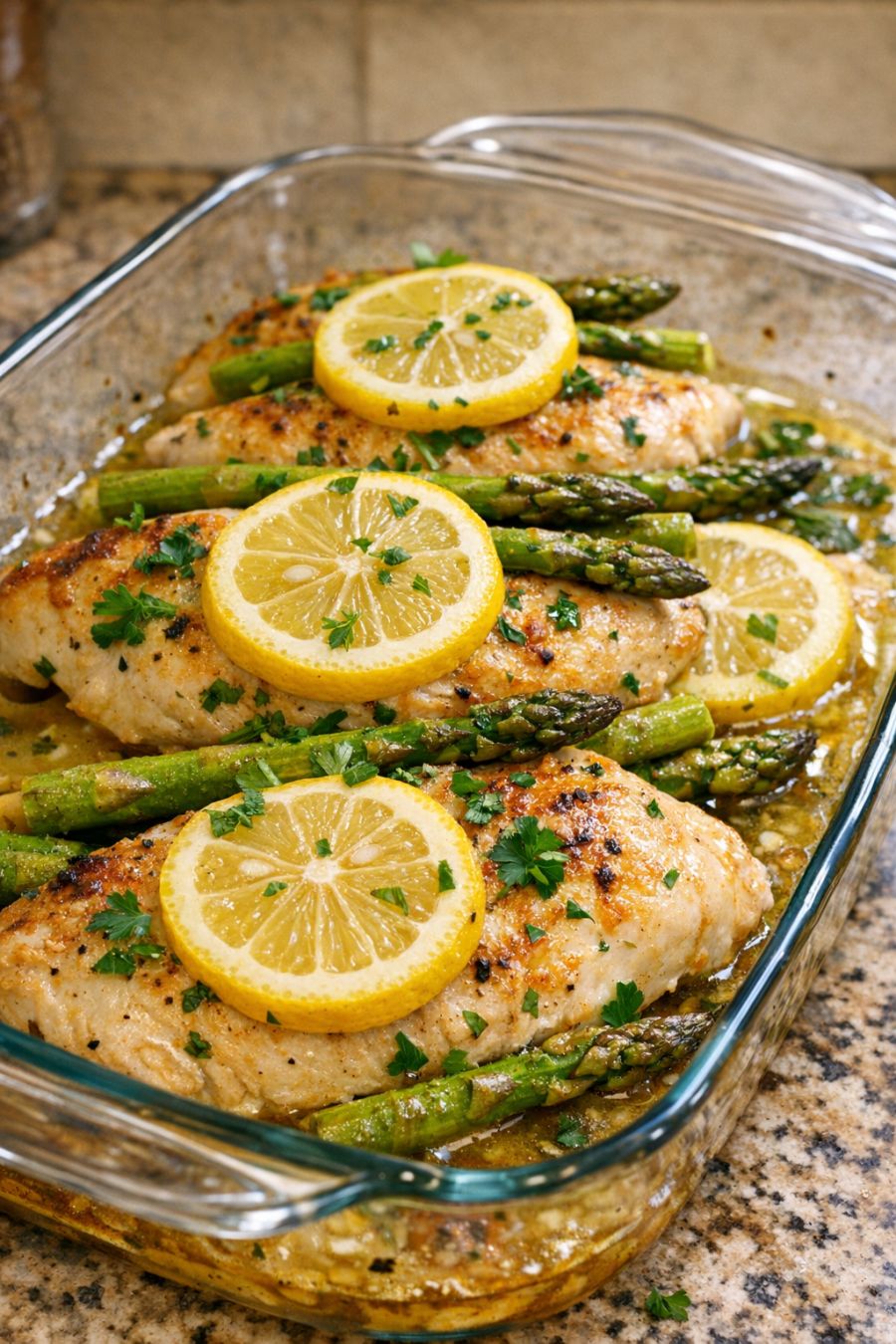
This oven baked 5-ingredient lemon asparagus chicken is my easy, springtime default for the nights I stare into the fridge and have no idea what to make. Everything goes right into a glass casserole dish: raw boneless skinless chicken breasts, fresh lemon slices layered on top, plus just three more pantry-friendly ingredients. It feels bright and special enough for company, but it’s simple enough for a Tuesday when the kids are hungry and you’re short on energy.
Serve this lemon asparagus chicken with buttered egg noodles, rice, or roasted potatoes to soak up the lemony juices from the pan. A simple green salad or a bowl of cut fruit on the side keeps things light and fresh. If you’re feeding a heartier appetite, add some crusty bread for dipping and maybe a quick dessert like brownies or sliced store-bought pound cake with berries.
Oven-Baked 5-Ingredient Lemon Asparagus Chicken
Servings: 4
Ingredients
4 small boneless skinless chicken breasts (about 1 1/2–2 pounds total)
1 large lemon, thinly sliced (plus 1–2 extra tablespoons lemon juice, optional)
1 pound fresh asparagus, woody ends snapped off
3 tablespoons olive oil
1 1/2 teaspoons kosher salt
1 teaspoon black pepper
1 teaspoon garlic powder (optional but recommended)
Directions
Preheat your oven to 400°F (200°C). Lightly grease a 9x13-inch glass casserole dish with a little olive oil or nonstick spray so the chicken doesn’t stick.
Pat the boneless skinless chicken breasts dry with paper towels so they brown a bit better. Lay them in a single layer in the bottom of the glass casserole dish, leaving a little space between each piece if you can.
Drizzle the chicken breasts with the olive oil. Sprinkle evenly with the kosher salt, black pepper, and garlic powder (if using). If you like extra lemon flavor, you can also drizzle 1–2 tablespoons of lemon juice over the chicken now.
Arrange the asparagus spears around and in between the chicken breasts in the same glass dish, keeping most of them in a single layer so they roast instead of steam. If the spears are very thick, you can slice them in half lengthwise.
Thinly slice the lemon into rounds, removing any large seeds you see. Layer the fresh lemon slices directly over the top of the raw chicken breasts, overlapping them slightly so most of the surface of each piece of chicken is covered. This is what gives the dish that pretty, springtime look and keeps the chicken moist.
Place the glass casserole dish on the middle rack of the preheated oven. Bake for 20–25 minutes, or until the chicken is cooked through and reaches an internal temperature of 165°F (74°C) in the thickest part. Thinner pieces may cook a bit faster, so start checking around 18–20 minutes.
If you’d like a little more color on top, move the dish under the broiler for 2–3 minutes at the end of cooking, watching closely so the lemon slices don’t burn. The edges of the lemons and asparagus can get lightly browned and caramelized.
Remove the dish from the oven and let the chicken rest for about 5 minutes so the juices settle. Serve the chicken breasts topped with the roasted lemon slices, with the asparagus and pan juices spooned over the top or alongside.
Variations & Tips
For picky eaters, you can tuck the lemon slices to one side of the dish instead of directly on top of their chicken, then spoon just a little of the milder pan juices over their portion. If asparagus isn’t a family favorite, swap it for green beans, broccoli florets, or halved baby carrots (just cut them small so they cook in the same time). For a slightly richer version, add a light sprinkle of grated Parmesan over the asparagus for the last 5 minutes of baking. You can also add dried herbs like Italian seasoning or thyme along with the salt and pepper. If your chicken breasts are very thick, slice them horizontally into cutlets so they cook evenly and safely in the same amount of time; undercooked chicken should be returned to the oven until it reaches 165°F (74°C). Always wash your hands, cutting board, and any utensils that touch the raw chicken or its juices with hot, soapy water. Use a food thermometer to confirm doneness instead of guessing by color, and avoid reusing any marinades or plates that held raw chicken unless they’ve been thoroughly washed.
