
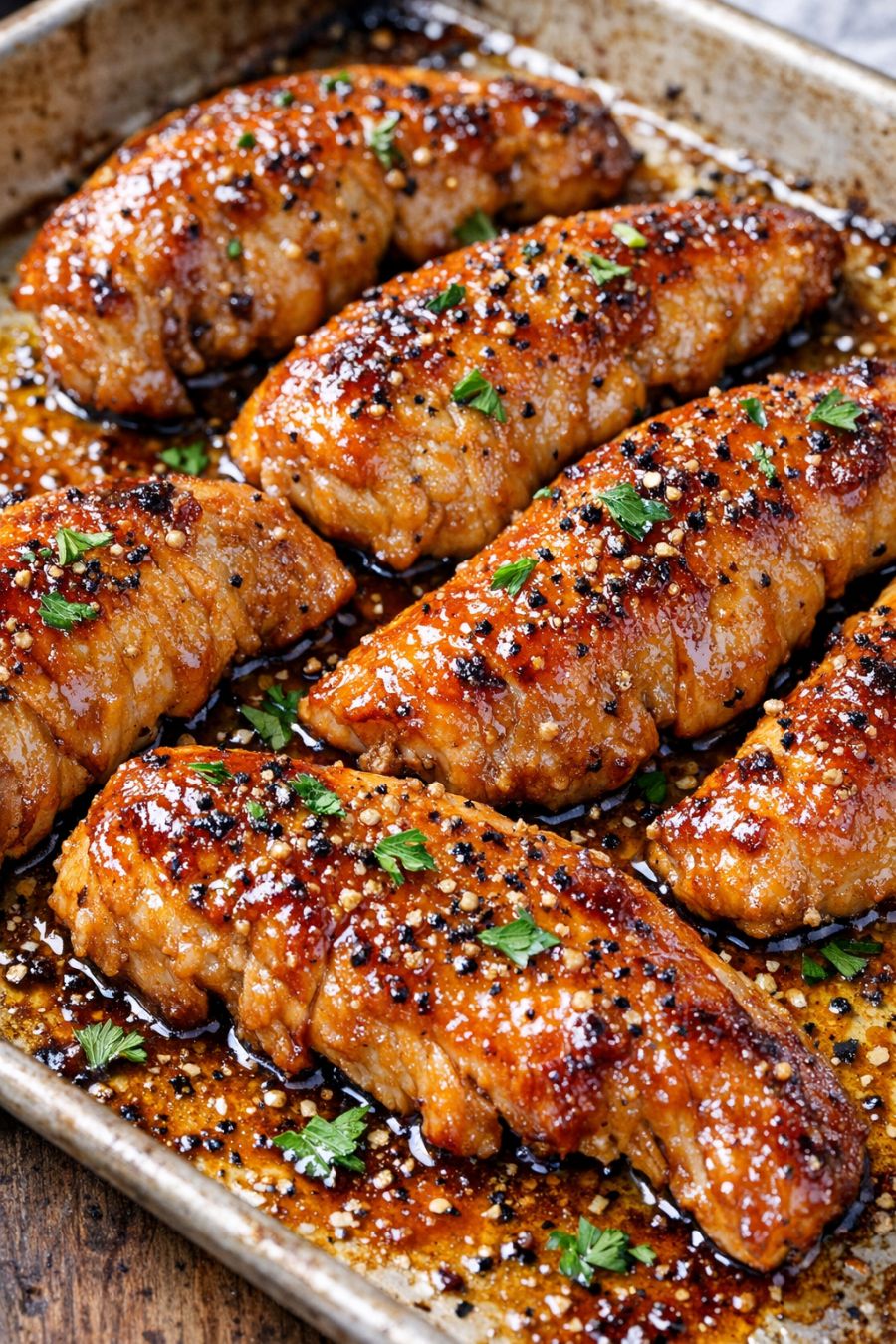
This oven-baked Amish-style maple mustard chicken is a five-ingredient weeknight dinner that leans on pantry staples and a very simple technique: you spread bottled yellow mustard and three more ingredients over raw chicken tenderloins right on a sheet pan, then slide it into the oven. The flavor profile nods to classic Amish and Pennsylvania Dutch cooking, where mustard, maple, and a touch of brown sugar often show up in picnic salads and baked meats. The result is sweet, tangy, and just a little rustic—exactly the kind of unfussy comfort food that works on a busy evening but still feels thoughtful.
Serve these maple mustard chicken tenderloins with buttered egg noodles or fluffy mashed potatoes to catch all the extra sauce that bakes onto the pan. A simple side of steamed green beans or roasted carrots balances the sweetness nicely, and a crisp green salad with a vinegar-forward dressing cuts through the richness. If you’d like to lean into the Amish-inspired feel, pair the chicken with warm dinner rolls, coleslaw, and maybe a side of buttered corn for a homestyle, family-style spread.
Oven-Baked Amish Maple Mustard Chicken Tenderloins
Servings: 4
Ingredients
1 1/2 pounds chicken tenderloins, trimmed and patted dry
1/3 cup bottled yellow mustard
1/3 cup pure maple syrup
2 tablespoons packed light brown sugar
1 teaspoon kosher salt, plus more to taste
1/2 teaspoon freshly ground black pepper (optional, for a little bite)
1 tablespoon neutral oil or nonstick cooking spray, for the pan
Directions
Preheat your oven to 400°F (200°C). Lightly grease a rimmed sheet pan with neutral oil or coat it with nonstick cooking spray to help prevent sticking and make cleanup easier.
Pat the chicken tenderloins dry with paper towels and lay them in a single layer on the prepared sheet pan. Avoid overlapping so they cook evenly and brown a bit around the edges.
Squeeze or spoon the bottled yellow mustard directly over the raw chicken tenderloins, distributing it as evenly as you can. Using clean hands or the back of a spoon, spread the mustard over all sides of the chicken so every piece is coated. This is your base layer of tang and also helps the sweet ingredients cling.
In a small bowl, stir together the maple syrup, brown sugar, kosher salt, and black pepper (if using) until the sugar is mostly dissolved and the mixture looks like a loose glaze.
Drizzle the maple-brown sugar mixture evenly over the mustard-coated chicken on the sheet pan. Use your hands or a spoon again to gently spread and turn the tenderloins so they’re well coated on all sides. You should see a glossy, mustardy-sweet layer clinging to each piece.
Place the sheet pan in the preheated oven and bake for 15 to 20 minutes, or until the chicken tenderloins are cooked through. They should reach an internal temperature of 165°F (74°C) when checked with an instant-read thermometer in the thickest part.
If you’d like a bit more caramelization on top, switch the oven to broil for 1 to 3 minutes at the end of cooking, watching closely so the sugars don’t scorch. Remove the pan as soon as the glaze is bubbling and lightly browned in spots.
Let the chicken rest on the sheet pan for about 5 minutes to allow the juices to settle. Spoon any extra maple mustard sauce from the pan over the tenderloins before serving for maximum sweet-tangy flavor.
Variations & Tips
For a touch of heat, add 1/4 to 1/2 teaspoon crushed red pepper flakes or a small pinch of cayenne to the maple-brown sugar mixture before spreading it over the mustard-coated chicken. If you prefer a more savory balance, reduce the brown sugar to 1 tablespoon and add 1 teaspoon apple cider vinegar for extra tang. You can also sprinkle 1 teaspoon dried thyme or 1/2 teaspoon smoked paprika over the coated tenderloins for a subtle herbal or smoky note that still fits the rustic, Amish-inspired profile. If you don’t have tenderloins, you can use boneless, skinless chicken breasts cut into strips; just keep the pieces about the same thickness so they cook at a similar rate, and add a few extra minutes to the baking time if needed. For easier cleanup, line your sheet pan with parchment paper, but keep in mind the sauce may not caramelize quite as deeply as it does directly on metal. Food safety tips: Always start with fresh or properly thawed chicken kept refrigerated until just before cooking, and avoid rinsing raw chicken (it can spread bacteria around the sink). Use one hand or utensil for handling raw chicken and a separate clean utensil for spreading and adjusting the glaze to prevent cross-contamination. Wash your hands, cutting boards, and any tools that touch raw chicken with hot, soapy water before using them for other ingredients. Ensure the chicken reaches an internal temperature of 165°F (74°C) and refrigerate leftovers within 2 hours in a shallow container; eat leftovers within 3 to 4 days, reheating until hot all the way through.
