
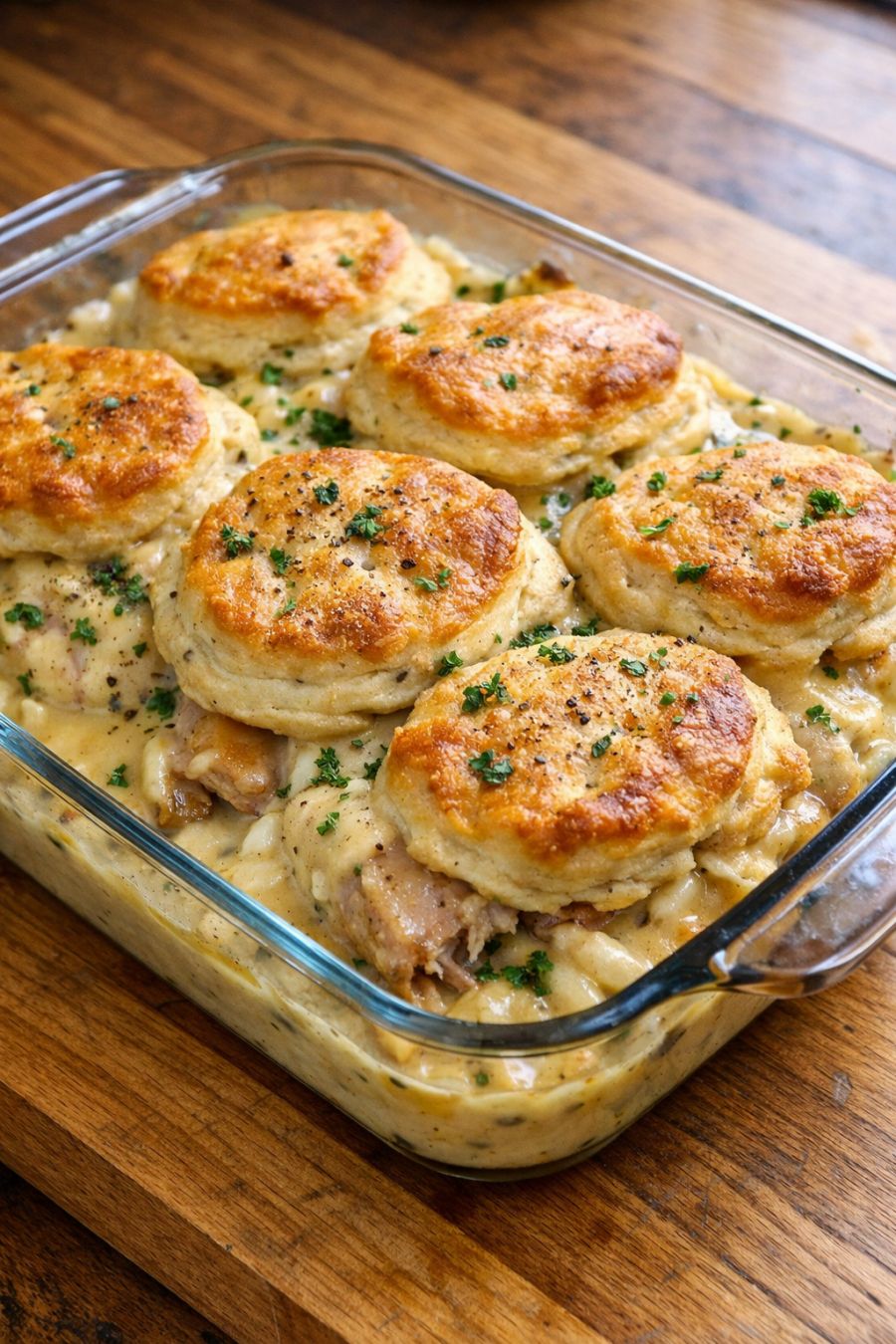
This oven-baked 4-ingredient Amish-style dumpling chicken is the sort of dish that feels like it’s been on a church potluck table for generations. It leans on simple pantry helpers—bone-in chicken breasts, canned refrigerated buttermilk biscuits, and two humble, creamy ingredients—to give you all the comfort of chicken and dumplings without standing over a hot stove. Everything is layered right into a glass baking dish, just like the old community cookbook recipes, and baked until the chicken is tender and the biscuits puff up into soft, dumpling-like bites soaked in savory gravy.
Serve this cozy chicken and biscuit bake straight from the glass dish, spooning plenty of the creamy gravy and dumpling-like biscuits over each piece of chicken. It pairs nicely with buttered peas or green beans, a simple tossed salad with a tangy vinaigrette to cut the richness, and maybe some applesauce or coleslaw on the side. A pan of roasted carrots or corn, and a jar of pickles from the cellar, turn it into the kind of stick-to-your-ribs Midwestern supper that fills both the plate and the heart.
Oven-Baked 4-Ingredient Amish Dumpling Chicken
Servings: 4
Ingredients
4 bone-in, skin-on chicken breasts (about 2 1/2 to 3 pounds total)
1 (10.5-ounce) can condensed cream of chicken soup
1 1/2 cups low-sodium chicken broth
1 (16.3-ounce) can refrigerated buttermilk biscuits (8 large biscuits)
1 teaspoon salt (optional, to taste)
1/2 teaspoon black pepper (optional, to taste)
Nonstick cooking spray or a little butter, for greasing the dish
Directions
Preheat your oven to 375°F (190°C). Lightly grease a 9x13-inch glass baking dish with nonstick spray or a little butter so the chicken and biscuits don’t stick.
Pat the bone-in chicken breasts dry with paper towels. If they are very large, you can cut each breast in half crosswise for quicker, more even cooking. Season all over with salt and black pepper if using, rubbing it in so it sticks to the skin.
Lay the seasoned chicken breasts in a single layer in the bottom of the greased glass baking dish, skin side up. They should fit snugly but not be stacked on top of one another.
In a medium bowl, whisk together the condensed cream of chicken soup and the chicken broth until smooth and pourable. It should look like a thin, creamy gravy.
Pour the soup and broth mixture evenly over the chicken breasts in the glass dish, making sure each piece is coated and there is liquid in the bottom of the pan. This will become the sauce that soaks into the biscuits and turns them dumpling-soft.
Open the can of refrigerated buttermilk biscuits. Separate the biscuits and, using your hands, tear each biscuit into 3 or 4 pieces. This helps them layer more easily and cook through like dumplings.
With clean hands, begin layering the biscuit pieces and the creamy sauce over the chicken. Scatter the torn biscuit pieces evenly over the top, tucking some pieces between and slightly over the chicken breasts so they are nestled into the soup mixture. Press them down gently so the bottoms of the biscuit pieces touch the sauce while the tops peek up. You should still see bits of chicken and plenty of creamy liquid between the biscuit pieces.
Use your fingers or a spoon to spoon a little of the creamy sauce from the sides of the dish over any dry-looking biscuit pieces on top. You want a good mix of biscuit pieces sitting in the sauce and some on top so you get both tender dumpling centers and lightly browned tops.
Cover the glass baking dish tightly with foil. Place the dish on the middle rack of the preheated oven and bake, covered, for 35 to 40 minutes. This gives the chicken time to cook through and the biscuit pieces time to puff and begin to turn dumpling-soft in the sauce.
After 35 to 40 minutes, carefully remove the foil (watch for hot steam). Continue baking uncovered for another 15 to 20 minutes, or until the chicken is cooked through (an instant-read thermometer should read at least 165°F in the thickest part, not touching the bone) and the tops of the biscuit pieces are lightly golden and no longer doughy in the center.
If the tops of the biscuits are browning faster than you like but the chicken still needs a little more time, loosely lay the foil back over the dish (do not seal tightly) and continue baking until the chicken is done and the biscuits are cooked through.
Remove the dish from the oven and let the chicken and dumplings rest for about 5 to 10 minutes. This allows the bubbling sauce to settle and thicken slightly, and it makes the biscuits easier to serve without falling apart.
To serve, spoon a piece of chicken onto each plate and top with plenty of the biscuit “dumplings” and creamy gravy from the pan. Be sure to reach down into the corners of the glass dish where the best, sauce-soaked biscuit bits like to hide.
Variations & Tips
For a little extra flavor without adding more ingredients, you can season the chicken with paprika, garlic powder, or dried thyme before layering everything in the glass dish. If you prefer dark meat, substitute bone-in, skin-on chicken thighs; they tend to stay very moist and are forgiving if cooked a bit longer. You can also use a mixture of cream of chicken and cream of mushroom soup for a deeper, earthier flavor, or swap in homemade chicken stock for the broth if you have it on hand.
If you like more vegetables, scatter a cup or two of frozen peas and carrots or mixed vegetables over the chicken before pouring on the soup and broth mixture. Keep in mind that adding a lot of vegetables can thin the sauce slightly as they release moisture, so you may want to reduce the broth by 1/4 cup if you add a generous amount of veggies.
For a crisper biscuit top, leave more of the biscuit pieces sitting above the sauce and bake uncovered a bit longer, watching closely so they don’t overbrown. For softer, more dumpling-like biscuits, press more of the pieces down into the sauce and keep the dish covered with foil for most of the baking time, uncovering only for the last 10 to 15 minutes.
Food safety tips: Always handle raw chicken with care. Use a separate cutting board and wash your hands, utensils, and any surfaces that touch the raw chicken with hot, soapy water. Be sure the chicken reaches an internal temperature of at least 165°F (74°C) in the thickest part, away from the bone, before serving. Do not taste the sauce or biscuits until the dish is fully baked, as they have been in contact with raw chicken. Leftovers should be cooled and refrigerated within 2 hours and eaten within 3 to 4 days, reheated until steaming hot all the way through. If you are using a glass baking dish, avoid placing it directly from the refrigerator into a hot oven to prevent thermal shock; let it sit at room temperature for a short time first if assembling ahead.
